Cambodia Blowing Agent Market: Import Trend Analysis
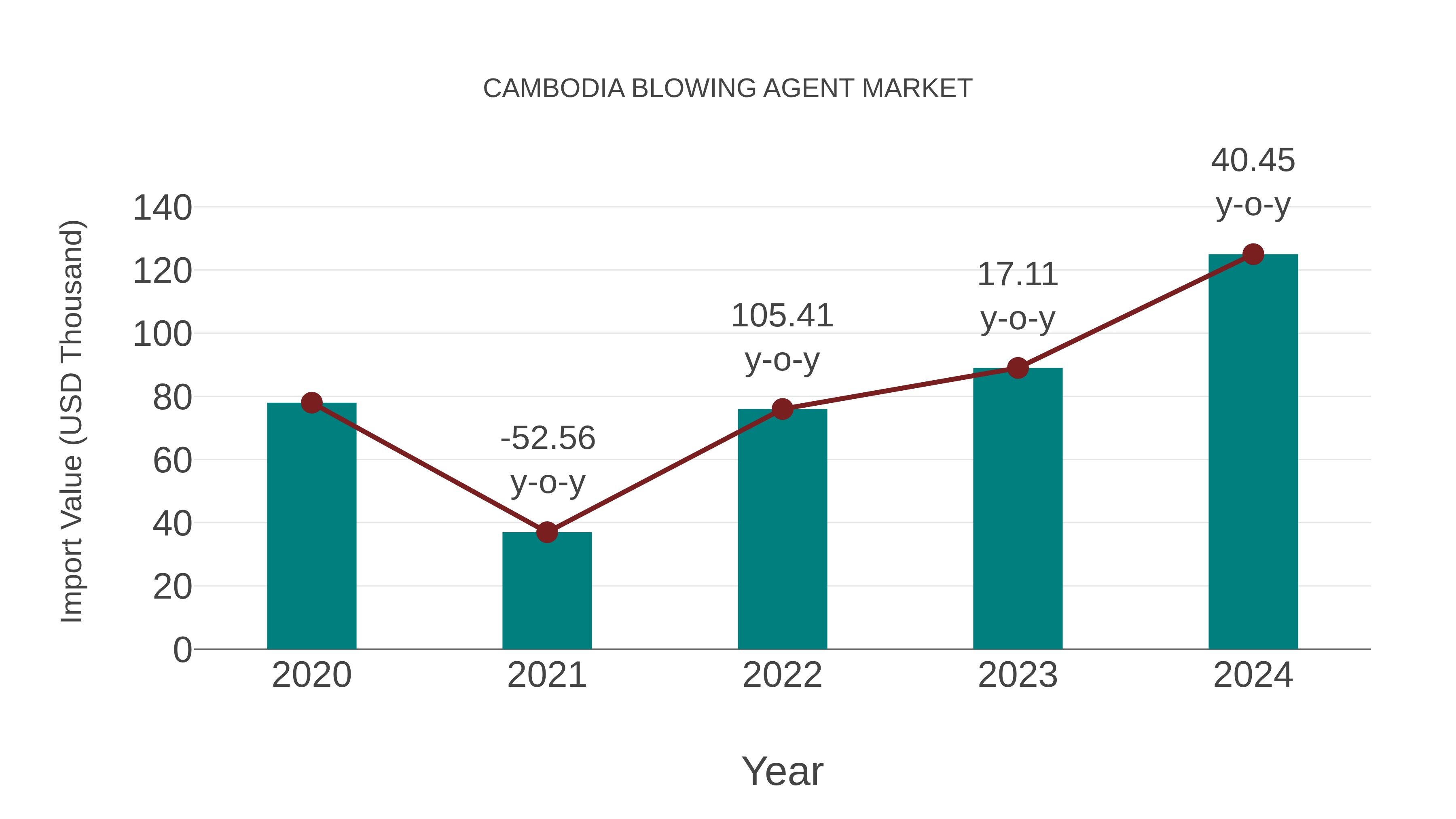
In the Cambodia blowing agent market, the import trend experienced significant growth from 2023 to 2024, with a notable increase of 40.45%. The compound annual growth rate (CAGR) for the period 2020-2024 stood at 12.51%. This robust import momentum can be attributed to a notable demand shift towards environmentally friendly blowing agents in the market.
Cambodia Blowing Agent Market Overview
The Cambodia Blowing Agent Market is experiencing steady growth driven by the expanding construction and automotive industries. Blowing agents are widely used in the production of insulation materials, polyurethane foams, and packaging materials. The market is witnessing increased demand for environmentally friendly blowing agents due to stringent regulations on harmful emissions. Key players in the market are focusing on developing bio-based and low-global warming potential blowing agents to cater to the growing demand for sustainable solutions. The market is characterized by intense competition, with companies investing in research and development activities to innovate new products and gain a competitive edge. Overall, the Cambodia Blowing Agent Market is poised for continued growth, driven by the construction sector`s robust demand for insulation materials and the automotive industry`s increasing use of lightweight materials.
Cambodia Blowing Agent Market Trends and Opportunities
The Cambodia Blowing Agent Market is experiencing growth due to the increasing demand for insulation materials in construction and automotive industries. The market is witnessing a shift towards eco-friendly and energy-efficient blowing agents, driven by environmental regulations and sustainability concerns. Opportunities lie in the development of innovative and sustainable blowing agent technologies to meet the evolving market demands. Additionally, the expanding construction sector in Cambodia presents a favorable environment for the growth of the blowing agent market, as the need for thermal insulation solutions continues to rise. Collaborations with key players in the industry, adoption of advanced manufacturing processes, and emphasis on product differentiation can further propel the market growth in Cambodia.
Cambodia Blowing Agent Market Challenges
In the Cambodia Blowing Agent Market, some key challenges include limited awareness and understanding of the benefits of blowing agents among end users and manufacturers, leading to slower adoption rates. Additionally, the lack of standardized regulations and quality control measures in the industry can result in inconsistencies in product quality and performance. Another challenge is the limited availability of advanced technologies and expertise in blowing agent production, which can hinder innovation and product development in the market. Furthermore, the increasing pressure to meet sustainability and environmental regulations poses a challenge for manufacturers to develop eco-friendly blowing agents that are both effective and cost-efficient. Overall, addressing these challenges will be crucial for the growth and competitiveness of the Cambodia Blowing Agent Market.
Cambodia Blowing Agent Market Drivers
The Cambodia Blowing Agent Market is primarily driven by the growing construction and automotive industries in the country. With increasing urbanization and infrastructure development projects, there is a rising demand for insulation materials in buildings and automotive components, creating a significant market opportunity for blowing agents. Additionally, stringent regulations related to energy efficiency and environmental sustainability are propelling the adoption of eco-friendly blowing agents that have lower global warming potential. The government`s initiatives to promote sustainable practices and reduce carbon emissions are further bolstering the market growth for blowing agents in Cambodia. Overall, the combination of increasing industrial activities, regulatory pressures, and environmental concerns are the key drivers shaping the Cambodia Blowing Agent Market.
Cambodia Blowing Agent Market Government Policies
The Cambodian government has implemented several policies related to the blowing agent market to ensure environmental sustainability and safety. One key policy is the Regulation on Ozone-Depleting Substances and Climate Change Mitigation Measures, which aims to phase out the use of harmful blowing agents that contribute to ozone depletion and global warming. Additionally, the government has set regulations on the import, production, and sale of blowing agents to control their usage and promote the adoption of eco-friendly alternatives. The Ministry of Environment in Cambodia also collaborates with international organizations to monitor compliance with these policies and provide support for industry players to transition towards sustainable practices in the blowing agent market. Overall, these policies reflect the government`s commitment to environmental protection and sustainable development in the country.
Cambodia Blowing Agent Market Future Outlook
The Cambodia Blowing Agent Market is expected to witness steady growth in the coming years, driven by increasing demand from the construction and automotive industries. The growing emphasis on energy-efficient and eco-friendly materials is likely to boost the adoption of blowing agents in the region. Additionally, government initiatives promoting sustainable practices and regulations restricting the use of harmful chemicals are expected to further propel market growth. With ongoing urbanization and infrastructure development in Cambodia, there is a growing need for insulation materials in buildings and vehicles, which will drive the demand for blowing agents. Overall, the market is poised for a positive outlook, with opportunities for manufacturers to innovate and expand their product offerings to meet the evolving needs of the industry.
Key Highlights of the Report:
- Cambodia Blowing Agent Market Outlook
- Market Size of Cambodia Blowing Agent Market, 2025
- Forecast of Cambodia Blowing Agent Market, 2032
- Historical Data and Forecast of Cambodia Blowing Agent Revenues & Volume for the Period 2022 - 2032F
- Cambodia Blowing Agent Market Trend Evolution
- Cambodia Blowing Agent Market Drivers and Challenges
- Cambodia Blowing Agent Price Trends
- Cambodia Blowing Agent Porter's Five Forces
- Cambodia Blowing Agent Industry Life Cycle
- Historical Data and Forecast of Cambodia Blowing Agent Market Revenues & Volume By Type for the Period 2022 - 2032F
- Historical Data and Forecast of Cambodia Blowing Agent Market Revenues & Volume By HC for the Period 2022 - 2032F
- Historical Data and Forecast of Cambodia Blowing Agent Market Revenues & Volume By HFC for the Period 2022 - 2032F
- Historical Data and Forecast of Cambodia Blowing Agent Market Revenues & Volume By HCFC for the Period 2022 - 2032F
- Historical Data and Forecast of Cambodia Blowing Agent Market Revenues & Volume By Others for the Period 2022 - 2032F
- Historical Data and Forecast of Cambodia Blowing Agent Market Revenues & Volume By Foam for the Period 2022 - 2032F
- Historical Data and Forecast of Cambodia Blowing Agent Market Revenues & Volume By Polyurethane Foam (PU) for the Period 2022 - 2032F
- Historical Data and Forecast of Cambodia Blowing Agent Market Revenues & Volume By Polystyrene Foam (PS) for the Period 2022 - 2032F
- Historical Data and Forecast of Cambodia Blowing Agent Market Revenues & Volume By Phenolic Foam for the Period 2022 - 2032F
- Historical Data and Forecast of Cambodia Blowing Agent Market Revenues & Volume By Polyolefin Foam for the Period 2022 - 2032F
- Historical Data and Forecast of Cambodia Blowing Agent Market Revenues & Volume By Others for the Period 2022 - 2032F
- Cambodia Blowing Agent Import Export Trade Statistics
- Market Opportunity Assessment By Type
- Market Opportunity Assessment By Foam
- Cambodia Blowing Agent Top Companies Market Share
- Cambodia Blowing Agent Competitive Benchmarking By Technical and Operational Parameters
- Cambodia Blowing Agent Company Profiles
- Cambodia Blowing Agent Key Strategic Recommendations






































