Cambodia Packaged Water Market: Import Trend Analysis
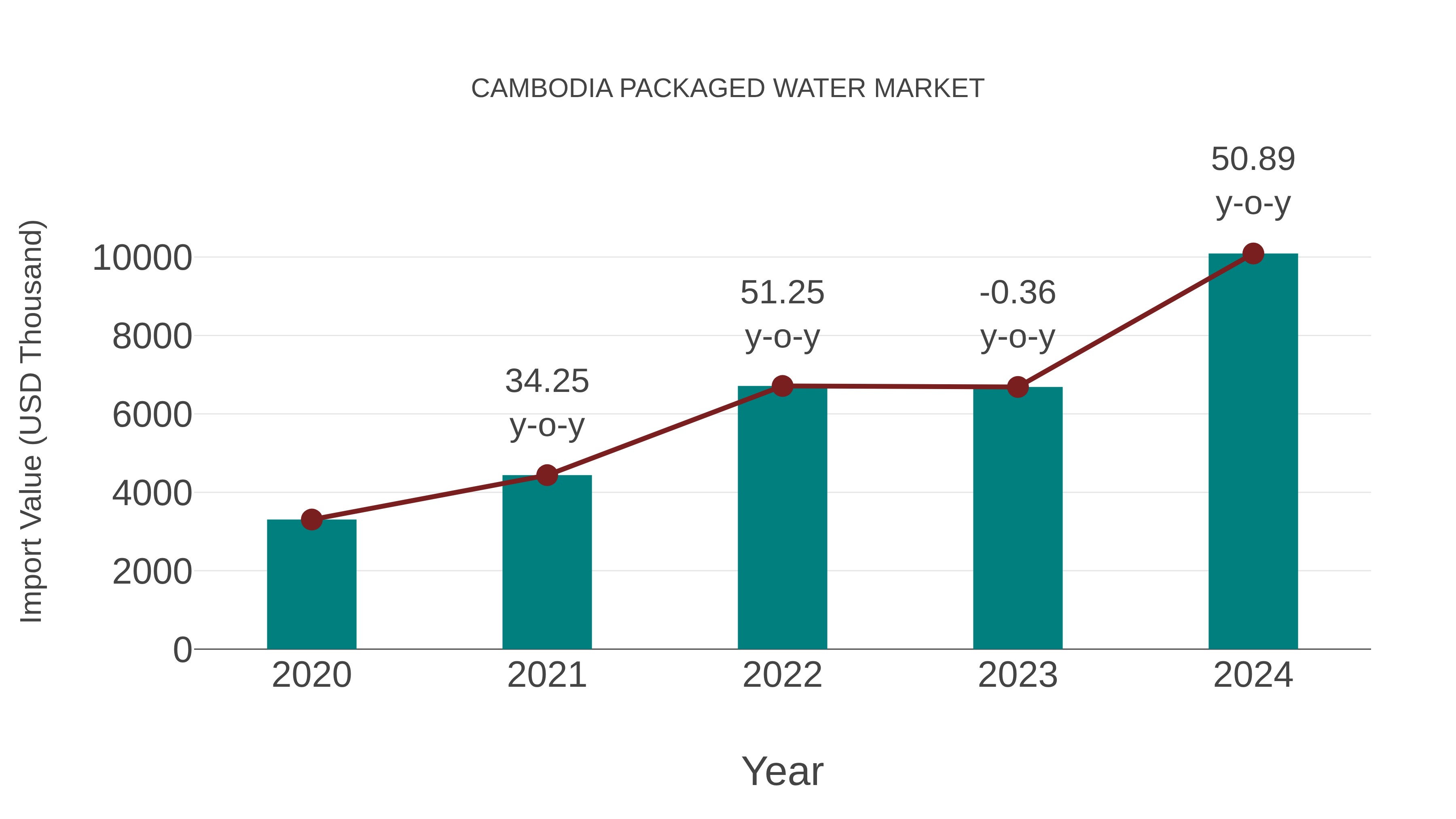
In 2024, Cambodia packaged water market saw a notable increase in imports. This trend was driven by rising consumer demand for convenient and safe drinking water options. Major players in the market focused on expanding their product offerings to cater to this growing segment.
Cambodia Packaged water Market Overview
The Cambodia packaged water market has been experiencing steady growth in recent years, driven by increasing consumer awareness of the importance of safe drinking water and convenience. The market is characterized by a mix of local and international brands offering a variety of packaged water products, including bottled water and water pouches. Key market players include brands such as Dasani, Aquafina, and local brands like Kulara Water. Factors such as population growth, urbanization, and rising disposable incomes have contributed to the growing demand for packaged water in Cambodia. Increasing concerns about water quality and hygiene have also boosted the market as consumers seek reliable and safe drinking water options. The market is expected to continue its growth trajectory in the coming years as consumers prioritize health and convenience in their beverage choices.
Cambodia Packaged water Market Trends and Opportunities
The packaged water market in Cambodia is experiencing rapid growth driven by increasing consumer awareness of the importance of clean drinking water and a rising demand for convenient and safe hydration options. Key trends in the market include the shift towards premium and value-added products such as flavored and functional waters, sustainable packaging solutions, and the expanding distribution channels through online platforms and convenience stores. Opportunities for market players lie in developing innovative packaging designs, expanding product portfolios to cater to diverse consumer preferences, and investing in marketing strategies to differentiate themselves in a competitive landscape. With a growing urban population and rising disposable incomes, the Cambodia packaged water market presents significant potential for growth and expansion in the coming years.
Cambodia Packaged water Market Challenges
In the Cambodia packaged water market, there are several challenges that businesses face. One major challenge is the lack of awareness and trust among consumers regarding the quality and safety of packaged water products. This is due to the prevalence of counterfeit or low-quality products in the market, leading to skepticism among buyers. Additionally, the high competition among various brands and the price sensitivity of consumers pose challenges in terms of differentiation and pricing strategies. Furthermore, the infrastructure for distribution and logistics in Cambodia can be underdeveloped in certain areas, making it difficult for companies to reach all potential customers efficiently. Overall, addressing these challenges through quality control measures, marketing efforts to build trust, and strategic distribution expansion is crucial for success in the Cambodian packaged water market.
Cambodia Packaged water Market Drivers
The Cambodia Packaged water market is primarily driven by increasing awareness about the importance of safe drinking water for health and well-being among consumers. The growing urban population, rapid economic development, and improving living standards have also contributed to the rising demand for convenient and hygienic packaged water options. Additionally, the tourism industry in Cambodia has boosted the demand for packaged water in hotels, restaurants, and other hospitality establishments. Changing lifestyles, rising health consciousness, and concerns about water contamination further fuel the market growth. The convenience and portability of packaged water make it a preferred choice for consumers on-the-go and in areas where access to clean drinking water is limited, driving the market expansion in Cambodia.
Cambodia Packaged water Market Government Policy
The Cambodian government has implemented policies to regulate the packaged water market to ensure safety and quality standards are met. The Ministry of Industry and Handicrafts oversees the licensing and monitoring of packaged water producers to uphold hygiene and sanitation requirements. Additionally, the Ministry of Health sets guidelines for water quality testing and labeling requirements to protect consumer health. The government has also introduced measures to combat the proliferation of counterfeit packaged water products through increased inspections and penalties for non-compliance. Overall, these policies aim to promote consumer confidence in the Cambodian packaged water market and safeguard public health.
Cambodia Packaged water Market Future Outlook
The Cambodia packaged water market is projected to experience steady growth in the coming years due to factors such as increasing disposable income, changing consumer preferences towards healthier beverage options, and growing awareness about the importance of safe drinking water. The market is expected to benefit from urbanization, tourism, and the development of retail infrastructure. Key players are likely to focus on product innovation, packaging sustainability, and marketing strategies to differentiate themselves in a competitive landscape. The rise in health-conscious consumers and the convenience of packaged water are expected to drive market expansion. Additionally, the government`s initiatives to improve water quality and access to safe drinking water are anticipated to further boost the demand for packaged water in Cambodia.
Key Highlights of the Report:
- Cambodia Packaged water Market Outlook
- Market Size of Cambodia Packaged water Market, 2025
- Forecast of Cambodia Packaged water Market, 2032
- Historical Data and Forecast of Cambodia Packaged water Revenues & Volume for the Period 2022 - 2032F
- Cambodia Packaged water Market Trend Evolution
- Cambodia Packaged water Market Drivers and Challenges
- Cambodia Packaged water Price Trends
- Cambodia Packaged water Porter's Five Forces
- Cambodia Packaged water Industry Life Cycle
- Historical Data and Forecast of Cambodia Packaged water Market Revenues & Volume By Product for the Period 2022 - 2032F
- Historical Data and Forecast of Cambodia Packaged water Market Revenues & Volume By Still for the Period 2022 - 2032F
- Historical Data and Forecast of Cambodia Packaged water Market Revenues & Volume By Carbonated for the Period 2022 - 2032F
- Historical Data and Forecast of Cambodia Packaged water Market Revenues & Volume By Flavored for the Period 2022 - 2032F
- Historical Data and Forecast of Cambodia Packaged water Market Revenues & Volume By Functional for the Period 2022 - 2032F
- Cambodia Packaged water Import Export Trade Statistics
- Market Opportunity Assessment By Product
- Cambodia Packaged water Top Companies Market Share
- Cambodia Packaged water Competitive Benchmarking By Technical and Operational Parameters
- Cambodia Packaged water Company Profiles
- Cambodia Packaged water Key Strategic Recommendations






































