Cambodia Perchloroethylene Market Size, Share & Growth Rate
The Cambodia Perchloroethylene Market was estimated at USD 251 Million in 2025 and is projected to reach USD 337 Million by 2032, growing at a CAGR of 4.3% from 2026 to 2032. This growth trajectory is primarily fueled by the increasing demand from the textile and dry cleaning sectors, as consumer awareness regarding clothing maintenance rises. Additionally, the expansion of the hospitality industry is driving higher demand for professional laundry and dry-cleaning services, further solidifying the market's positive outlook.
Cambodia Perchloroethylene Market Year-wise Growth Rate and Key Drivers
This graph highlights how the Cambodia Perchloroethylene Market has steadily grown over the years, supported by major growth factors.
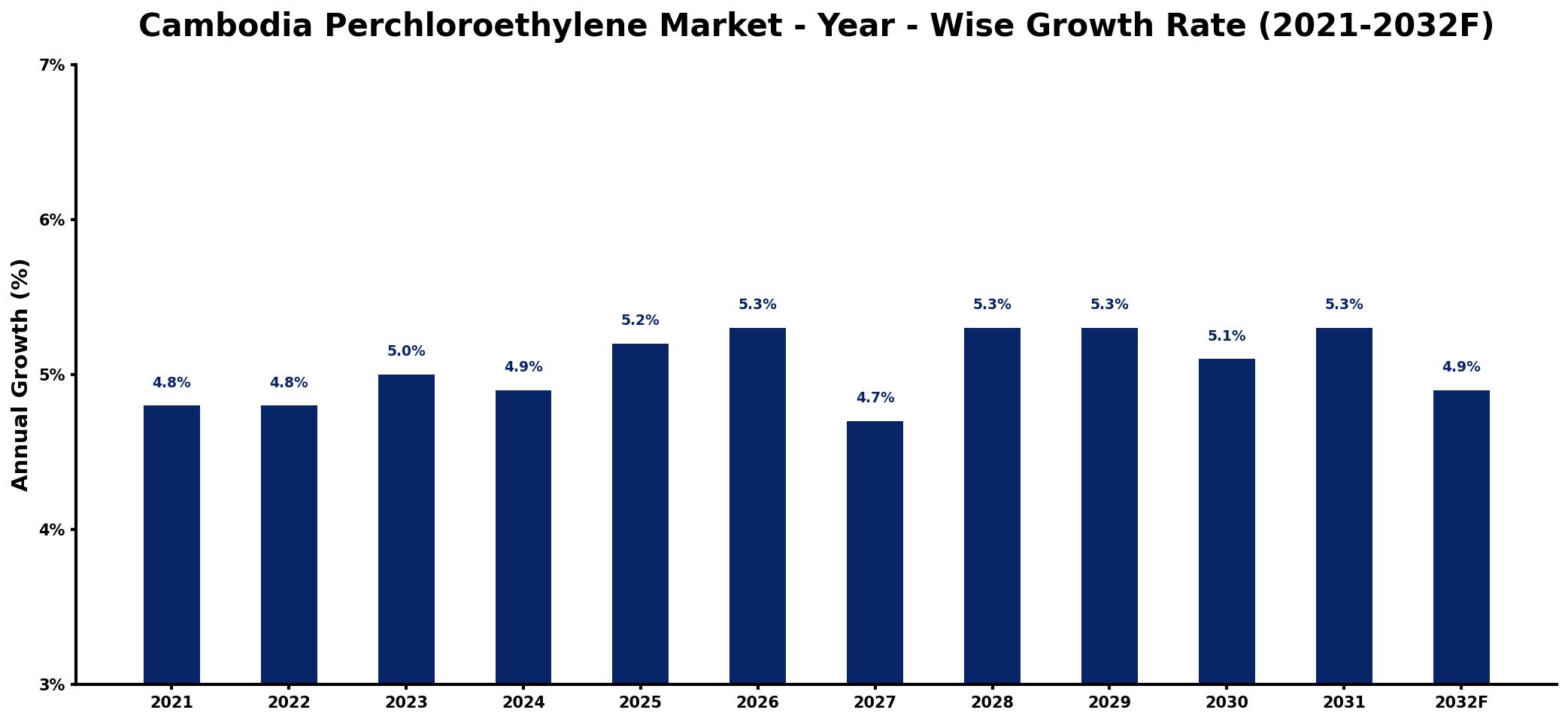
The table below presents the year‑wise growth rates along with the key drivers influencing the market
| Year | Growth Rate | Major Drivers |
| 2021 | 4.8% | Rising demand from textile industry |
| 2022 | 4.8% | Increased usage in dry cleaning |
| 2023 | 5.0% | Growth in automotive cleaning services |
| 2024 | 4.9% | Expansion of industrial cleaning applications |
| 2025 | 5.2% | Higher investments in manufacturing sectors |
| 2026 | 5.3% | Growing awareness of environmental standards |
| 2027 | 4.7% | Emerging markets increasing supply needs |
| 2028 | 5.3% | Technological advancements in cleaning processes |
| 2029 | 5.3% | Strengthening regulations for safety compliance |
| 2030 | 5.1% | Increased focus on sustainable practices |
| 2031 | 5.3% | Development of new cleaning technologies |
| 2032 | 4.9% | increased pharmaceutical industry usage |
Note: Market size estimations and growth projections presented in this report are based on 6Wresearch's proprietary forecasting methodology, utilizing the latest available industry data, government publications, and primary research inputs.
Cambodia Perchloroethylene Market Synopsis
In Cambodia, the dry cleaning sector heavily relies on imported perchloroethylene (PERC), reflecting the nation's limited local production capacity. This dependency underscores the challenges and opportunities within the market, as increasing industrial demands necessitate a steady supply of high-quality solvents.
The textile industry's rapid expansion is another key driver of market dynamics. As the country attracts foreign investments and boosts its manufacturing capabilities, the need for perchloroethylene for degreasing and cleaning processes is expected to rise significantly, influencing overall market growth.
Cambodia Perchloroethylene Market Key Takeaways
- The market is primarily dominated by imports due to limited domestic production.
- Expanding textile and hospitality industries are driving increased demand for dry cleaning services.
- Growing awareness regarding the environmental impact of perchloroethylene is prompting a shift towards eco-friendly alternatives.
- Investment in research and sustainable production methods is essential to addressing regulatory pressures.
- Regulatory challenges surrounding the environmental and health impacts of perchloroethylene require ongoing attention from stakeholders.
Evaluation of Restraints in Cambodia Perchloroethylene Market
The Cambodia Perchloroethylene market faces several restraints that hinder its full potential. Strict regulations regarding the environmental impact and health risks associated with perchloroethylene are pivotal in shaping market dynamics. Although some regulations exist, enforcement remains inconsistent, leading to improper handling and disposal practices that can threaten public health and the environment. Additionally, there is limited awareness among smaller operators regarding the hazards of perchloroethylene exposure, which exacerbates potential risks to users and the community.
Cambodia Perchloroethylene Market Trends
Current trends in the Cambodia Perchloroethylene market indicate a growing inclination towards eco-friendly and sustainable alternatives to traditional solvents. This shift is largely driven by consumer demand for greener practices in dry cleaning and textile treatment, alongside increased regulatory scrutiny. Furthermore, technological advancements are fostering the development of safer solvents, prompting industry players to innovate and adapt to meet the evolving preferences of environmentally conscious consumers.
Cambodia Perchloroethylene Market Opportunities
The Cambodia Perchloroethylene market is ripe with investment opportunities, particularly within the expanding textile and dry cleaning sectors. With the ongoing urbanization and industrial development, investors can capitalize on the growing need for perchloroethylene. Moreover, as the government actively promotes industrial growth and foreign investments, stakeholders can leverage the conducive environment to establish new manufacturing or supply channels. Building partnerships with regulatory bodies will also be crucial for navigating compliance and enhancing market potential.
Government Initiatives in the Cambodia Perchloroethylene Market
The Cambodian government has implemented several regulations aimed at managing the use of perchloroethylene in dry cleaning operations. Acknowledging its potential health hazards, authorities have set limits on its use, coupled with strict safety and disposal protocols. Furthermore, the government encourages the adoption of environmentally friendly technologies, promoting sustainable practices within the sector to protect public health and the environment.
Future Insights of the Cambodia Perchloroethylene Market
Looking ahead to the period from 2026 to 2032, the Cambodia Perchloroethylene market is expected to maintain steady growth, bolstered by increasing industrial demands. As urbanization and industrialization accelerate, the solvent's utility across various applications is likely to expand. Additionally, the shift toward sustainable practices will reshape market dynamics, pushing companies to innovate and invest in environmentally friendly production methods. Overall, a balance of regulatory compliance and consumer preferences will be pivotal for future success.
Cambodia Perchloroethylene Market Latest Developments (2025 - 2026)
Recent developments in the Cambodia Perchloroethylene market reflect a growing emphasis on sustainability and compliance with environmental regulations. Stakeholders are increasingly investing in research and technology aimed at discovering safer alternatives to traditional solvents. Additionally, there is a noticeable shift among dry cleaning businesses toward adopting greener practices, in response to consumer demand and regulatory pressures. This focus on sustainability is likely to define market trends in the coming years.
Cambodia Perchloroethylene Market - Key Attractiveness of the Report
- 10 Years of Market Numbers
- Historical Data Starting from 2022 to 2025
- Base Year: 2025
- Forecast Data until 2032
- Key Performance Indicators Impacting the Market
- Major Upcoming Developments and Projects
Key Highlights of the Report:
- Cambodia Perchloroethylene Market Outlook
- Market Size of Cambodia Perchloroethylene Market, 2025
- Forecast of Cambodia Perchloroethylene Market, 2032
- Historical Data and Forecast of Cambodia Perchloroethylene Revenues & Volume for the Period 2022-2032F
- Cambodia Perchloroethylene Market Trend Evolution
- Cambodia Perchloroethylene Market Drivers and Challenges
- Cambodia Perchloroethylene Price Trends
- Cambodia Perchloroethylene Porter's Five Forces
- Cambodia Perchloroethylene Industry Life Cycle
- Historical Data and Forecast of Cambodia Perchloroethylene Market Revenues & Volume By Type for the Period 2022-2032F
- Historical Data and Forecast of Cambodia Perchloroethylene Market Revenues & Volume By Ethylene Oxychlorination for the Period 2022-2032F
- Historical Data and Forecast of Cambodia Perchloroethylene Market Revenues & Volume By Acetylene Method for the Period 2022-2032F
- Historical Data and Forecast of Cambodia Perchloroethylene Market Revenues & Volume By Ethylene Direct Chlorination for the Period 2022-2032F
- Historical Data and Forecast of Cambodia Perchloroethylene Market Revenues & Volume By End-use for the Period 2022-2032F
- Historical Data and Forecast of Cambodia Perchloroethylene Market Revenues & Volume By Dry Cleaning Agent for the Period 2022-2032F
- Historical Data and Forecast of Cambodia Perchloroethylene Market Revenues & Volume By Solvent for the Period 2022-2032F
- Historical Data and Forecast of Cambodia Perchloroethylene Market Revenues & Volume By Others for the Period 2022-2032F
- Cambodia Perchloroethylene Import Export Trade Statistics
- Market Opportunity Assessment By Type
- Market Opportunity Assessment By End-use
- Cambodia Perchloroethylene Top Companies Market Share
- Cambodia Perchloroethylene Competitive Benchmarking By Technical and Operational Parameters
- Cambodia Perchloroethylene Company Profiles
- Cambodia Perchloroethylene Key Strategic Recommendations






































