Cambodia Vetiver Oil Market: Import Trend Analysis
In 2024, Cambodia import of vetiver oil experienced a steady upward trend due to growing demand from the fragrance and cosmetics industries. The country`s import volume increased by a significant percentage compared to the previous year, reflecting a positive market outlook for this essential oil.
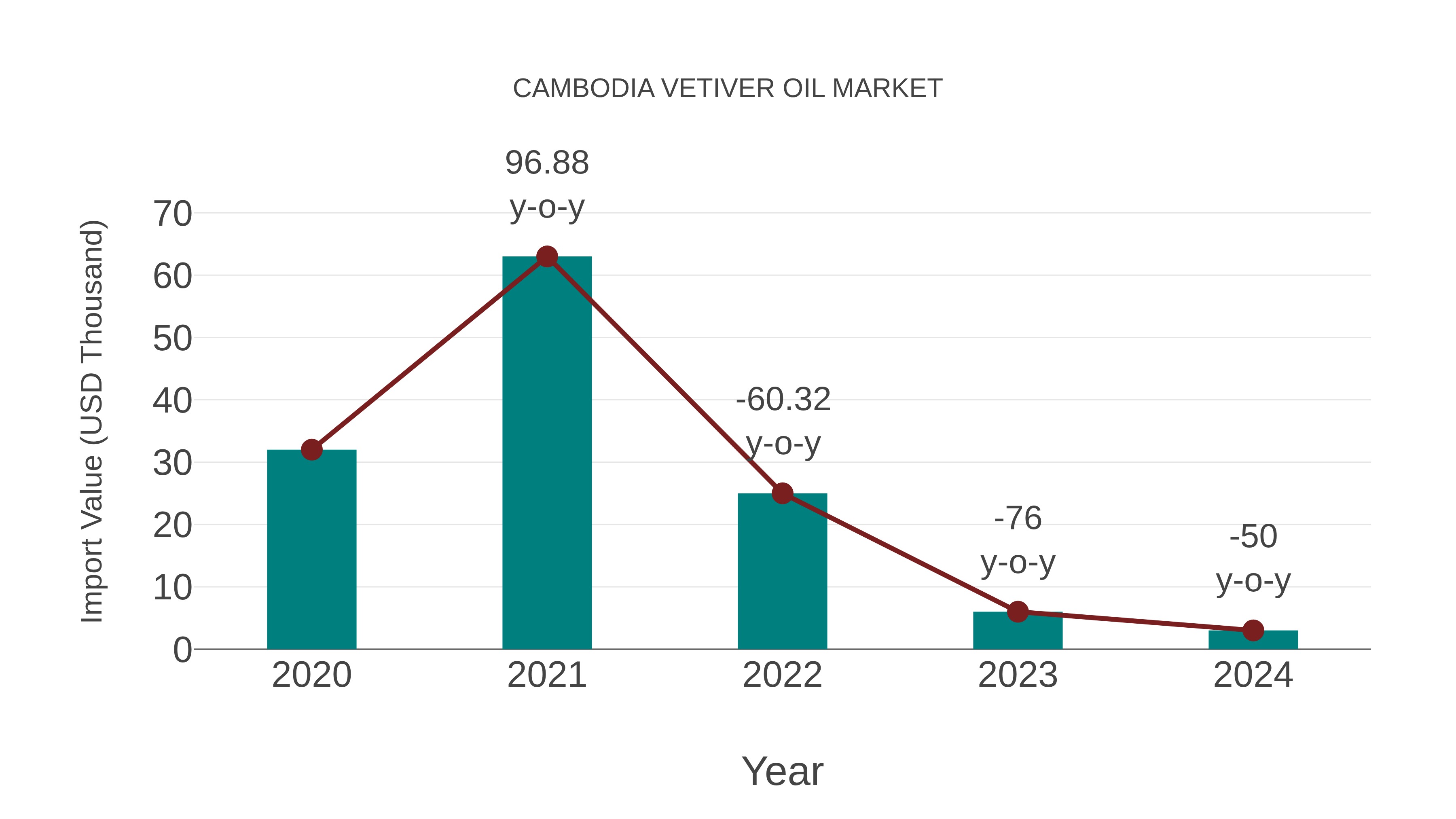
Cambodia Vetiver Oil Market Overview
In the fragrance and cosmetics industry, Cambodia vetiver oil market offers essential oil extracted from the roots of vetiver grass for perfumes, aromatherapy, and personal care products. Vetiver oil has a unique earthy and woody aroma, making it a popular ingredient in fragrance formulations.
Drivers of the market
The vetiver oil market in Cambodia is experiencing growth propelled by the country`s expanding aromatherapy industry, increasing demand for natural fragrances and essential oils, and the cultivation of vetiver grass for its aromatic and therapeutic properties. Vetiver oil, extracted from the roots of vetiver grass (Vetiveria zizanioides), is valued for its earthy, woody scent and its use in perfumery, cosmetics, and aromatherapy. With the growing popularity of natural remedies, wellness products, and sustainable sourcing practices in Cambodia, there is a growing demand for vetiver oil that offers calming, grounding, and stress-relieving benefits to consumers, driving market growth in the country.
Challenges of the market
Navigating the Cambodia vetiver oil market presents challenges related to agricultural practices and market demand. Vetiver oil, derived from vetiver grass, offers various applications in perfumery and aromatherapy, but its adoption may be limited by factors such as limited cultivation of vetiver grass and competition from synthetic fragrances in Cambodia. Moreover, ensuring oil quality and addressing sustainability concerns pose challenges for vetiver oil producers and end-users. Addressing these challenges demands investments in vetiver cultivation techniques, quality control measures, and market promotion strategies to promote the adoption of vetiver oil and support sustainable agriculture and fragrance industries in Cambodia.
Government Policy of the market
Recognizing the economic potential of vetiver oil production, especially in fragrance and cosmetics industries, the Cambodian government has introduced policies to support the vetiver oil market. These policies include incentives for vetiver cultivation and oil extraction, regulations for sustainable harvesting practices, and support for vetiver oil processing facilities.
Key Highlights of the Report:
- Cambodia Vetiver Oil Market Outlook
- Market Size of Cambodia Vetiver Oil Market, 2025
- Forecast of Cambodia Vetiver Oil Market, 2032
- Historical Data and Forecast of Cambodia Vetiver Oil Revenues & Volume for the Period 2022-2032F
- Cambodia Vetiver Oil Market Trend Evolution
- Cambodia Vetiver Oil Market Drivers and Challenges
- Cambodia Vetiver Oil Price Trends
- Cambodia Vetiver Oil Porter's Five Forces
- Cambodia Vetiver Oil Industry Life Cycle
- Historical Data and Forecast of Cambodia Vetiver Oil Market Revenues & Volume By Application for the Period 2022-2032F
- Historical Data and Forecast of Cambodia Vetiver Oil Market Revenues & Volume By Medical for the Period 2022-2032F
- Historical Data and Forecast of Cambodia Vetiver Oil Market Revenues & Volume By Food & Beverage for the Period 2022-2032F
- Historical Data and Forecast of Cambodia Vetiver Oil Market Revenues & Volume By Spa & Relaxation for the Period 2022-2032F
- Cambodia Vetiver Oil Import Export Trade Statistics
- Market Opportunity Assessment By Application
- Cambodia Vetiver Oil Top Companies Market Share
- Cambodia Vetiver Oil Competitive Benchmarking By Technical and Operational Parameters
- Cambodia Vetiver Oil Company Profiles
- Cambodia Vetiver Oil Key Strategic Recommendations






































