Cameroon Canned Tuna Market: Top 5 Importing Countries and Market Competition (HHI) Analysis
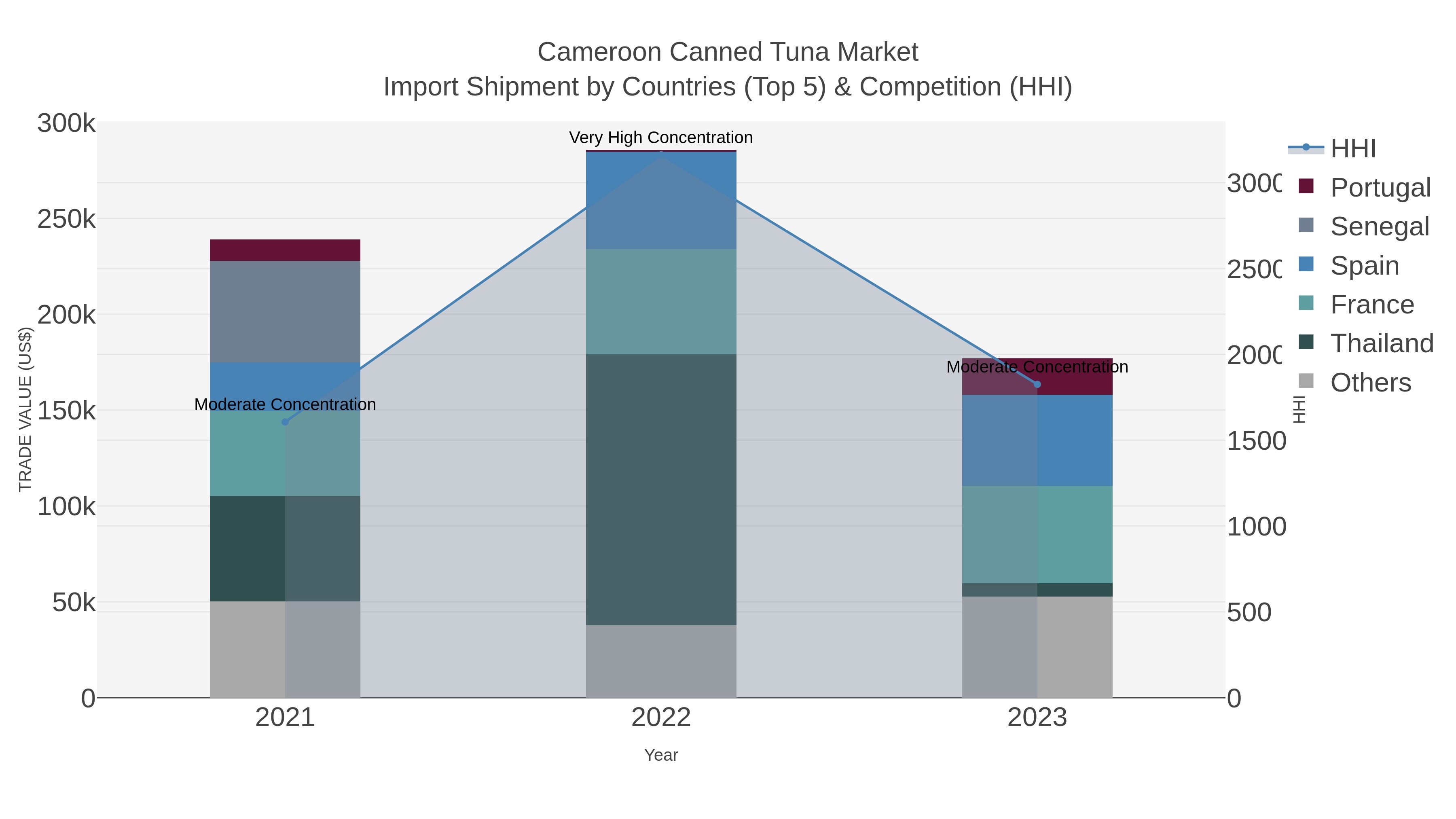
The canned tuna import market in Cameroon saw a shift in 2023 with a decrease in market concentration, moving from very high to moderate. Top exporters to Cameroon included France, Spain, Portugal, Tunisia, and Mauritius. The market experienced a negative compound annual growth rate (CAGR) of -13.97% and a significant decline in growth rate at -38.04%. This data suggests a challenging environment for canned tuna importers in Cameroon, possibly influenced by changing consumer preferences or economic factors. Stakeholders should closely monitor these trends to adapt their strategies accordingly.
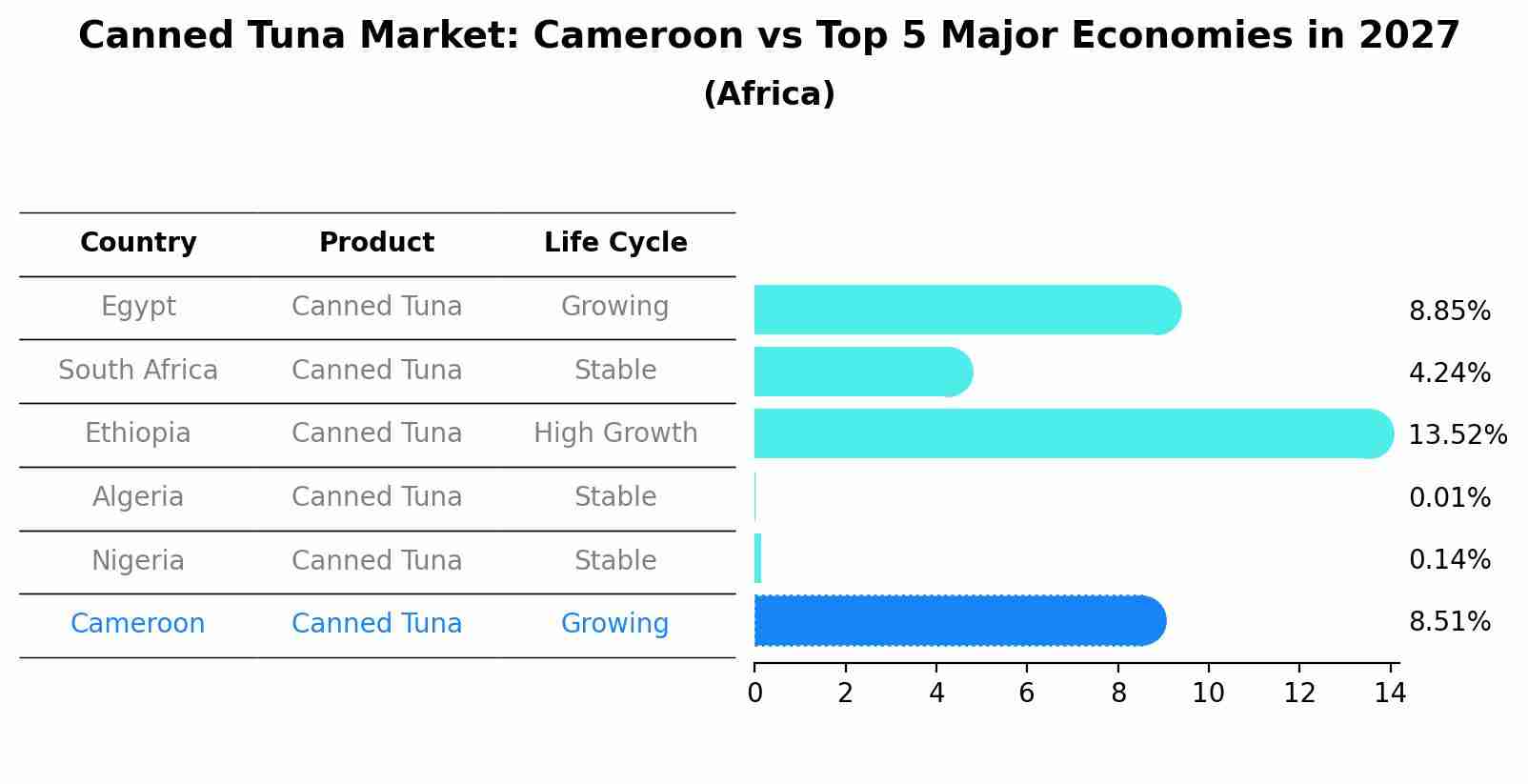
Canned Tuna Market: Cameroon vs Top 5 Major Economies in 2027 (Africa)
By 2027, Cameroon's Canned Tuna market is forecasted to achieve a growing growth rate of 8.51%, with Egypt leading the Africa region, followed by South Africa, Ethiopia, Algeria and Nigeria.
Cameroon Canned Tuna Market Overview
Canned tuna is a popular product in Cameroon due to its affordability and versatility. It is commonly used in various dishes and is valued for its long shelf life. The market is supported by increasing consumer demand for convenient and nutritious food options. Key challenges include managing supply chain issues and maintaining product quality.
Drivers of the market
The Cameroon canned tuna market is driven by the growing popularity of tuna as a versatile and convenient protein source. The demand for canned tuna is fueled by its use in various dishes and its long shelf life, which aligns with busy lifestyles and convenience preferences. Additionally, the expansion of retail channels and the introduction of different canned tuna varieties cater to diverse consumer tastes and further support market growth.
Challenges of the market
The Canned Tuna Market in Cameroon faces challenges including fluctuations in the price and availability of tuna, which can impact production costs. There are also issues related to the sustainability of tuna fishing practices and regulatory requirements for seafood products. Logistics and distribution challenges affect the availability and freshness of canned tuna. Additionally, competition from both local and international brands impacts market pricing and consumer preference.
Government Policy of the market
Government policies affecting the canned tuna market in Cameroon focus on food safety and trade regulations. The government enforces strict standards for the processing, labeling, and safety of canned tuna to protect consumer health. Import regulations and tariffs influence the availability and cost of canned tuna. Additionally, the government supports local tuna processing industries through various incentives.
Key Highlights of the Report:
- Cameroon Canned Tuna Market Outlook
- Market Size of Cameroon Canned Tuna Market, 2024
- Forecast of Cameroon Canned Tuna Market, 2031
- Historical Data and Forecast of Cameroon Canned Tuna Revenues & Volume for the Period 2021-2031
- Cameroon Canned Tuna Market Trend Evolution
- Cameroon Canned Tuna Market Drivers and Challenges
- Cameroon Canned Tuna Price Trends
- Cameroon Canned Tuna Porter`s Five Forces
- Cameroon Canned Tuna Industry Life Cycle
- Historical Data and Forecast of Cameroon Canned Tuna Market Revenues & Volume By Product for the Period 2021-2031
- Historical Data and Forecast of Cameroon Canned Tuna Market Revenues & Volume By Skipjack for the Period 2021-2031
- Historical Data and Forecast of Cameroon Canned Tuna Market Revenues & Volume By Yellowfin for the Period 2021-2031
- Historical Data and Forecast of Cameroon Canned Tuna Market Revenues & Volume By Others for the Period 2021-2031
- Historical Data and Forecast of Cameroon Canned Tuna Market Revenues & Volume By Distribution Channel for the Period 2021-2031
- Historical Data and Forecast of Cameroon Canned Tuna Market Revenues & Volume By Hypermarket & Supermarket for the Period 2021-2031
- Historical Data and Forecast of Cameroon Canned Tuna Market Revenues & Volume By Specialty Stores for the Period 2021-2031
- Historical Data and Forecast of Cameroon Canned Tuna Market Revenues & Volume By Online for the Period 2021-2031
- Cameroon Canned Tuna Import Export Trade Statistics
- Market Opportunity Assessment By Product
- Market Opportunity Assessment By Distribution Channel
- Cameroon Canned Tuna Top Companies Market Share
- Cameroon Canned Tuna Competitive Benchmarking By Technical and Operational Parameters
- Cameroon Canned Tuna Company Profiles
- Cameroon Canned Tuna Key Strategic Recommendations






































