Cameroon Plastic Furniture Market: Top 5 Importing Countries and Market Competition (HHI) Analysis
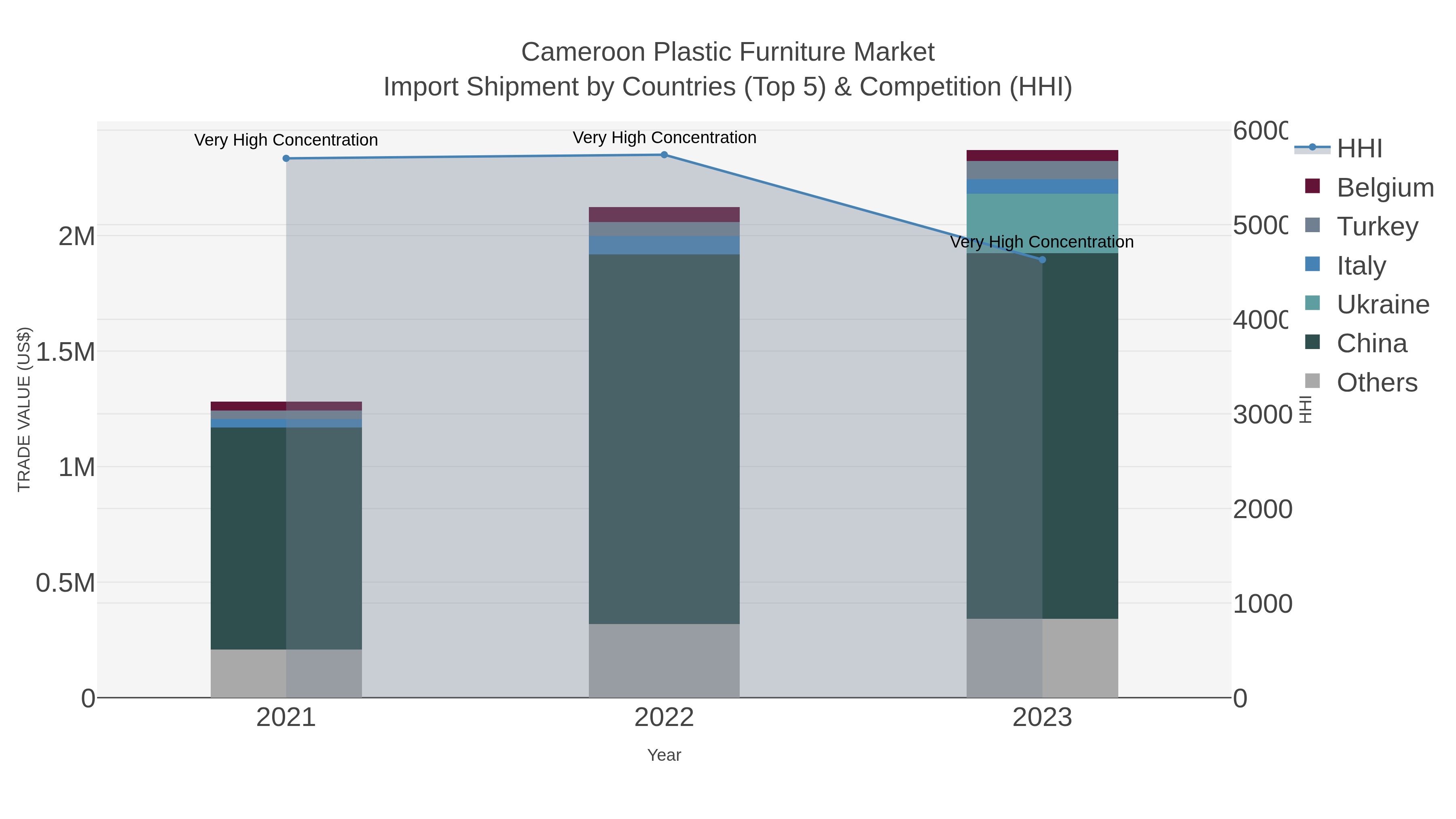
In 2023, Cameroon continued to see a significant influx of plastic furniture imports, with top exporters including China, Ukraine, United Kingdom, Turkey, and Italy. The high Herfindahl-Hirschman Index (HHI) concentration indicates a competitive market dominated by a few key players. The impressive compound annual growth rate (CAGR) of 36.02% reflects the expanding demand for plastic furniture in Cameroon. With a growth rate of 11.61%, the market shows promising opportunities for both existing and potential exporters to capitalize on this upward trend.
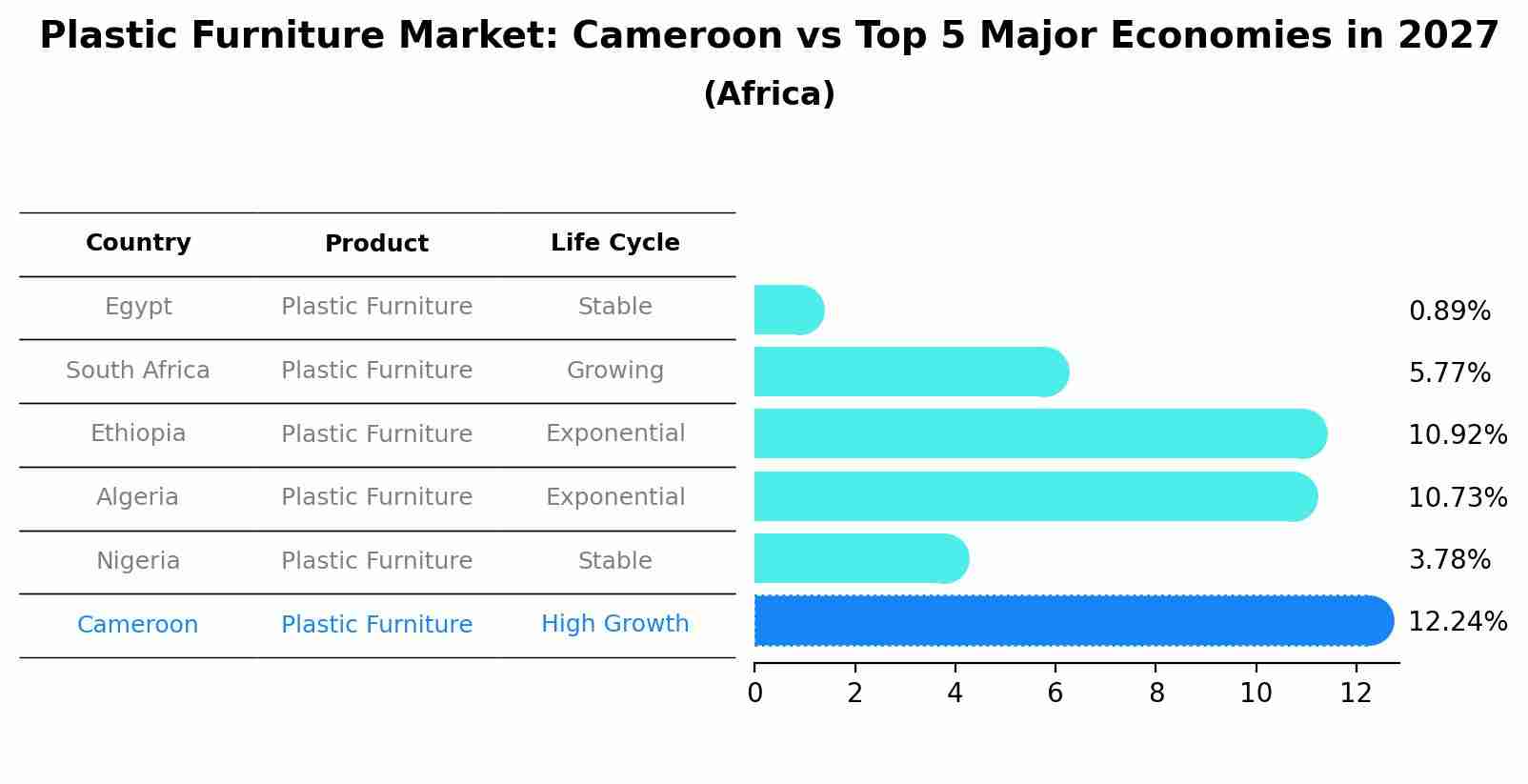
Plastic Furniture Market: Cameroon vs Top 5 Major Economies in 2027 (Africa)
By 2027, the Plastic Furniture market in Cameroon is anticipated to reach a growth rate of 12.24%, as part of an increasingly competitive Africa region, where Egypt remains at the forefront, supported by South Africa, Ethiopia, Algeria and Nigeria, driving innovations and market adoption across sectors.
Cameroon Plastic Furniture Market Overview
The Plastic Furniture market in Cameroon is expanding as plastic furniture is used for residential, commercial, and industrial applications. Plastic furniture is valued for its durability, lightweight nature, and cost-effectiveness. The market growth is driven by the increasing demand for affordable and versatile furniture solutions, advancements in plastic furniture design, and the growth of the residential and commercial sectors.
Drivers of the market
The plastic furniture market in Cameroon is driven by the demand for affordable, lightweight, and durable furniture solutions. Plastic furniture offers advantages such as ease of maintenance, resistance to weather conditions, and cost-effectiveness. The growth of the residential and commercial sectors, coupled with the increasing focus on versatile and low-maintenance furniture, supports market expansion. Additionally, advancements in plastic furniture design and the rising popularity of outdoor and casual furniture contribute to market growth.
Challenges of the market
Challenges in the Plastic Furniture Market in Cameroon include high production costs and limited local manufacturing capabilities. There is a lack of awareness among consumers and businesses about the benefits of plastic furniture for durability and design flexibility. Technical issues related to furniture quality and production processes further affect market growth. Additionally, regulatory uncertainties and the absence of supportive policies for furniture manufacturing create significant obstacles.
Government Policy of the market
Cameroon is promoting the plastic furniture market as part of its efforts to support the furniture and manufacturing industries. Policies include offering incentives for local production and improving regulatory standards to ensure product quality and environmental sustainability. The government is also focused on expanding access to plastic furniture and supporting innovation in furniture design and manufacturing.
Key Highlights of the Report:
- Cameroon Plastic Furniture Market Outlook
- Market Size of Cameroon Plastic Furniture Market, 2024
- Forecast of Cameroon Plastic Furniture Market, 2031
- Historical Data and Forecast of Cameroon Plastic Furniture Revenues & Volume for the Period 2021-2031
- Cameroon Plastic Furniture Market Trend Evolution
- Cameroon Plastic Furniture Market Drivers and Challenges
- Cameroon Plastic Furniture Price Trends
- Cameroon Plastic Furniture Porter`s Five Forces
- Cameroon Plastic Furniture Industry Life Cycle
- Historical Data and Forecast of Cameroon Plastic Furniture Market Revenues & Volume By Distribution Channel for the Period 2021-2031
- Historical Data and Forecast of Cameroon Plastic Furniture Market Revenues & Volume By Online for the Period 2021-2031
- Historical Data and Forecast of Cameroon Plastic Furniture Market Revenues & Volume By Offline for the Period 2021-2031
- Historical Data and Forecast of Cameroon Plastic Furniture Market Revenues & Volume By Application for the Period 2021-2031
- Historical Data and Forecast of Cameroon Plastic Furniture Market Revenues & Volume By Residential for the Period 2021-2031
- Historical Data and Forecast of Cameroon Plastic Furniture Market Revenues & Volume By Commercial for the Period 2021-2031
- Cameroon Plastic Furniture Import Export Trade Statistics
- Market Opportunity Assessment By Distribution Channel
- Market Opportunity Assessment By Application
- Cameroon Plastic Furniture Top Companies Market Share
- Cameroon Plastic Furniture Competitive Benchmarking By Technical and Operational Parameters
- Cameroon Plastic Furniture Company Profiles
- Cameroon Plastic Furniture Key Strategic Recommendations






































