Canada Canned Tuna Market: Import Trend Analysis
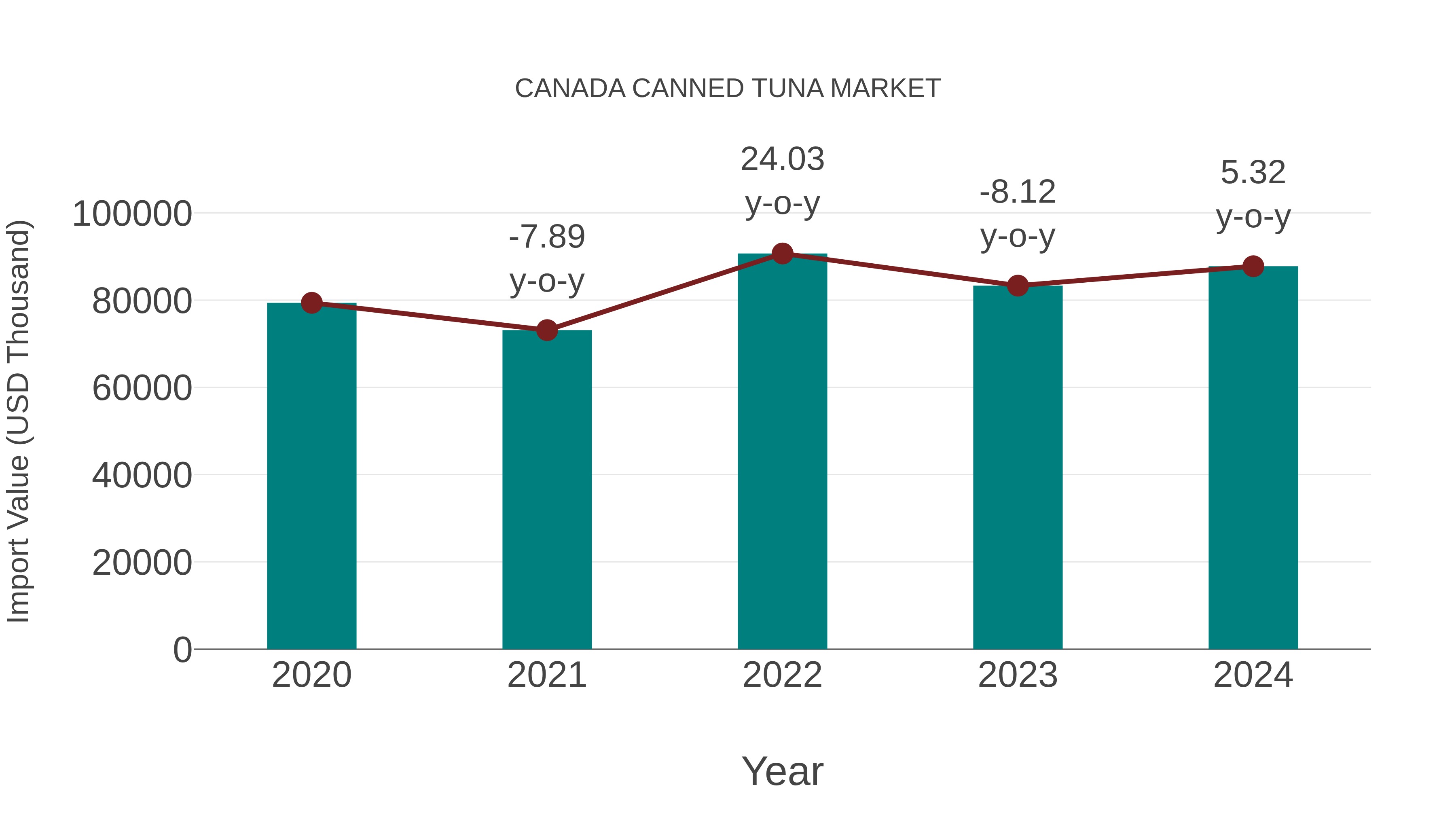
In the Canada canned tuna market, the import trend showed a growth rate of 5.32% from 2023 to 2024, with a compound annual growth rate (CAGR) of 2.54% for the period of 2020-2024. This increase in import momentum can be attributed to shifting consumer preferences towards convenient and shelf-stable seafood options, indicating sustained market stability and demand for canned tuna products during this period.
Canada Canned Tuna Market Overview
Canned tuna is a popular and convenient seafood option in Canada. The market is driven by its use in salads, sandwiches, and other dishes. Factors influencing the market include consumer preferences for sustainable and high-quality tuna, as well as advancements in canning technology. Market growth is supported by increasing awareness of the health benefits of tuna and demand for convenient meal options.
Drivers of the market
The canned tuna market in Canada is expanding with the increasing demand for tuna as a convenient and protein-rich food product. Canned tuna offers a long shelf life and ease of use, making it a popular choice for consumers. The market is driven by advancements in canning technologies, the rising focus on convenient and healthy meal solutions, and the growing popularity of tuna in various dishes. The expansion of retail and foodservice channels further contributes to market growth.
Challenges of the market
The canned tuna market in Canada faces challenges such as fluctuating tuna prices and the need to comply with environmental regulations related to sustainable fishing practices. Additionally, competition from fresh and frozen tuna products, along with changing consumer preferences for healthier and sustainably sourced seafood, impacts market dynamics.
Government Policy of the market
The canned tuna market in Canada is influenced by government policies on sustainable fishing and seafood imports. Regulations ensuring compliance with international fishing standards, alongside food safety laws governing the canned tuna industry, play a significant role in market development. Government initiatives promoting sustainable seafood consumption further drive demand.
Key Highlights of the Report:
- Canada Canned Tuna Market Outlook
- Market Size of Canada Canned Tuna Market, 2025
- Forecast of Canada Canned Tuna Market, 2032
- Historical Data and Forecast of Canada Canned Tuna Revenues & Volume for the Period 2022-2032F
- Canada Canned Tuna Market Trend Evolution
- Canada Canned Tuna Market Drivers and Challenges
- Canada Canned Tuna Price Trends
- Canada Canned Tuna Porter`s Five Forces
- Canada Canned Tuna Industry Life Cycle
- Historical Data and Forecast of Canada Canned Tuna Market Revenues & Volume By Product for the Period 2022-2032F
- Historical Data and Forecast of Canada Canned Tuna Market Revenues & Volume By Skipjack for the Period 2022-2032F
- Historical Data and Forecast of Canada Canned Tuna Market Revenues & Volume By Yellowfin for the Period 2022-2032F
- Historical Data and Forecast of Canada Canned Tuna Market Revenues & Volume By Others for the Period 2022-2032F
- Historical Data and Forecast of Canada Canned Tuna Market Revenues & Volume By Distribution Channel for the Period 2022-2032F
- Historical Data and Forecast of Canada Canned Tuna Market Revenues & Volume By Hypermarket & Supermarket for the Period 2022-2032F
- Historical Data and Forecast of Canada Canned Tuna Market Revenues & Volume By Specialty Stores for the Period 2022-2032F
- Historical Data and Forecast of Canada Canned Tuna Market Revenues & Volume By Online for the Period 2022-2032F
- Canada Canned Tuna Import Export Trade Statistics
- Market Opportunity Assessment By Product
- Market Opportunity Assessment By Distribution Channel
- Canada Canned Tuna Top Companies Market Share
- Canada Canned Tuna Competitive Benchmarking By Technical and Operational Parameters
- Canada Canned Tuna Company Profiles
- Canada Canned Tuna Key Strategic Recommendations






































