Canada Epoxy Market Growth Rate Analysis (2025 - 2031)
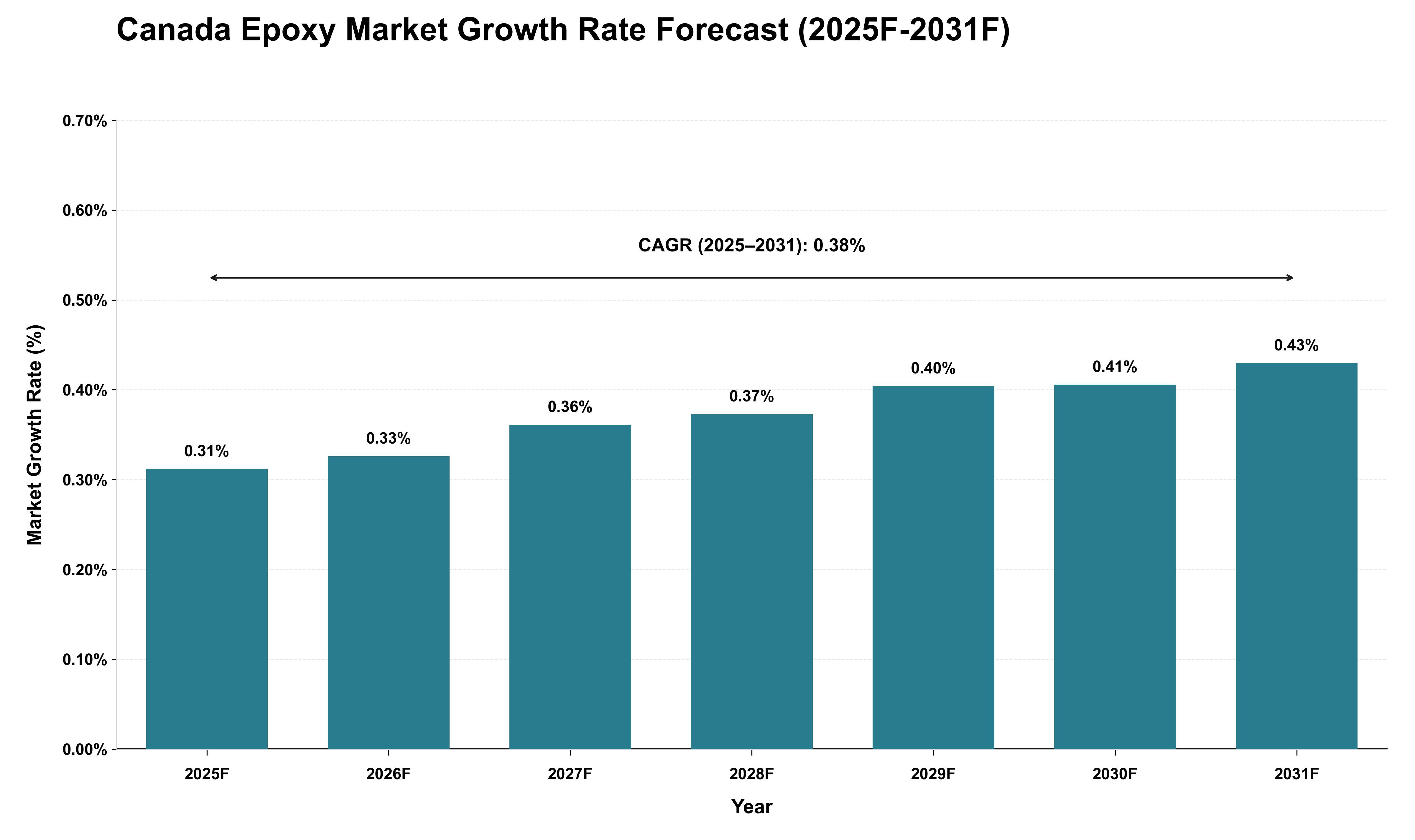
The Canadian epoxy market will experience a gradual increase in trade flows, driven by evolving industrial applications and the demand for advanced materials in construction and manufacturing sectors. With a projected CAGR of 0.38% from 2025 to 2031, annual growth rates will rise incrementally, starting at 0.31% in 2025 and reaching 0.43% by 2031. This trend reflects an anticipated uptick in import dependencies as domestic production may not fully meet the growing needs of industries leveraging epoxy for enhanced durability and performance. Furthermore, cyclical trends associated with infrastructure investments and technological advancements will likely bolster demand, particularly as Canada seeks to modernize its facilities and embrace sustainable practices. Consequently, the interplay between domestic supply capabilities and international trade dynamics will shape the market's trajectory during this period.
Key Highlights of the Report:
- Canada Epoxy Market Outlook
- Market Size of Canada Epoxy Market, 2025
- Forecast of Canada Epoxy Market, 2032
- Historical Data and Forecast of Canada Epoxy Revenues & Volume for the Period 2022-2032F
- Canada Epoxy Market Trend Evolution
- Canada Epoxy Market Drivers and Challenges
- Canada Epoxy Price Trends
- Canada Epoxy Porter`s Five Forces
- Canada Epoxy Industry Life Cycle
- Historical Data and Forecast of Canada Epoxy Market Revenues & Volume By Type for the Period 2022-2032F
- Historical Data and Forecast of Canada Epoxy Market Revenues & Volume By Liquid for the Period 2022-2032F
- Historical Data and Forecast of Canada Epoxy Market Revenues & Volume By Solid & Solution for the Period 2022-2032F
- Historical Data and Forecast of Canada Epoxy Market Revenues & Volume By Application for the Period 2022-2032F
- Historical Data and Forecast of Canada Epoxy Market Revenues & Volume By Construction for the Period 2022-2032F
- Historical Data and Forecast of Canada Epoxy Market Revenues & Volume By Automotive & transportation for the Period 2022-2032F
- Historical Data and Forecast of Canada Epoxy Market Revenues & Volume By Electrical & electronics for the Period 2022-2032F
- Historical Data and Forecast of Canada Epoxy Market Revenues & Volume By General industrial for the Period 2022-2032F
- Historical Data and Forecast of Canada Epoxy Market Revenues & Volume By Wind for the Period 2022-2032F
- Historical Data and Forecast of Canada Epoxy Market Revenues & Volume By Marine for the Period 2022-2032F
- Historical Data and Forecast of Canada Epoxy Market Revenues & Volume By Aerospace for the Period 2022-2032F
- Historical Data and Forecast of Canada Epoxy Market Revenues & Volume By Consumer goods for the Period 2022-2032F
- Canada Epoxy Import Export Trade Statistics
- Market Opportunity Assessment By Type
- Market Opportunity Assessment By Application
- Canada Epoxy Top Companies Market Share
- Canada Epoxy Competitive Benchmarking By Technical and Operational Parameters
- Canada Epoxy Company Profiles
- Canada Epoxy Key Strategic Recommendations






































