Canada Fatty Acid Market Year-wise Growth Rate (2021-2031F)
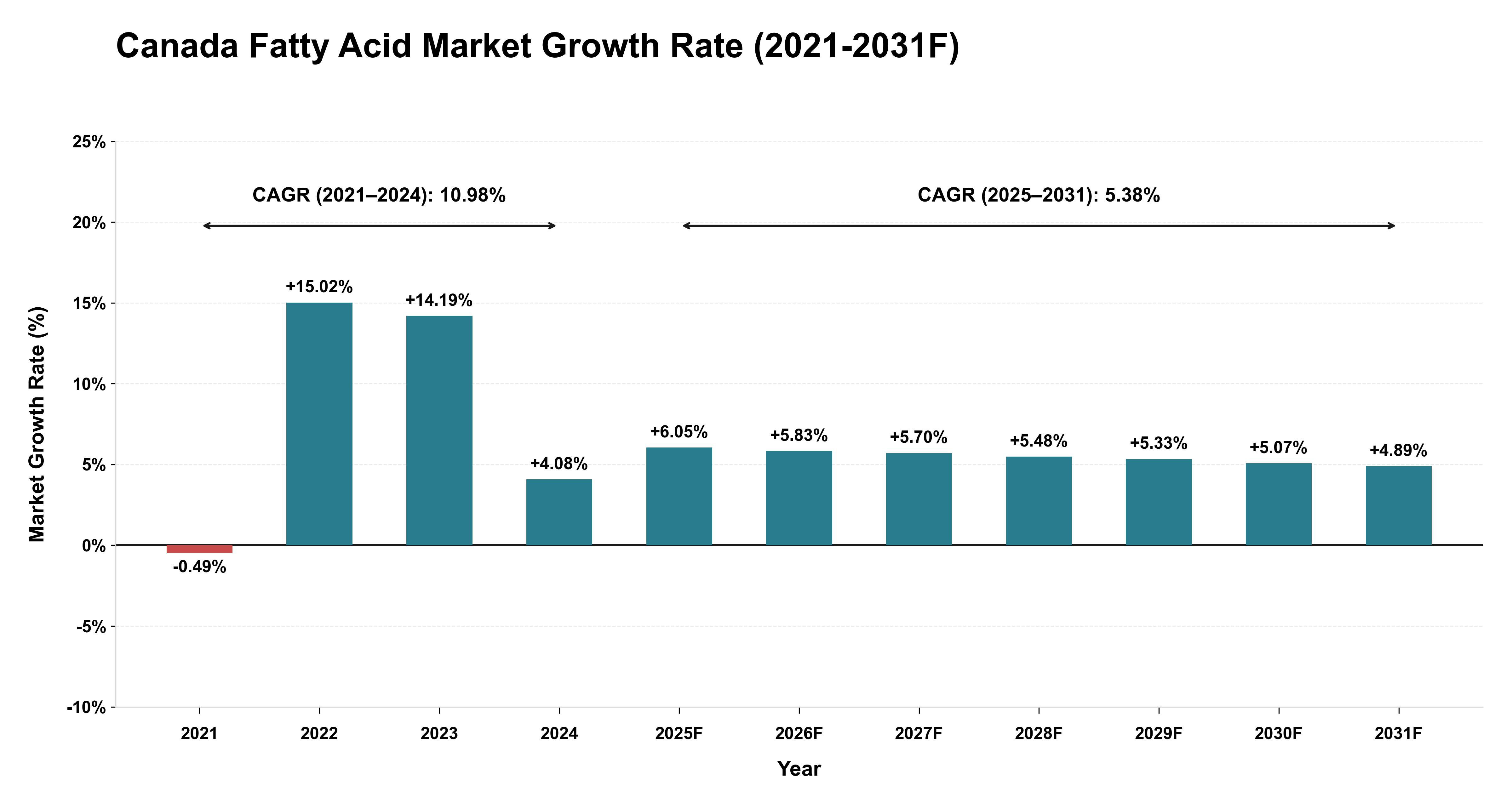
The Canada Fatty Acid Market experienced a tumultuous period from 2021 to 2024, with erratic growth rates ranging from a slight decline of -0.49% in 2021 to a substantial increase of 15.02% in 2022, followed by another peak at 14.19% in 2023 before stabilizing at 4.08% in 2024. These fluctuations can be attributed to shifting consumer preferences towards healthier fats, technological advancements in extraction methods, and regulatory changes promoting sustainable sourcing. Looking ahead to 2025-2031, the market is expected to display more moderate growth rates, averaging at 5.38% CAGR. This slowdown indicates a maturing market as initial surges taper off and stabilize due to increased competition, standardization of processes, and market saturation within key end-use industries like food and cosmetics.
Canada Fatty Acid Market Overview
The Canada fatty acid market is experiencing steady growth, driven by increasing awareness about the health benefits of fatty acids such as omega-3 and omega-6. The market is primarily dominated by fish oil supplements, flaxseed oil, and algal oils which are rich sources of essential fatty acids. Consumers are increasingly seeking out these products as they are known to support heart health, brain function, and overall well-being. The demand for fatty acids in Canada is also being boosted by the growing trend of including functional foods and dietary supplements in daily routines. Manufacturers are focusing on product innovations and marketing strategies to cater to the evolving consumer preferences for natural and sustainable sources of fatty acids. Overall, the Canada fatty acid market is poised for further growth in the coming years.
Canada Fatty Acid Market Trends
The Canada fatty acid market is witnessing a growing demand for Omega-3 fatty acids due to their various health benefits, such as reducing inflammation and supporting heart health. Consumers are increasingly seeking out products fortified with Omega-3s, leading to a rise in the incorporation of these fatty acids in a wide range of food and beverage products. Additionally, there is a growing trend towards plant-based sources of fatty acids, driven by the increasing popularity of vegetarian and vegan diets. This shift has prompted manufacturers to explore alternative sources like algae and flaxseed to meet the demand for plant-based Omega-3 supplements. Overall, the Canada fatty acid market is experiencing a shift towards healthier and more sustainable sources of fatty acids in response to changing consumer preferences and increasing awareness of the importance of essential fatty acids in a balanced diet.
Canada Fatty Acid Market Challenges
In the Canada fatty acid market, some key challenges include fluctuating raw material prices, increasing competition from alternative sources such as plant-based oils, and regulatory changes impacting the industry. The volatility of raw material prices, particularly for animal-based fatty acids, can affect production costs and profit margins for manufacturers. The growing consumer preference for plant-based fatty acids, driven by health and sustainability concerns, poses a challenge for traditional animal-based fatty acid producers to adapt and innovate. Additionally, evolving regulations related to labeling, quality standards, and environmental sustainability can create compliance hurdles for companies operating in the market. Navigating these challenges requires strategic planning, continuous market monitoring, and investment in research and development to stay competitive and meet changing consumer demands.
Canada Fatty Acid Market Investment Opportunities
The Canadian fatty acid market presents promising investment opportunities due to the increasing demand for fatty acids in various industries such as food and beverages, pharmaceuticals, and personal care. With the growing awareness of the health benefits of omega-3 and omega-6 fatty acids, there is a rising demand for products enriched with these essential nutrients. Investing in companies that specialize in producing fatty acid supplements, functional foods, or cosmetics can be lucrative. Additionally, the Canadian government`s support for the development of the bio-based industries and sustainable practices further enhances the investment potential in the fatty acid market. Overall, the market offers opportunities for investors looking to capitalize on the growing consumer interest in health and wellness products.
Canada Fatty Acid Market Government Policy
Government policies related to the Canada fatty acid market primarily focus on promoting the production and consumption of healthy fats while regulating the use of trans fats. Health Canada has implemented regulations to reduce trans fats in food products, aiming to improve public health by reducing the risk of heart disease. Additionally, the Canadian Food Inspection Agency (CFIA) sets standards for labelling and advertising of fats and oils to ensure consumer awareness and protection. The government also supports research and development initiatives to promote innovation in the production of omega-3 fatty acids and other beneficial fats. Overall, the government policies in Canada related to the fatty acid market aim to balance consumer health protection with industry innovation and growth.
Canada Fatty Acid Market Future Outlook
The future outlook for the Canada fatty acid market appears promising, driven by factors such as the growing demand for healthy and functional food products, increasing awareness about the health benefits of omega-3 fatty acids, and the expanding application of fatty acids in industries like pharmaceuticals and cosmetics. With consumers becoming more health-conscious and seeking products with added nutritional benefits, there is a rising demand for fatty acids derived from sources like fish oil, flaxseed oil, and algae. Additionally, the trend towards natural and clean label ingredients is expected to further boost the market for fatty acids in Canada. Companies in the industry are likely to focus on innovation, product differentiation, and sustainable sourcing practices to capitalize on these opportunities and meet the evolving needs of consumers.
Key Highlights of the Report:
- Canada Fatty Acid Market Outlook
- Market Size of Canada Fatty Acid Market,2025
- Forecast of Canada Fatty Acid Market, 2032
- Historical Data and Forecast of Canada Fatty Acid Revenues & Volume for the Period 2022-2032F
- Canada Fatty Acid Market Trend Evolution
- Canada Fatty Acid Market Drivers and Challenges
- Canada Fatty Acid Price Trends
- Canada Fatty Acid Porter's Five Forces
- Canada Fatty Acid Industry Life Cycle
- Historical Data and Forecast of Canada Fatty Acid Market Revenues & Volume By Product Type for the Period 2022-2032F
- Historical Data and Forecast of Canada Fatty Acid Market Revenues & Volume By Saturated Fatty Acids for the Period 2022-2032F
- Historical Data and Forecast of Canada Fatty Acid Market Revenues & Volume By Unsaturated Fatty Acids for the Period 2022-2032F
- Historical Data and Forecast of Canada Fatty Acid Market Revenues & Volume By Omega-3 Fatty Acids for the Period 2022-2032F
- Historical Data and Forecast of Canada Fatty Acid Market Revenues & Volume By Medium-Chain Fatty Acids for the Period 2022-2032F
- Historical Data and Forecast of Canada Fatty Acid Market Revenues & Volume By Technology Type for the Period 2022-2032F
- Historical Data and Forecast of Canada Fatty Acid Market Revenues & Volume By Extraction and Distillation for the Period 2022-2032F
- Historical Data and Forecast of Canada Fatty Acid Market Revenues & Volume By Hydrogenation for the Period 2022-2032F
- Historical Data and Forecast of Canada Fatty Acid Market Revenues & Volume By Solvent Extraction for the Period 2022-2032F
- Historical Data and Forecast of Canada Fatty Acid Market Revenues & Volume By Chemical Synthesis for the Period 2022-2032F
- Historical Data and Forecast of Canada Fatty Acid Market Revenues & Volume By End User for the Period 2022-2032F
- Historical Data and Forecast of Canada Fatty Acid Market Revenues & Volume By Food and Beverage Industry for the Period 2022-2032F
- Historical Data and Forecast of Canada Fatty Acid Market Revenues & Volume By Pharmaceuticals and Nutraceuticals for the Period 2022-2032F
- Historical Data and Forecast of Canada Fatty Acid Market Revenues & Volume By Health-Conscious Consumers for the Period 2022-2032F
- Historical Data and Forecast of Canada Fatty Acid Market Revenues & Volume By Animal Feed Manufacturers for the Period 2022-2032F
- Historical Data and Forecast of Canada Fatty Acid Market Revenues & Volume By Application for the Period 2022-2032F
- Historical Data and Forecast of Canada Fatty Acid Market Revenues & Volume By Fats and Oils in Cooking and Baking for the Period 2022-2032F
- Historical Data and Forecast of Canada Fatty Acid Market Revenues & Volume By Dietary Supplements and Medicinal Uses for the Period 2022-2032F
- Historical Data and Forecast of Canada Fatty Acid Market Revenues & Volume By Nutritional Supplements for the Period 2022-2032F
- Historical Data and Forecast of Canada Fatty Acid Market Revenues & Volume By Animal Nutrition and Feed Additives for the Period 2022-2032F
- Canada Fatty Acid Import Export Trade Statistics
- Market Opportunity Assessment By Product Type
- Market Opportunity Assessment By Technology Type
- Market Opportunity Assessment By End User
- Market Opportunity Assessment By Application
- Canada Fatty Acid Top Companies Market Share
- Canada Fatty Acid Competitive Benchmarking By Technical and Operational Parameters
- Canada Fatty Acid Company Profiles
- Canada Fatty Acid Key Strategic Recommendations






































