Canada Flower and Ornamental Plants Market Growth Rate Analysis (2025 - 2031)
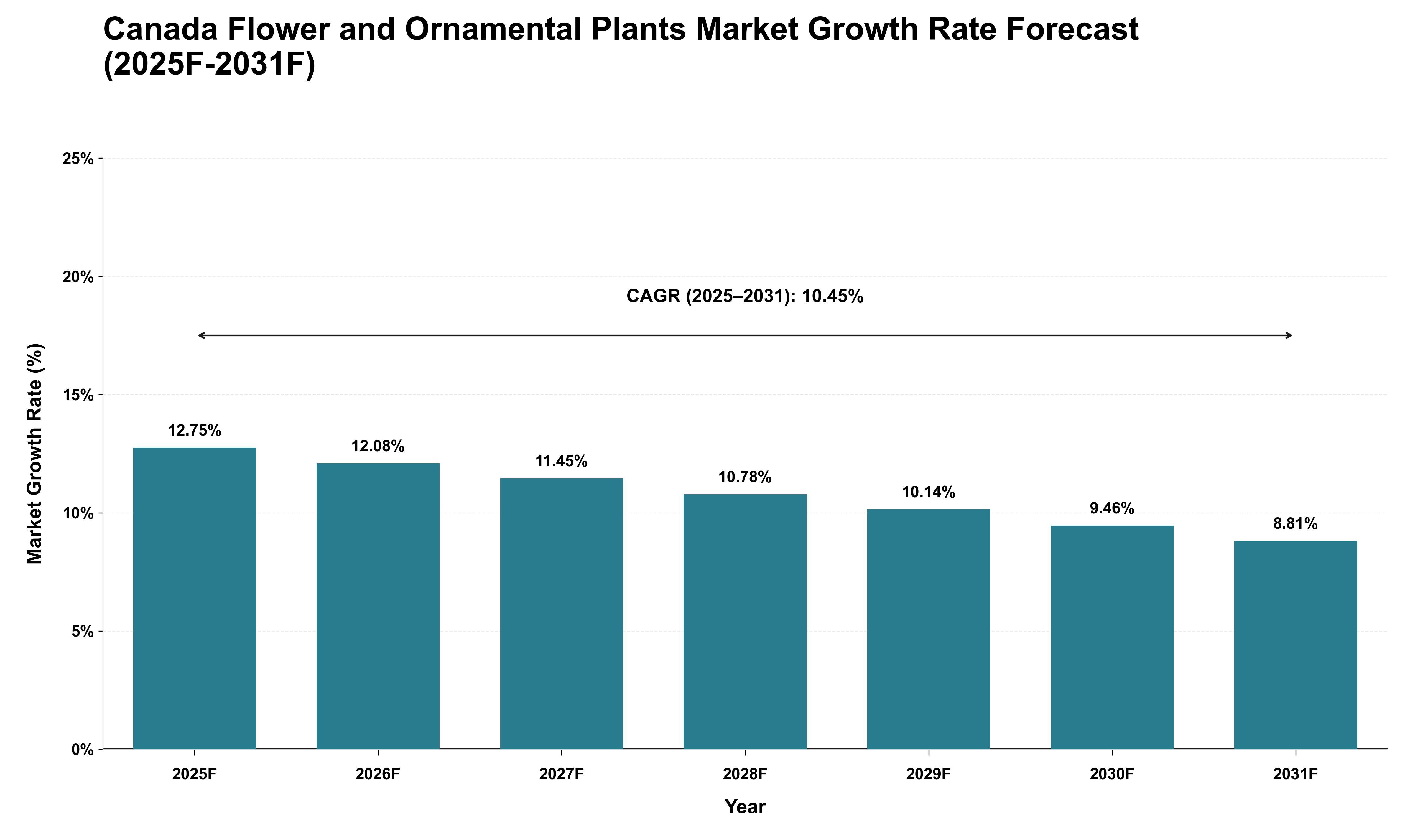
The Canada flower and ornamental plants market will experience a robust compound annual growth rate of 10.45% from 2025 to 2031, driven by evolving end-use demand shifts in both residential and commercial sectors. The projected annual growth rates indicate a gradual decline, with initial years showing strong double-digit increases, reflecting heightened consumer interest in home gardening and landscaping as lifestyle choices evolve post-pandemic. This trend will likely be supported by increasing disposable incomes and a growing emphasis on sustainable living, prompting consumers to invest in ornamental plants. Additionally, import dependencies may influence market dynamics as global supply chains adapt to changing consumer preferences for exotic varieties. As the market matures through this period, cyclical trends such as seasonal demand fluctuations will also play a critical role in shaping overall growth trajectories, ensuring that the sector remains responsive to both economic conditions and consumer behavior shifts.
Key Highlights of the Report:
- Canada Flower and Ornamental Plants Market Outlook
- Market Size of Canada Flower and Ornamental Plants Market, 2025
- Forecast of Canada Flower and Ornamental Plants Market, 2032
- Historical Data and Forecast of Canada Flower and Ornamental Plants Revenues & Volume for the Period 2022-2032F
- Canada Flower and Ornamental Plants Market Trend Evolution
- Canada Flower and Ornamental Plants Market Drivers and Challenges
- Canada Flower and Ornamental Plants Price Trends
- Canada Flower and Ornamental Plants Porter`s Five Forces
- Canada Flower and Ornamental Plants Industry Life Cycle
- Historical Data and Forecast of Canada Flower and Ornamental Plants Market Revenues & Volume By Product Type for the Period 2022-2032F
- Historical Data and Forecast of Canada Flower and Ornamental Plants Market Revenues & Volume By Potted Plants for the Period 2022-2032F
- Historical Data and Forecast of Canada Flower and Ornamental Plants Market Revenues & Volume By Cut Flowers for the Period 2022-2032F
- Historical Data and Forecast of Canada Flower and Ornamental Plants Market Revenues & Volume By Application for the Period 2022-2032F
- Historical Data and Forecast of Canada Flower and Ornamental Plants Market Revenues & Volume By Home for the Period 2022-2032F
- Historical Data and Forecast of Canada Flower and Ornamental Plants Market Revenues & Volume By Commercial for the Period 2022-2032F
- Canada Flower and Ornamental Plants Import Export Trade Statistics
- Market Opportunity Assessment By Product Type
- Market Opportunity Assessment By Application
- Canada Flower and Ornamental Plants Top Companies Market Share
- Canada Flower and Ornamental Plants Competitive Benchmarking By Technical and Operational Parameters
- Canada Flower and Ornamental Plants Company Profiles
- Canada Flower and Ornamental Plants Key Strategic Recommendations






































