Canada Insect Repellent Market: Import Trend Analysis
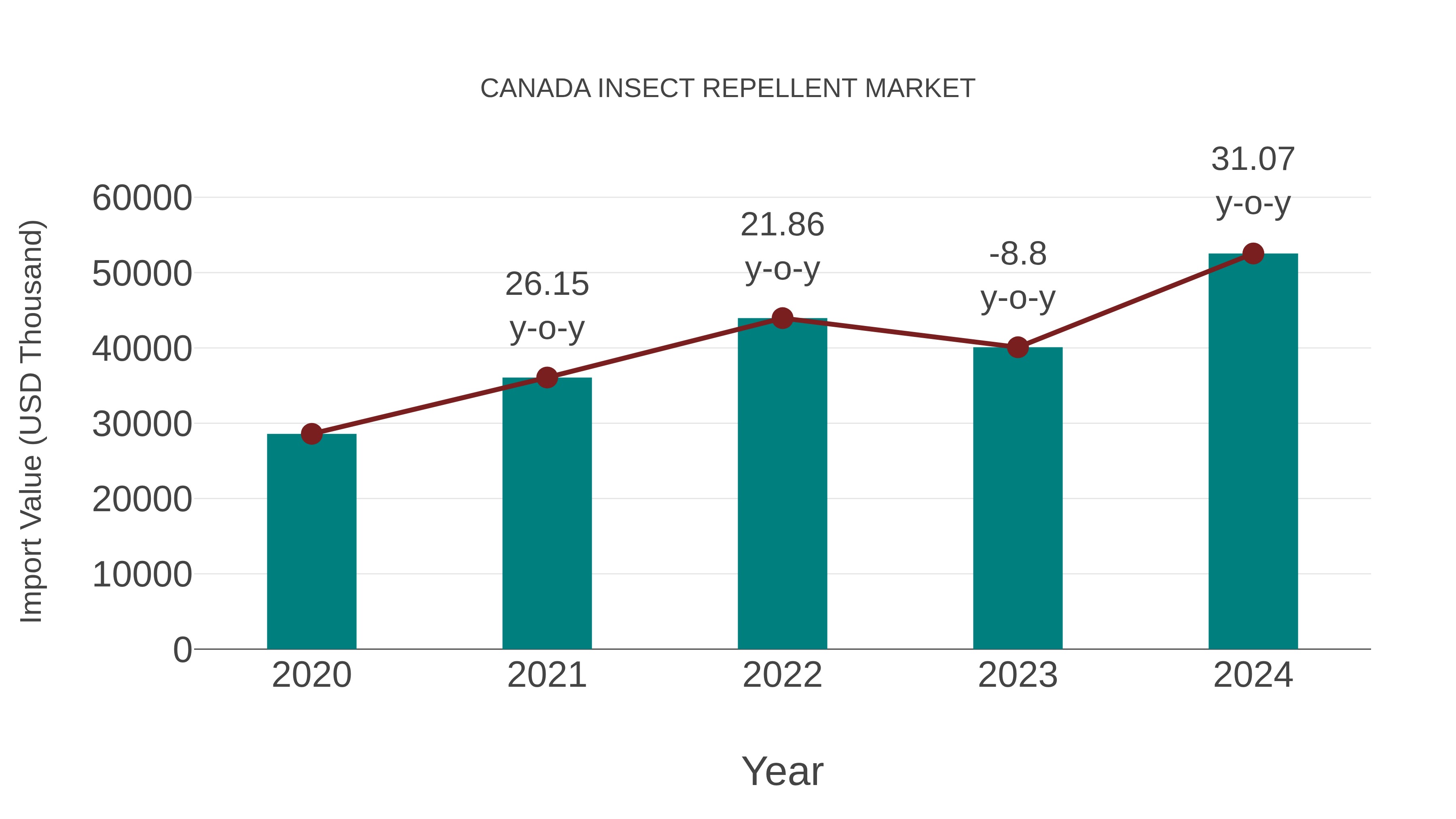
In the Canada insect repellent market, the import trend showed a notable growth rate of 31.07% from 2023 to 2024, with a compound annual growth rate (CAGR) of 16.43% from 2020 to 2024. This significant increase in imports can be attributed to a surge in consumer demand for insect repellents, indicating a strong market demand for such products during this period.
Canada Insect Repellent Market Overview
The Canada Insect Repellent Market is growing steadily due to factors such as increasing awareness about mosquito-borne diseases like West Nile virus and Lyme disease, along with a rise in outdoor recreational activities. Consumers are seeking effective and long-lasting insect repellent products that are also safe for their families and the environment. Key trends in the market include the demand for natural and DEET-free repellents, as well as innovative product formats such as wearable repellent devices and botanical-based formulations. Major players in the Canadian market include brands like OFF!, Cutter, and Repel, as well as smaller local and eco-friendly brands. With a focus on product innovation, sustainability, and consumer education, the Canada Insect Repellent Market is expected to continue its growth trajectory in the coming years.
Canada Insect Repellent Market Trends and Opportunities
The Canada insect repellent market is experiencing a surge in demand due to the increasing prevalence of insect-borne diseases and a growing awareness of the importance of protection against insects. Consumers are seeking natural and DEET-free repellent options, driving the market towards botanical and essential oil-based products. There is also a rise in demand for convenient and travel-friendly insect repellent formats such as wipes, sprays, and wearable devices. With the trend towards eco-friendly and sustainable products, there is an opportunity for companies to develop environmentally conscious insect repellents. Additionally, advancements in technology have led to the introduction of innovative formulations with longer-lasting efficacy, providing further growth potential in the market. Overall, the Canada insect repellent market offers opportunities for companies to cater to evolving consumer preferences and health concerns.
Canada Insect Repellent Market Challenges
The Canada Insect Repellent Market faces several challenges, including increasing concerns about the environmental impact of traditional chemical-based repellents, growing demand for natural and organic alternatives, and the need for products that are effective against a wider range of insects. Consumer preferences are shifting towards products with natural ingredients and eco-friendly formulations, creating a competitive landscape for manufacturers to innovate and meet these demands. Additionally, the seasonal nature of insect repellent sales in Canada poses a challenge for companies to maintain consistent revenue throughout the year. Regulatory hurdles related to the approval of new active ingredients and formulations also present obstacles for market players looking to introduce novel products to the market. Overall, companies in the Canada Insect Repellent Market need to navigate these challenges to stay competitive and meet evolving consumer preferences.
Canada Insect Repellent Market Drivers
The Canada Insect Repellent Market is primarily driven by increasing awareness about insect-borne diseases like West Nile virus and Lyme disease, leading to a growing demand for protection against mosquitoes and ticks. Additionally, rising outdoor recreational activities and camping trips in Canada have fueled the need for effective insect repellents. Consumers are increasingly seeking natural and DEET-free insect repellent products, driving innovation in the market. The influence of social media and online platforms has also played a significant role in educating consumers about the importance of insect protection, further boosting market growth. Overall, the combination of health concerns, outdoor lifestyles, and preference for natural products are key drivers propelling the Canada Insect Repellent Market.
Canada Insect Repellent Market Government Policies
In Canada, insect repellents are regulated by Health Canada under the Pest Control Products Act. All insect repellents must undergo rigorous testing to ensure they are safe and effective before being approved for sale in the market. Health Canada sets maximum concentrations of active ingredients such as DEET and picaridin in insect repellent products to minimize potential health risks. Additionally, labeling requirements mandate that all insect repellents include clear instructions for use and safety precautions. Companies marketing insect repellents in Canada must comply with these regulations to ensure consumer safety and product efficacy in the market.
Canada Insect Repellent Market Future Outlook
The Canada insect repellent market is poised for steady growth in the coming years, driven by factors such as increasing awareness about insect-borne diseases, rising outdoor recreational activities, and a growing demand for natural and eco-friendly repellent products. Consumers are becoming more conscious about the chemicals they apply on their skin, leading to a shift towards plant-based and organic repellents. The market is also witnessing innovation in product formulations and packaging to cater to evolving consumer preferences. With the prevalence of diseases such as Lyme disease and West Nile virus, the demand for effective insect repellents is expected to rise, presenting opportunities for manufacturers to expand their product offerings and reach a wider consumer base. Additionally, the ongoing trend of adventure tourism and camping activities is likely to further boost the market for insect repellents in Canada.
Key Highlights of the Report:
- Canada Insect Repellent Market Outlook
- Market Size of Canada Insect Repellent Market, 2025
- Forecast of Canada Insect Repellent Market, 2032
- Historical Data and Forecast of Canada Insect Repellent Revenues & Volume for the Period 2022 - 2032F
- Canada Insect Repellent Market Trend Evolution
- Canada Insect Repellent Market Drivers and Challenges
- Canada Insect Repellent Price Trends
- Canada Insect Repellent Porter's Five Forces
- Canada Insect Repellent Industry Life Cycle
- Historical Data and Forecast of Canada Insect Repellent Market Revenues & Volume By Type for the Period 2022 - 2032F
- Historical Data and Forecast of Canada Insect Repellent Market Revenues & Volume By Mosquito Repellent for the Period 2022 - 2032F
- Historical Data and Forecast of Canada Insect Repellent Market Revenues & Volume By Bugs Repellent for the Period 2022 - 2032F
- Historical Data and Forecast of Canada Insect Repellent Market Revenues & Volume By Fly Repellent for the Period 2022 - 2032F
- Historical Data and Forecast of Canada Insect Repellent Market Revenues & Volume By Others for the Period 2022 - 2032F
- Historical Data and Forecast of Canada Insect Repellent Market Revenues & Volume By Product Type for the Period 2022 - 2032F
- Historical Data and Forecast of Canada Insect Repellent Market Revenues & Volume By Vaporizers for the Period 2022 - 2032F
- Historical Data and Forecast of Canada Insect Repellent Market Revenues & Volume By Spray for the Period 2022 - 2032F
- Historical Data and Forecast of Canada Insect Repellent Market Revenues & Volume By Cream for the Period 2022 - 2032F
- Historical Data and Forecast of Canada Insect Repellent Market Revenues & Volume By Others for the Period 2022 - 2032F
- Canada Insect Repellent Import Export Trade Statistics
- Market Opportunity Assessment By Type
- Market Opportunity Assessment By Product Type
- Canada Insect Repellent Top Companies Market Share
- Canada Insect Repellent Competitive Benchmarking By Technical and Operational Parameters
- Canada Insect Repellent Company Profiles
- Canada Insect Repellent Key Strategic Recommendations






































