Canada Manganese Market: Import Trend Analysis
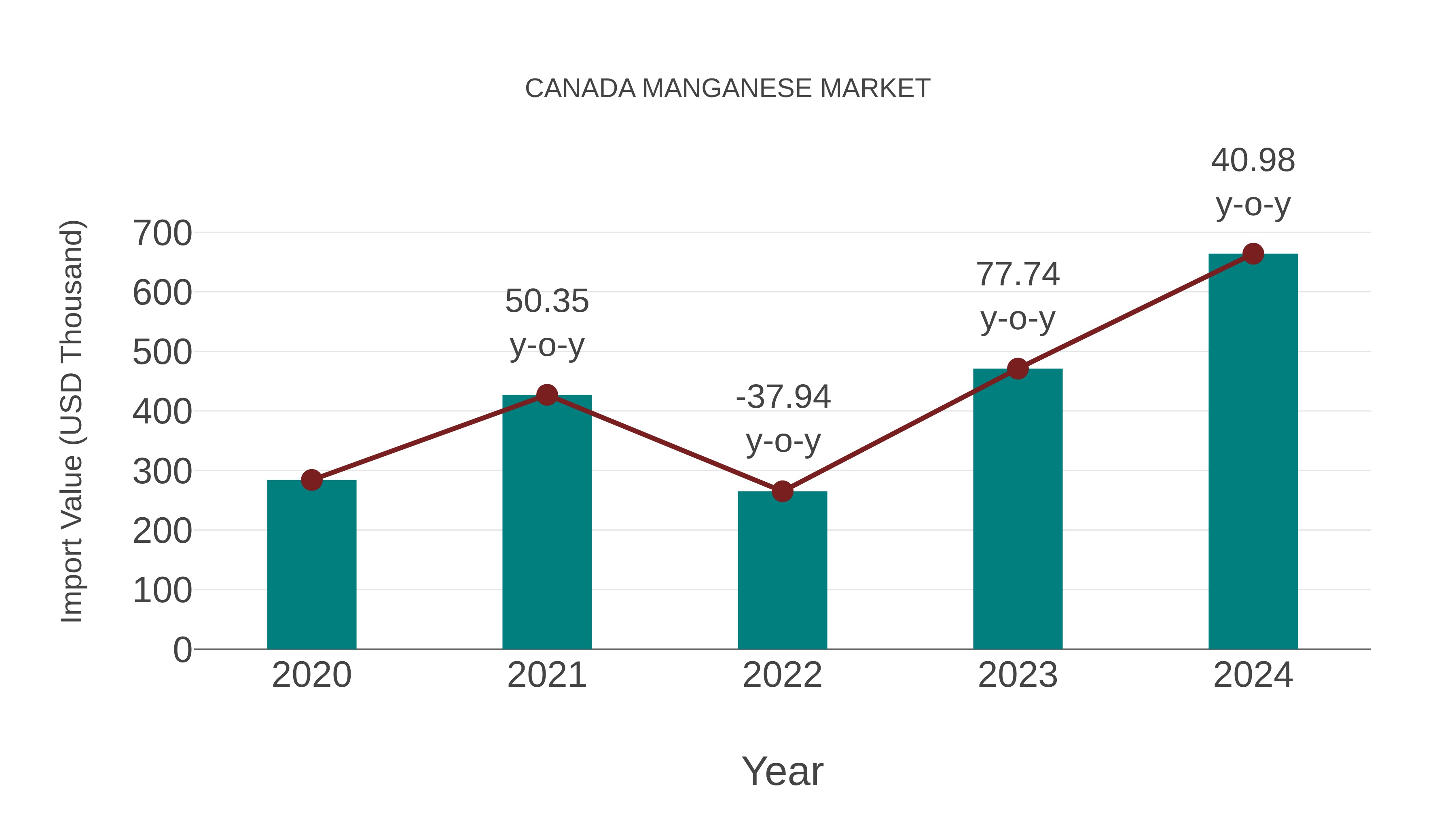
In the Canada manganese market, the import trend showed significant growth from 2023 to 2024, with a notable increase of 40.98%. The compound annual growth rate (CAGR) for imports between 2020 and 2024 was 23.66%. This surge in imports can be attributed to a notable demand shift towards manganese-based products in various industries, indicating a positive import momentum driven by market demand.
Canada Manganese Market Overview
The manganese market in Canada is expanding due to the metal`s essential role in steel production and other industrial applications. Manganese is used as an alloying element to improve the strength and durability of steel and is also important in battery technologies. The market is driven by the growing demand for steel and the increasing use of manganese in emerging technologies.
Drivers of the market
The manganese market in Canada is largely influenced by its application in the production of steel and aluminum alloys. As the construction and automotive sectors grow, so does the demand for manganese in steel production, where it improves hardness and strength. Additionally, the increasing adoption of electric vehicles (EVs) is driving demand for manganese as a key component in battery production.
Challenges of the market
The manganese market in Canada faces challenges related to the fluctuating prices of manganese ore and the high cost of production. Ensuring that manganese products meet industry standards and regulatory requirements while addressing environmental and safety concerns is crucial. Additionally, competition from alternative materials and adapting to technological advancements and changes in market demand for applications such as batteries and steel production pose significant challenges.
Government Policy of the market
The Canadian government supports the manganese market through regulations that ensure the safe extraction, production, and use of manganese. Policies focus on environmental sustainability and promote research into new applications and technologies in the manganese industry.
Key Highlights of the Report:
- Canada Manganese Market Outlook
- Market Size of Canada Manganese Market, 2025
- Forecast of Canada Manganese Market, 2032
- Historical Data and Forecast of Canada Manganese Revenues & Volume for the Period 2022-2032F
- Canada Manganese Market Trend Evolution
- Canada Manganese Market Drivers and Challenges
- Canada Manganese Price Trends
- Canada Manganese Porter`s Five Forces
- Canada Manganese Industry Life Cycle
- Historical Data and Forecast of Canada Manganese Market Revenues & Volume By Application for the Period 2022-2032F
- Historical Data and Forecast of Canada Manganese Market Revenues & Volume By Alloys for the Period 2022-2032F
- Historical Data and Forecast of Canada Manganese Market Revenues & Volume By Others for the Period 2022-2032F
- Historical Data and Forecast of Canada Manganese Market Revenues & Volume By Metallurgical Application for the Period 2022-2032F
- Historical Data and Forecast of Canada Manganese Market Revenues & Volume By High-Carbon Ferromanganese for the Period 2022-2032F
- Historical Data and Forecast of Canada Manganese Market Revenues & Volume By Refined Ferromanganese for the Period 2022-2032F
- Historical Data and Forecast of Canada Manganese Market Revenues & Volume By Silico manganese for the Period 2022-2032F
- Historical Data and Forecast of Canada Manganese Market Revenues & Volume By Others for the Period 2022-2032F
- Historical Data and Forecast of Canada Manganese Market Revenues & Volume By End-User Industry for the Period 2022-2032F
- Historical Data and Forecast of Canada Manganese Market Revenues & Volume By Steel for the Period 2022-2032F
- Historical Data and Forecast of Canada Manganese Market Revenues & Volume By Batteries for the Period 2022-2032F
- Historical Data and Forecast of Canada Manganese Market Revenues & Volume By Others for the Period 2022-2032F
- Canada Manganese Import Export Trade Statistics
- Market Opportunity Assessment By Application
- Market Opportunity Assessment By Metallurgical Application
- Market Opportunity Assessment By End-User Industry
- Canada Manganese Top Companies Market Share
- Canada Manganese Competitive Benchmarking By Technical and Operational Parameters
- Canada Manganese Company Profiles
- Canada Manganese Key Strategic Recommendations






































