Canada Rubber Processing Equipment Market Growth Rate Analysis (2025 - 2031)
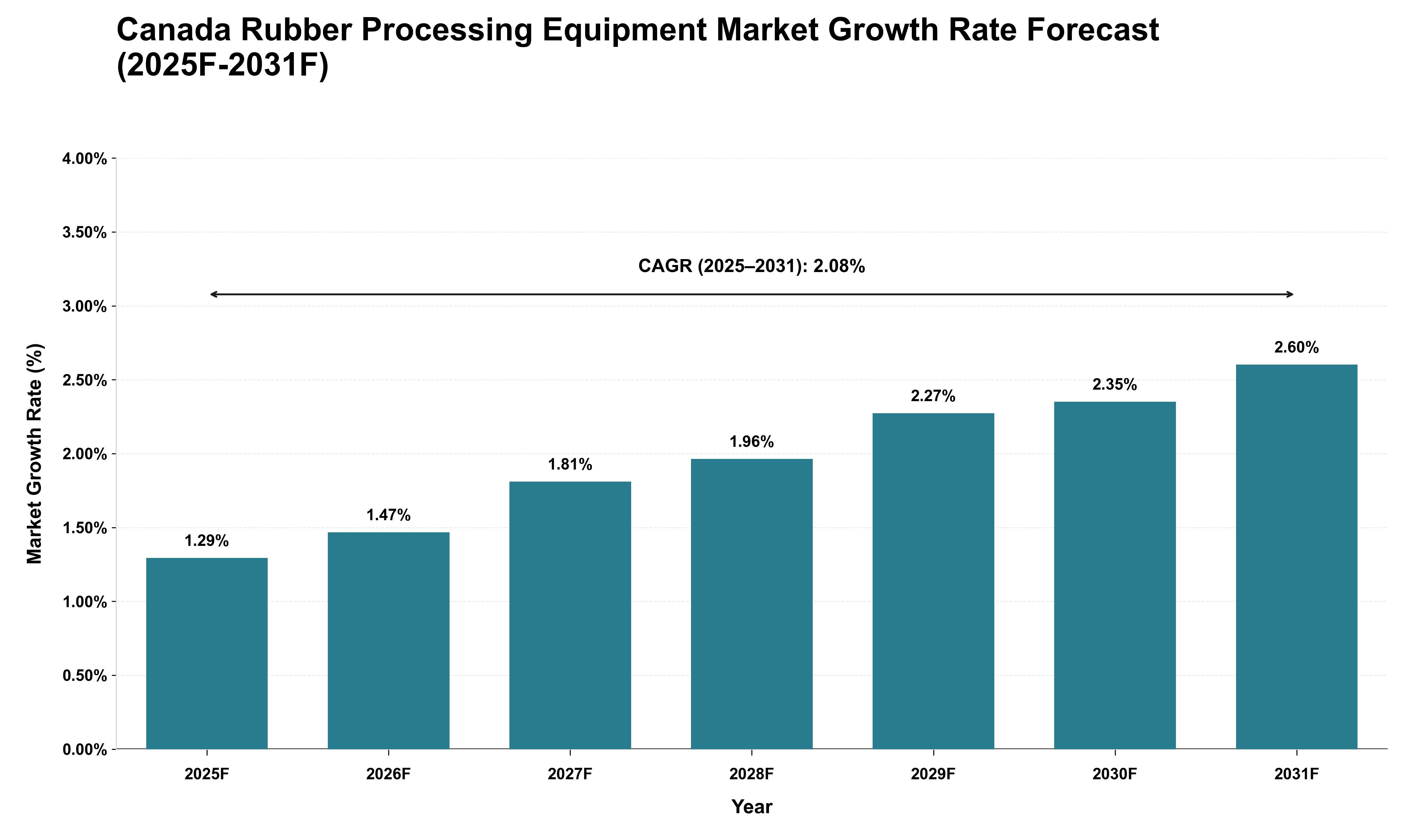
The Canada rubber processing equipment market is projected to experience a compound annual growth rate of 2.08% from 2025 to 2031, reflecting a gradual acceleration in growth as indicated by the annual forecast figures. The initial years will see modest increases, with growth rates rising from 1.29% in 2025 to 2.60% by 2031, suggesting an upward trajectory influenced by macroeconomic cycles and potential shifts in industrial demand. Factors such as increased investment in manufacturing capabilities and advancements in technology will likely drive this trend, while import dependencies on specialized machinery may create fluctuations based on global supply chain dynamics. Additionally, cyclical trends related to economic recovery phases could enhance capital expenditures within the rubber processing sector, further supporting the anticipated growth as firms adapt to evolving market conditions and seek efficiency improvements through upgraded equipment.
Key Highlights of the Report:
- Canada Rubber Processing Equipment Market Outlook
- Market Size of Canada Rubber Processing Equipment Market, 2024
- Forecast of Canada Rubber Processing Equipment Market, 2031
- Historical Data and Forecast of Canada Rubber Processing Equipment Revenues & Volume for the Period 2021-2031
- Canada Rubber Processing Equipment Market Trend Evolution
- Canada Rubber Processing Equipment Market Drivers and Challenges
- Canada Rubber Processing Equipment Price Trends
- Canada Rubber Processing Equipment Porter`s Five Forces
- Canada Rubber Processing Equipment Industry Life Cycle
- Historical Data and Forecast of Canada Rubber Processing Equipment Market Revenues & Volume By Type for the Period 2021-2031
- Historical Data and Forecast of Canada Rubber Processing Equipment Market Revenues & Volume By Small-scale for the Period 2021-2031
- Historical Data and Forecast of Canada Rubber Processing Equipment Market Revenues & Volume By Large-scale for the Period 2021-2031
- Historical Data and Forecast of Canada Rubber Processing Equipment Market Revenues & Volume By Application for the Period 2021-2031
- Historical Data and Forecast of Canada Rubber Processing Equipment Market Revenues & Volume By Automobile for the Period 2021-2031
- Historical Data and Forecast of Canada Rubber Processing Equipment Market Revenues & Volume By Household Electrical Appliances for the Period 2021-2031
- Historical Data and Forecast of Canada Rubber Processing Equipment Market Revenues & Volume By Other for the Period 2021-2031
- Canada Rubber Processing Equipment Import Export Trade Statistics
- Market Opportunity Assessment By Type
- Market Opportunity Assessment By Application
- Canada Rubber Processing Equipment Top Companies Market Share
- Canada Rubber Processing Equipment Competitive Benchmarking By Technical and Operational Parameters
- Canada Rubber Processing Equipment Company Profiles
- Canada Rubber Processing Equipment Key Strategic Recommendations






































