Chile Algorithmic Trading Market Size & Growth Rate (2026-2032)
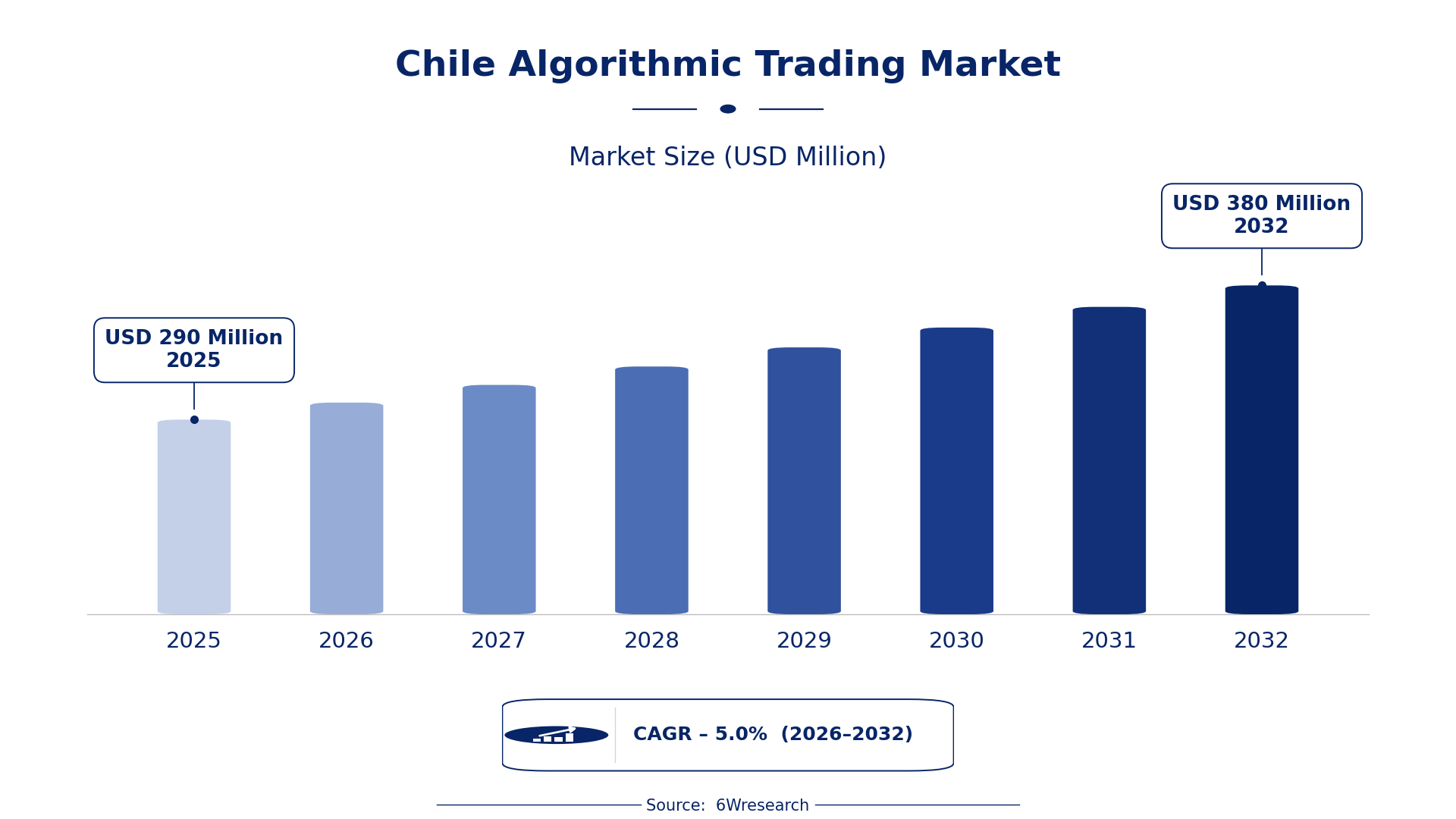
The Chile Algorithmic Trading Market was estimated at USD 290 Million in 2025 and is projected to reach USD 380 Million by 2032, growing at a CAGR of 5.0% from 2026 to 2032.
Chile Algorithmic Trading Market Synopsis
The Chilean Algorithmic Trading Market is undergoing a transformative phase, primarily driven by technological advancements and a surge in automated trading adoption. Financial institutions are increasingly implementing sophisticated algorithms, enhancing their trading efficiency and performance.
This market is not just about speed; it’s about precision and data-driven strategies. Investors are attracted to algorithmic trading due to its potential for higher returns and better risk management, making Chile a focal point for innovative trading solutions in Latin America.
Chile Algorithmic Trading Market Year-wise Growth Rate and Key Drivers
This graph illustrates the annual growth rates of the Chile Algorithmic Trading Market from 2021 to 2032, highlighting a steady upward trajectory and projected expansion over the forecast period.
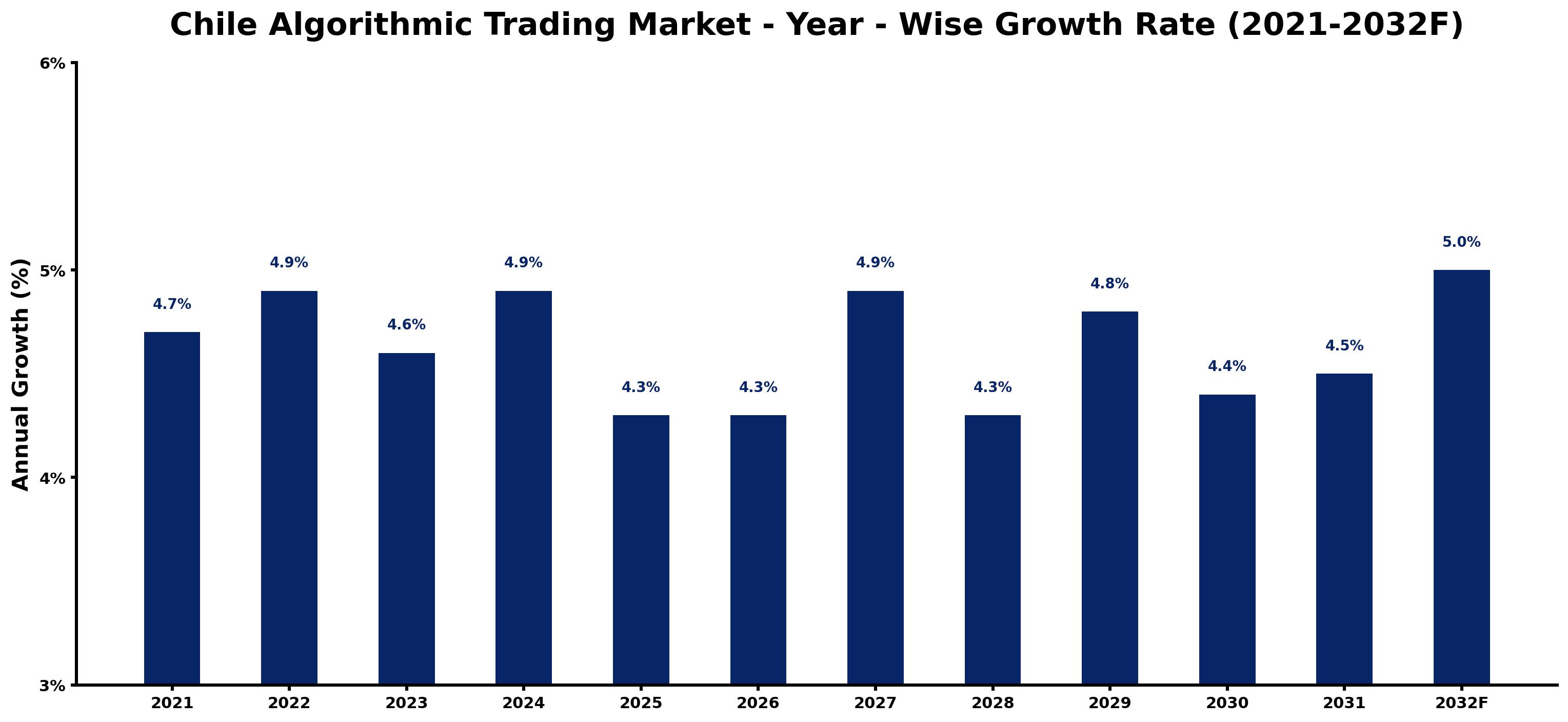
The table below presents the year‑wise growth rates along with the key drivers influencing the market
| Year | Growth Rate | Major Drivers |
| 2021 | 4.7% | Increased investment from Chilean pension funds in algorithms. |
| 2022 | 4.9% | Growing local fintech ecosystem fostering algorithm adoption. |
| 2023 | 4.6% | Regulatory support from CMF for algorithmic trading practices. |
| 2024 | 4.9% | Emergence of new trading platforms enhancing algorithm access. |
| 2025 | 4.3% | Rise in tech-savvy investors utilizing algorithmic strategies. |
| 2026 | 4.3% | Advancements in local market analytics tools driving effectiveness. |
| 2027 | 4.9% | Partnerships between banks and tech firms innovating trading. |
| 2028 | 4.3% | Increased educational programs promoting algorithmic trading skills. |
| 2029 | 4.8% | Regulatory clarity encouraging more algorithmic trading participants. |
| 2030 | 4.4% | Growing popularity of cryptocurrency trading algorithms in Chile. |
| 2031 | 4.5% | Local universities offering specialized courses in trading technologies. |
| 2032 | 5.0% | Chilean economic stability boosting confidence in algorithmic trading. |
Note: Market size estimations and growth projections presented in this report are based on 6Wresearch's proprietary forecasting methodology, utilizing the latest available industry data, government publications, and primary research inputs.
Chile Algorithmic Trading Market Key Takeaways
Below are some of the specific key takeaways from the market, including:
- The market is characterized by the increasing use of artificial intelligence and machine learning in trading algorithms.
- Financial institutions are actively seeking efficient and reliable trading strategies to enhance competitiveness.
- Regulatory reforms are promoting transparency and efficiency, paving the way for market expansion.
- The demand for algorithmic trading solutions is growing among both institutional and retail investors.
- Chile is emerging as a vital hub for algorithmic trading in the Latin American region.
Evaluation of Restraints in Chile Algorithmic Trading Market
Despite its growth, the Chile Algorithmic Trading Market faces considerable challenges. One major restraint is the regulatory uncertainty surrounding algorithmic trading practices. The absence of a comprehensive framework leaves firms grappling with compliance issues, which can deter new entrants. Additionally, concerns regarding market liquidity persist, as algorithmic trading can lead to rapid price fluctuations that might destabilize trading conditions. Cybersecurity risks also pose a threat, as the reliance on technology and data makes trading systems vulnerable to attacks. As the market evolves, these issues will need to be addressed to foster a more secure and stable environment.
Chile Algorithmic Trading Market Trends
The trend towards increasingly sophisticated algorithms is reshaping the Chile Algorithmic Trading Market. Investors are gravitating towards solutions that utilize machine learning to adapt and optimize trading strategies in real time. on top of that, there is a noticeable shift towards platforms that enhance data integration and analytics capabilities, allowing traders to make more informed decisions.
As competition intensifies, firms are also focusing on developing algorithms that prioritize ethical trading practices, addressing concerns about market manipulation. These trends reflect a broader commitment within the market to not only drive profitability but also uphold market integrity.
Chile Algorithmic Trading Market Opportunities
The Chile Algorithmic Trading Market offers a wealth of opportunities for growth and investment. As local investors become more educated about algorithmic trading, demand for innovative solutions is set to increase. The emergence of new technologies, particularly in AI and machine learning, presents avenues for firms to enhance their trading capabilities significantly.
Additionally, the ongoing regulatory reforms aimed at creating a more transparent trading environment are expected to attract further investment. Companies that can develop compliant, effective trading algorithms will find themselves well-positioned to capitalize on this evolving market.
Government Initiatives in the Chile Algorithmic Trading Market
The Chilean government is actively shaping the Algorithmic Trading Market through a series of initiatives designed to enhance regulation and support technological advancement. The Financial Market Commission (CMF) plays a critical role in overseeing market activities, ensuring transparency, and fostering investor confidence. Recent regulatory frameworks aim to mitigate risks associated with algorithmic trading, which is crucial for market stability.
- A regulatory framework introduced in 2025 mandates that algorithmic trading firms register with the CMF, ensuring compliance with trading standards.
- Ongoing initiatives focus on enhancing educational resources for market participants, promoting a deeper understanding of algorithmic trading practices.
- A national digital infrastructure upgrade programme is currently underway to improve the technical capabilities of trading platforms.
- Planned public-private collaborations are expected to be launched in 2026, aimed at developing advanced trading technologies and methodologies.
Future Insights of the Chile Algorithmic Trading Market
Looking ahead to 2026-2032, the Chile Algorithmic Trading Market is poised for significant growth. The ongoing advancements in technology will continue to enhance trading strategies, making them more sophisticated and accessible to a broader range of investors. Regulatory frameworks will likely evolve to support these changes, ensuring market integrity while accommodating innovation.
As more financial institutions recognize the benefits of algorithmic trading, competition will drive further improvements in execution speed and accuracy. This dynamic environment positions Chile as a key player in the Latin American trading sector, attracting both domestic and international investment.
Chile Algorithmic Trading Market Latest Developments
In the past year, the Chile Algorithmic Trading Market has seen a flurry of activity reflecting its rapid development. Financial institutions are increasingly implementing advanced trading algorithms, signaling a strong shift towards automation. The focus on regulatory compliance has also intensified, with firms striving to align their operations with evolving guidelines.
- A leading financial institution launched a new AI-driven trading platform in early 2025, enhancing its algorithmic trading capabilities.
- A collaborative initiative with technology providers aimed at improving cybersecurity measures for trading systems is currently ongoing.
- By mid-2026, several firms are expected to adopt new regulatory guidelines that enhance transparency in algorithmic trading.
- Upcoming partnerships between local universities and trading firms are planned to develop training programs for algorithmic trading strategies.
Chile Algorithmic Trading Market - Key Attractiveness of the Report
- 10 Years of Market Numbers
- Historical Data Starting from 2022 to 2025
- Base Year: 2025
- Forecast Data until 2032
- Key Performance Indicators Impacting the Market
- Major Upcoming Developments and Projects
Key Highlights of the Report:
- Chile Algorithmic Trading Market Outlook
- Market Size of Chile Algorithmic Trading Market, 2025
- Forecast of Chile Algorithmic Trading Market, 2032
- Historical Data and Forecast of Chile Algorithmic Trading Revenues & Volume for the Period 2022-2032F
- Chile Algorithmic Trading Market Trend Evolution
- Chile Algorithmic Trading Market Drivers and Challenges
- Chile Algorithmic Trading Price Trends
- Chile Algorithmic Trading Porter's Five Forces
- Chile Algorithmic Trading Industry Life Cycle
- Historical Data and Forecast of Chile Algorithmic Trading Market Revenues & Volume By Trading Type for the Period 2022-2032F
- Historical Data and Forecast of Chile Algorithmic Trading Market Revenues & Volume By Foreign Exchange (FOREX) for the Period 2022-2032F
- Historical Data and Forecast of Chile Algorithmic Trading Market Revenues & Volume By Stock Markets for the Period 2022-2032F
- Historical Data and Forecast of Chile Algorithmic Trading Market Revenues & Volume By Exchange-Traded Fund (ETF) for the Period 2022-2032F
- Historical Data and Forecast of Chile Algorithmic Trading Market Revenues & Volume By Bonds for the Period 2022-2032F
- Historical Data and Forecast of Chile Algorithmic Trading Market Revenues & Volume By Cryptocurrencies for the Period 2022-2032F
- Historical Data and Forecast of Chile Algorithmic Trading Market Revenues & Volume By Others for the Period 2022-2032F
- Historical Data and Forecast of Chile Algorithmic Trading Market Revenues & Volume By Deployment Mode for the Period 2022-2032F
- Historical Data and Forecast of Chile Algorithmic Trading Market Revenues & Volume By Cloud for the Period 2022-2032F
- Historical Data and Forecast of Chile Algorithmic Trading Market Revenues & Volume By On-premises for the Period 2022-2032F
- Historical Data and Forecast of Chile Algorithmic Trading Market Revenues & Volume By Component for the Period 2022-2032F
- Historical Data and Forecast of Chile Algorithmic Trading Market Revenues & Volume By Solutions for the Period 2022-2032F
- Historical Data and Forecast of Chile Algorithmic Trading Market Revenues & Volume By Services for the Period 2022-2032F
- Historical Data and Forecast of Chile Algorithmic Trading Market Revenues & Volume By Enterprise Size for the Period 2022-2032F
- Historical Data and Forecast of Chile Algorithmic Trading Market Revenues & Volume By Small and Medium-sized Enterprises (SMEs) for the Period 2022-2032F
- Historical Data and Forecast of Chile Algorithmic Trading Market Revenues & Volume By Large Enterprises for the Period 2022-2032F
- Chile Algorithmic Trading Import Export Trade Statistics
- Market Opportunity Assessment By Trading Type
- Market Opportunity Assessment By Deployment Mode
- Market Opportunity Assessment By Component
- Market Opportunity Assessment By Enterprise Size
- Chile Algorithmic Trading Top Companies Market Share
- Chile Algorithmic Trading Competitive Benchmarking By Technical and Operational Parameters
- Chile Algorithmic Trading Company Profiles
- Chile Algorithmic Trading Key Strategic Recommendations






































