Chile Antioxidants Market Size Growth Rate
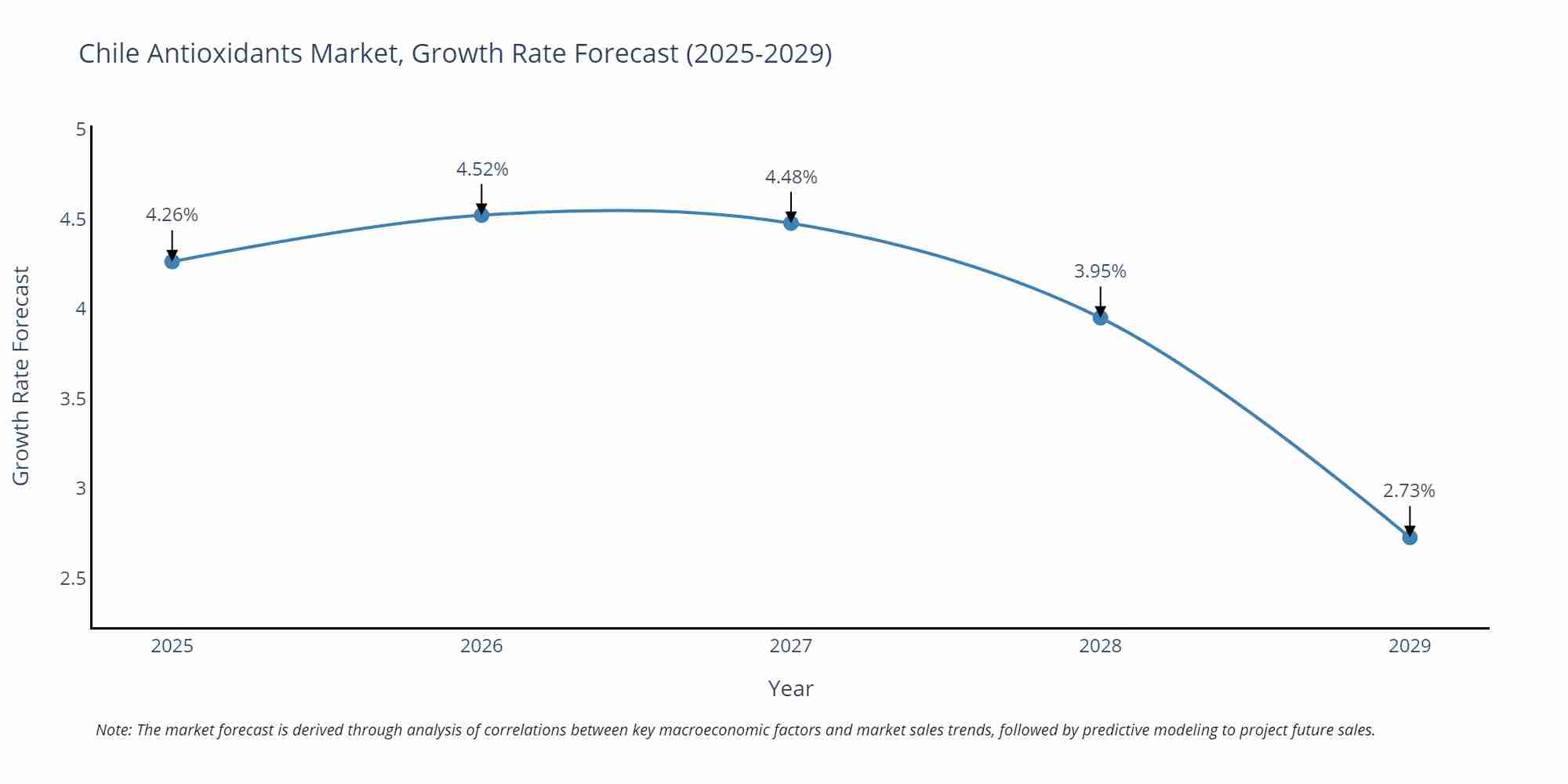
The Chile Antioxidants Market is projected to witness mixed growth rate patterns during 2025 to 2029. Starting at 4.26% in 2025, the market peaks at 4.52% in 2026, and settles at 2.73% by 2029.
Chile Antioxidants Market Synopsis
The Chile antioxidants market is experiencing steady growth driven by increasing consumer awareness regarding the health benefits of antioxidants in preventing various diseases. The market is primarily driven by the food and beverage industry, with demand for natural antioxidants in products such as beverages, snacks, and supplements. Chile`s rich agricultural sector provides a steady supply of antioxidant-rich fruits like berries, grapes, and apples, contributing to the growth of the market. The beauty and personal care industry is also a significant consumer of antioxidants, incorporating them into skincare and haircare products due to their anti-aging and skin-protecting properties. The market is characterized by a growing trend towards clean label and natural products, leading to a rise in demand for organic antioxidants and plant-based extracts.
Chile Antioxidants Market Trends
The Chile antioxidants market is experiencing a growing demand for natural antioxidants derived from fruits such as berries, grapes, and citrus fruits due to their perceived health benefits and anti-aging properties. Consumers are increasingly seeking antioxidant-rich products to support their overall health and well-being, driving the market growth. Additionally, there is a rising awareness among consumers about the potential health benefits of antioxidants in preventing chronic diseases and promoting longevity, further fueling the demand for antioxidant-rich foods and supplements. Manufacturers are also focusing on incorporating antioxidants into a variety of products such as beverages, snacks, and beauty products to cater to the evolving consumer preferences for functional and wellness-oriented products. Overall, the Chile antioxidants market is witnessing a shift towards natural and functional ingredients to meet the growing consumer demand for healthier options.
Chile Antioxidants Market Challenges
In the Chile Antioxidants Market, some of the key challenges include increasing competition from both domestic and international suppliers, fluctuating raw material prices, and evolving consumer preferences towards more natural and clean label products. Additionally, regulatory hurdles and stringent quality standards can pose obstacles for companies operating in this market. Adapting to rapidly changing market trends, maintaining product innovation, and ensuring consistent supply chain management are also critical challenges faced by players in the Chile Antioxidants Market. Overall, companies in this sector need to stay agile, invest in research and development, and establish strong relationships with suppliers and customers to navigate these challenges successfully.
Chile Antioxidants Market Investment Opportunities
The Chilean antioxidants market presents promising investment opportunities driven by the increasing consumer awareness of health and wellness benefits. The demand for natural antioxidants, such as those derived from fruits like berries and grapes, is on the rise due to their perceived health benefits and anti-aging properties. With the Chilean government focusing on promoting sustainable agriculture practices and the country`s reputation for high-quality agricultural products, investing in the production and export of antioxidants from Chile could be a lucrative opportunity. Additionally, the growing trend of incorporating antioxidants in various industries such as food and beverages, cosmetics, and pharmaceuticals further expands the market potential for investors looking to capitalize on the rising demand for antioxidant-rich products in Chile and globally.
Jordan Agar Market Government Policies
In Chile, government policies related to the antioxidants market focus on promoting the development and export of natural antioxidants derived from fruits and vegetables. The government has implemented initiatives to support research and innovation in this sector, aiming to enhance the competitiveness of Chilean products in the global market. Additionally, there are regulatory measures in place to ensure the quality and safety of antioxidant products, aligning with international standards and promoting consumer trust. The government also provides support to small and medium-sized enterprises in the antioxidants industry through funding programs and technical assistance, fostering growth and sustainability within the market. Overall, Chile`s government policies seek to capitalize on the country`s natural resources and promote a thriving antioxidants market both domestically and internationally.
Chile Antioxidants Market Future Outlook
The Chile Antioxidants Market is expected to witness steady growth in the coming years due to the increasing consumer awareness about the health benefits of antioxidants and their role in preventing chronic diseases. The growing demand for natural antioxidants from the food and beverage industry, coupled with the rising adoption of antioxidant-rich products in the cosmetics and pharmaceutical sectors, is likely to drive market expansion. Additionally, the rising disposable income levels and changing lifestyles leading to a higher emphasis on preventive healthcare measures are anticipated to further boost market growth. Innovations in antioxidant sources and formulations, along with a shift towards clean label and organic products, are expected to shape the market landscape in Chile, presenting opportunities for market players to capitalize on these emerging trends.
Key Highlights of the Report:
- Chile Antioxidants Market Outlook
- Market Size of Chile Antioxidants Market, 2021
- Forecast of Chile Antioxidants Market, 2031
- Historical Data and Forecast of Chile Antioxidants Revenues & Volume for the Period 2018 - 2031
- Chile Antioxidants Market Trend Evolution
- Chile Antioxidants Market Drivers and Challenges
- Chile Antioxidants Price Trends
- Chile Antioxidants Porter's Five Forces
- Chile Antioxidants Industry Life Cycle
- Historical Data and Forecast of Chile Antioxidants Market Revenues & Volume By Type for the Period 2018 - 2031
- Historical Data and Forecast of Chile Antioxidants Market Revenues & Volume By Natural Antioxidants for the Period 2018 - 2031
- Historical Data and Forecast of Chile Antioxidants Market Revenues & Volume By Synthetic Antioxidants for the Period 2018 - 2031
- Historical Data and Forecast of Chile Antioxidants Market Revenues & Volume By Form for the Period 2018 - 2031
- Historical Data and Forecast of Chile Antioxidants Market Revenues & Volume By Dry for the Period 2018 - 2031
- Historical Data and Forecast of Chile Antioxidants Market Revenues & Volume By Liquid for the Period 2018 - 2031
- Historical Data and Forecast of Chile Antioxidants Market Revenues & Volume By Application for the Period 2018 - 2031
- Historical Data and Forecast of Chile Antioxidants Market Revenues & Volume By Food and Feed Additives for the Period 2018 - 2031
- Historical Data and Forecast of Chile Antioxidants Market Revenues & Volume By Pharmaceuticals and Personal Care Products for the Period 2018 - 2031
- Historical Data and Forecast of Chile Antioxidants Market Revenues & Volume By Fuel and Lubricant Additives for the Period 2018 - 2031
- Historical Data and Forecast of Chile Antioxidants Market Revenues & Volume By Plastic for the Period 2018 - 2031
- Historical Data and Forecast of Chile Antioxidants Market Revenues & Volume By Rubber for the Period 2018 - 2031
- Historical Data and Forecast of Chile Antioxidants Market Revenues & Volume By Latex Additives for the Period 2018 - 2031
- Chile Antioxidants Import Export Trade Statistics
- Market Opportunity Assessment By Type
- Market Opportunity Assessment By Form
- Market Opportunity Assessment By Application
- Chile Antioxidants Top Companies Market Share
- Chile Antioxidants Competitive Benchmarking By Technical and Operational Parameters
- Chile Antioxidants Company Profiles
- Chile Antioxidants Key Strategic Recommendations






































