Chile Asparagus Market Size, Share & Growth Rate
The Chile Asparagus Market was estimated at USD 191 Million in 2025 and is projected to reach USD 208 Million by 2032, growing at a CAGR of 1.2% from 2026 to 2032. This steady growth trajectory is driven by the increasing global demand for fresh and nutritious produce, particularly as consumers shift towards healthier dietary options. Chiles optimal climate and advanced agricultural techniques further contribute to its ability to supply high-quality asparagus year-round, positioning it favorably in international markets.
Chile Asparagus Market Year-wise Growth Rate and Key Drivers
This graph highlights how the Chile Asparagus Market has steadily grown over the years, supported by major growth factors.
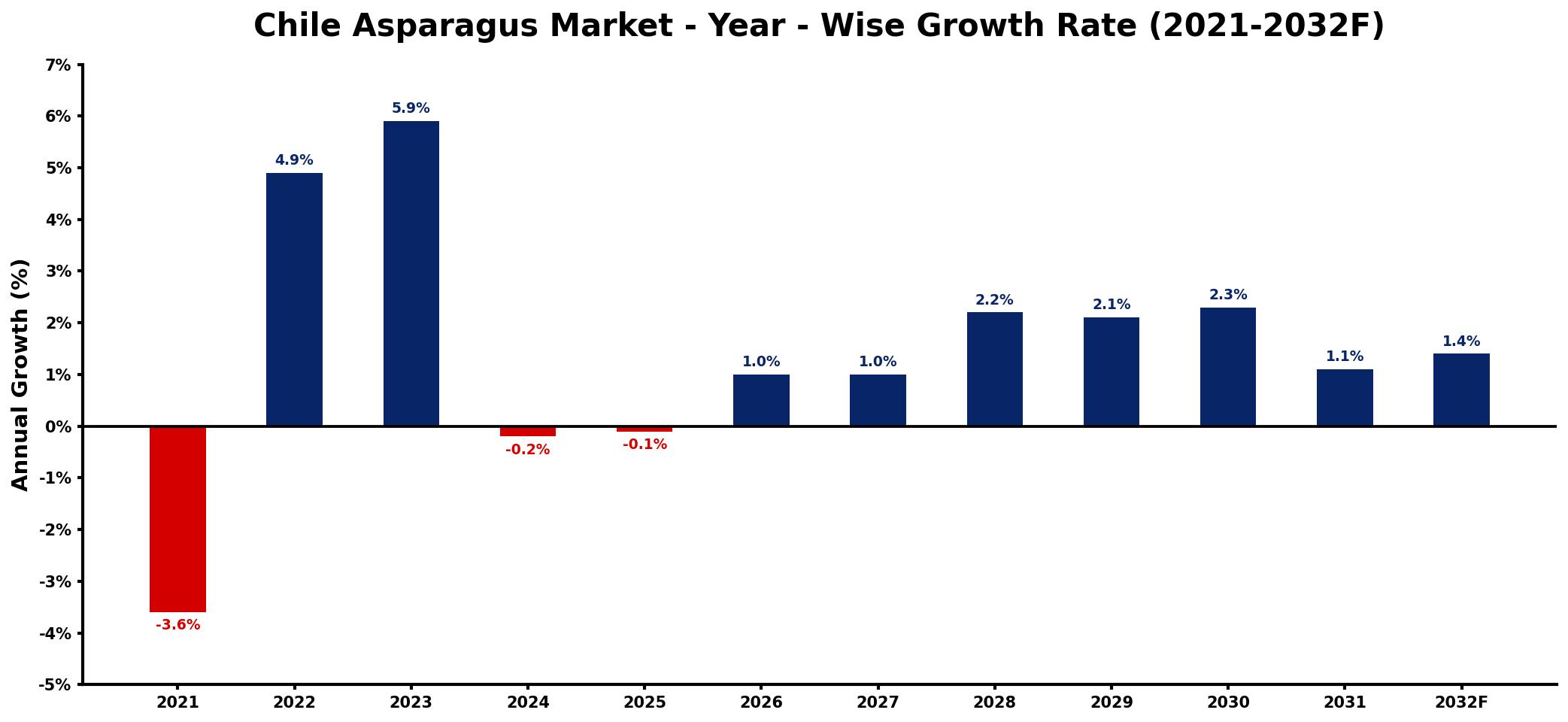
The table below presents the year‑wise growth rates along with the key drivers influencing the market
| Year | Growth Rate | Major Drivers |
| 2021 | -3.6% | Supply chain disruptions affect availability |
| 2022 | 4.9% | Increased demand for organic produce |
| 2023 | 5.9% | Growth in export market opportunities |
| 2024 | -0.2% | reduced capital spending allocations |
| 2025 | -0.1% | Market saturation limits expansion potential |
| 2026 | 1.0% | Investment in sustainable farming practices |
| 2027 | 1.0% | Expansion of local processing facilities |
| 2028 | 2.2% | Emerging health trends drive consumption |
| 2029 | 2.1% | Innovations in agricultural technology adoption |
| 2030 | 2.3% | Strengthening international trade agreements |
| 2031 | 1.1% | growing emerging market penetration |
| 2032 | 1.4% | Growing consumer interest in nutrition |
Note: Market size estimations and growth projections presented in this report are based on 6Wresearch's proprietary forecasting methodology, utilizing the latest available industry data, government publications, and primary research inputs.
Chile Asparagus Market Synopsis
With its unique geographical advantages, Chile is a major player in the asparagus market, producing quality asparagus that meets the demands of diverse international consumers. The countrys robust export infrastructure ensures that fresh produce reaches markets in the United States, Europe, and Asia efficiently.
As consumer preferences evolve, there is a notable shift towards organic and sustainably produced asparagus, reflecting a broader movement towards healthier eating habits. As such, the market is adapting to cater to these preferences by emphasizing quality and sustainability in production practices.
Chile Asparagus Market Key Takeaways
- Chiles favorable climate allows for year-round asparagus production, enhancing export potential.
- Growing consumer demand for healthy and convenient food options drives market growth.
- Increasing interest in organic and sustainably sourced asparagus reflects changing consumer values.
- The government supports agricultural exports, fostering a conducive investment environment.
- Competitive pressures from other asparagus-producing countries necessitate strategic differentiation.
Evaluation of Restraints in Chile Asparagus Market
Despite its advantages, the Chile asparagus market faces several restraints that could hinder growth. The increasing competition from other major producers like Peru and Mexico has intensified pricing pressures, making it crucial for Chilean producers to differentiate their offerings. Labor shortages also pose a significant challenge, as asparagus farming is labor-intensive. Furthermore, fluctuating weather patterns impact crop yields, potentially affecting the supply of high-quality asparagus. Efficient logistics remain vital to ensure timely delivery of this perishable product to international markets, further complicating the operational landscape for local producers.
Chile Asparagus Market Trends
Current trends in the Chile asparagus market indicate a shift toward convenience-oriented products. The rise of ready-to-eat asparagus, including pre-packaged and pre-cut options, caters to busy consumers seeking quick and healthy meal solutions. Additionally, marketing efforts increasingly focus on the nutritional benefits of asparagus, highlighting its status as a superfood rich in vitamins and antioxidants. These trends reflect a broader consumer emphasis on health and wellness, driving demand for fresh, nutrient-dense produce.
Chile Asparagus Market Opportunities
Investors looking into the Chile asparagus market can find promising opportunities, particularly in the organic segment, which is gaining traction among health-conscious consumers. Collaboration with local farmers or investment in production facilities can yield significant returns given the rising global demand. Additionally, Chile's favorable trade agreements and governmental support for the agricultural sector create an attractive environment for investments aimed at increasing production capacity and enhancing product quality.
Government Initiatives in the Chile Asparagus Market
The Chilean government plays a proactive role in supporting the asparagus market through various initiatives aimed at promoting sustainable agricultural practices. Subsidies and technical assistance are provided to farmers to improve production efficiency and uphold food safety standards. Regulations focusing on pesticide use and labor conditions ensure that the industry adheres to international trade requirements. Furthermore, the government collaborates with industry stakeholders to enhance market access and promote Chilean asparagus in key export destinations, aiming to bolster the competitiveness of the domestic industry.
Future Insights of the Chile Asparagus Market
Looking ahead to 2026-2032, the Chile asparagus market is expected to thrive as consumer interest in healthy diets and plant-based foods continues to rise. As demand grows, Chiles strengths in quality production and favorable farming conditions will play a pivotal role in maintaining its market presence. However, producers must remain vigilant regarding competitive pressures and market fluctuations, emphasizing innovation and strategic differentiation to ensure sustained growth in the years to come.
Chile Asparagus Market Latest Developments (2025 - 2026)
Recent developments in the Chile asparagus market have highlighted an increase in collaborations between local farmers and international distributors, focusing on expanding the reach of Chilean asparagus in overseas markets. Innovations in sustainable farming practices are being adopted, aiming to enhance both yield and environmental stewardship. Additionally, efforts to improve logistics and supply chain efficiency have gained traction, addressing challenges in exporting perishable goods and ensuring timely deliveries to key markets.
Chile Asparagus Market - Key Attractiveness of the Report
- 10 Years of Market Numbers
- Historical Data Starting from 2022 to 2025
- Base Year: 2025
- Forecast Data until 2032
- Key Performance Indicators Impacting the Market
- Major Upcoming Developments and Projects
Key Highlights of the Report:
- Chile Asparagus Market Outlook
- Market Size of Chile Asparagus Market, 2025
- Forecast of Chile Asparagus Market, 2032
- Historical Data and Forecast of Chile Asparagus Revenues & Volume for the Period 2022-2032F
- Chile Asparagus Market Trend Evolution
- Chile Asparagus Market Drivers and Challenges
- Chile Asparagus Price Trends
- Chile Asparagus Porter's Five Forces
- Chile Asparagus Industry Life Cycle
- Historical Data and Forecast of Chile Asparagus Market Revenues & Volume By Type for the Period 2022-2032F
- Historical Data and Forecast of Chile Asparagus Market Revenues & Volume By Fresh for the Period 2022-2032F
- Historical Data and Forecast of Chile Asparagus Market Revenues & Volume By Canned for the Period 2022-2032F
- Historical Data and Forecast of Chile Asparagus Market Revenues & Volume By Frozen for the Period 2022-2032F
- Historical Data and Forecast of Chile Asparagus Market Revenues & Volume By Colour for the Period 2022-2032F
- Historical Data and Forecast of Chile Asparagus Market Revenues & Volume By White for the Period 2022-2032F
- Historical Data and Forecast of Chile Asparagus Market Revenues & Volume By Green for the Period 2022-2032F
- Chile Asparagus Import Export Trade Statistics
- Market Opportunity Assessment By Type
- Market Opportunity Assessment By Colour
- Chile Asparagus Top Companies Market Share
- Chile Asparagus Competitive Benchmarking By Technical and Operational Parameters
- Chile Asparagus Company Profiles
- Chile Asparagus Key Strategic Recommendations






































