Chile Bamboos Market Size Growth Rate
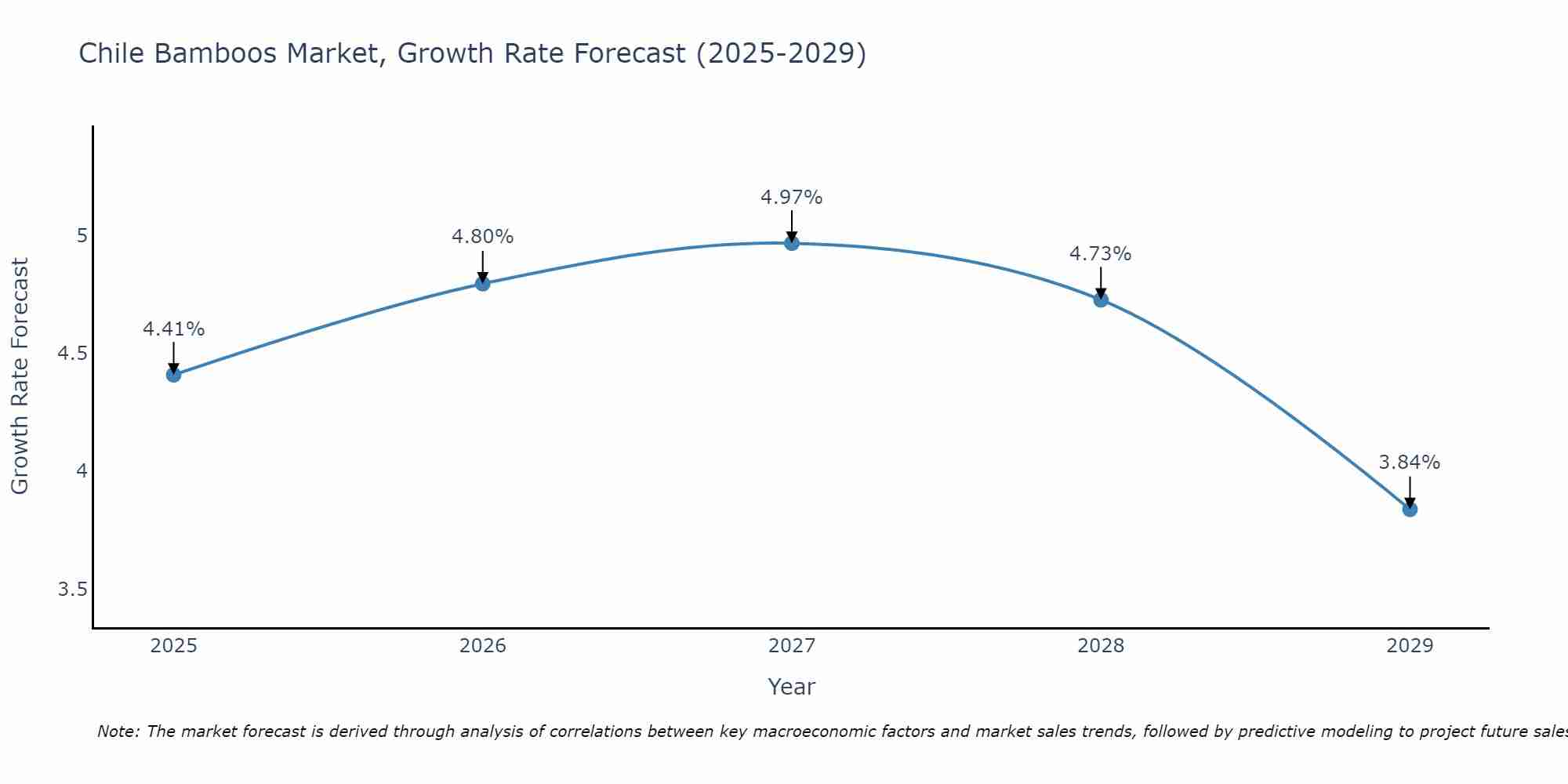
The Chile Bamboos Market is projected to witness mixed growth rate patterns during 2025 to 2029. The growth rate begins at 4.41% in 2025, climbs to a high of 4.97% in 2027, and moderates to 3.84% by 2029.
Chile Bamboos Market Overview
The Chile bamboo market is experiencing steady growth driven by increasing awareness of sustainability and eco-friendly products. Bamboo, known for its versatility and eco-friendly characteristics, is being widely used in various industries such as construction, furniture, and textiles in Chile. The demand for bamboo products is rising due to its renewable nature, fast growth rate, and durability. Additionally, the government`s initiatives to promote sustainable practices and the growing trend of consumers opting for green products are further boosting the Chile bamboo market. With a focus on sustainable development and environmental conservation, the Chile bamboo market is poised for continued growth in the coming years.
Chile Bamboos Market Trends
The Chile bamboo market is experiencing growth driven by increasing demand for sustainable and eco-friendly building materials. Bamboo is being utilized in various applications such as flooring, furniture, and construction due to its durability, versatility, and renewable nature. The market is also witnessing a rise in demand for bamboo products in the home decor and interior design sectors, as consumers seek environmentally conscious alternatives. Additionally, the government`s initiatives to promote the cultivation of bamboo for economic development and environmental benefits are further contributing to the market`s expansion. With a focus on sustainability and innovation, the Chile bamboo market is expected to continue its upward trajectory in the coming years.
Chile Bamboos Market Challenges
In the Chile Bamboos Market, some challenges include limited consumer awareness about the benefits of bamboo products, leading to lower demand compared to traditional materials. Additionally, there may be difficulties in sourcing high-quality bamboo due to factors such as climate change affecting bamboo growth patterns. The lack of standardized regulations and certifications for sustainable bamboo harvesting and production practices could also pose challenges in ensuring the credibility and quality of bamboo products in the market. Furthermore, competition from other eco-friendly materials and the perception of bamboo as a lower-quality or less durable option in certain applications may hinder its widespread adoption in various industries. Overall, addressing these challenges through targeted marketing efforts, sustainable sourcing practices, and industry collaboration will be crucial for the growth of the Chile Bamboos Market.
Chile Bamboos Market Investment Opportunities
The Chile Bamboos Market presents promising investment opportunities due to the increasing demand for sustainable and eco-friendly construction materials. Bamboo is known for its fast growth rate, strength, and versatility, making it a popular choice for a wide range of applications such as furniture, flooring, and even as a substitute for traditional timber. Investing in bamboo plantations in Chile can offer long-term returns as the country`s climate is conducive to bamboo growth, and there is a growing interest in sustainable practices. Additionally, the global trend towards green building and environmental conservation further supports the potential for growth in the Chile Bamboos Market. Overall, investing in the Chilean bamboo industry can be a strategic move for investors looking to capitalize on the demand for sustainable alternatives in various industries.
Chile Bamboos Market Government Policy
The Chilean government has implemented policies to support the growth of the bamboo market in the country. These policies include promoting sustainable bamboo cultivation practices, providing financial incentives for farmers to adopt bamboo farming, and facilitating research and development in the sector. Additionally, the government has set regulations to ensure the quality and standards of bamboo products, as well as to promote the use of bamboo in construction and other industries. Overall, the government aims to foster the sustainable development of the bamboo market in Chile through a combination of support measures and regulations to drive innovation and growth in the sector.
Chile Bamboos Market Future Outlook
The Chile bamboos market is anticipated to experience steady growth in the coming years due to increasing awareness of the benefits of bamboo as a sustainable and eco-friendly alternative to traditional materials. The growing demand for bamboo in various industries such as construction, furniture, and textiles is expected to drive market expansion. Additionally, the rising focus on environmental conservation and the shift towards green building practices are likely to further boost the adoption of bamboo products in Chile. However, challenges such as limited availability of mature bamboo forests and the need for infrastructure development for bamboo cultivation may hinder the market growth. Overall, with the right investments in research and development, as well as sustainable practices, the Chile bamboos market holds promising opportunities for growth and innovation.
Key Highlights of the Report:
- Chile Bamboos Market Outlook
- Market Size of Chile Bamboos Market, 2021
- Forecast of Chile Bamboos Market, 2031
- Historical Data and Forecast of Chile Bamboos Revenues & Volume for the Period 2018 - 2031
- Chile Bamboos Market Trend Evolution
- Chile Bamboos Market Drivers and Challenges
- Chile Bamboos Price Trends
- Chile Bamboos Porter's Five Forces
- Chile Bamboos Industry Life Cycle
- Historical Data and Forecast of Chile Bamboos Market Revenues & Volume By Application for the Period 2018 - 2031
- Historical Data and Forecast of Chile Bamboos Market Revenues & Volume By Raw Materials for the Period 2018 - 2031
- Historical Data and Forecast of Chile Bamboos Market Revenues & Volume By Industrial Products for the Period 2018 - 2031
- Historical Data and Forecast of Chile Bamboos Market Revenues & Volume By Furniture for the Period 2018 - 2031
- Historical Data and Forecast of Chile Bamboos Market Revenues & Volume By Shoots for the Period 2018 - 2031
- Historical Data and Forecast of Chile Bamboos Market Revenues & Volume By Others for the Period 2018 - 2031
- Chile Bamboos Import Export Trade Statistics
- Market Opportunity Assessment By Application
- Chile Bamboos Top Companies Market Share
- Chile Bamboos Competitive Benchmarking By Technical and Operational Parameters
- Chile Bamboos Company Profiles
- Chile Bamboos Key Strategic Recommendations






































