Chile Digital Signature Market Size & Growth Rate (2026-2032)
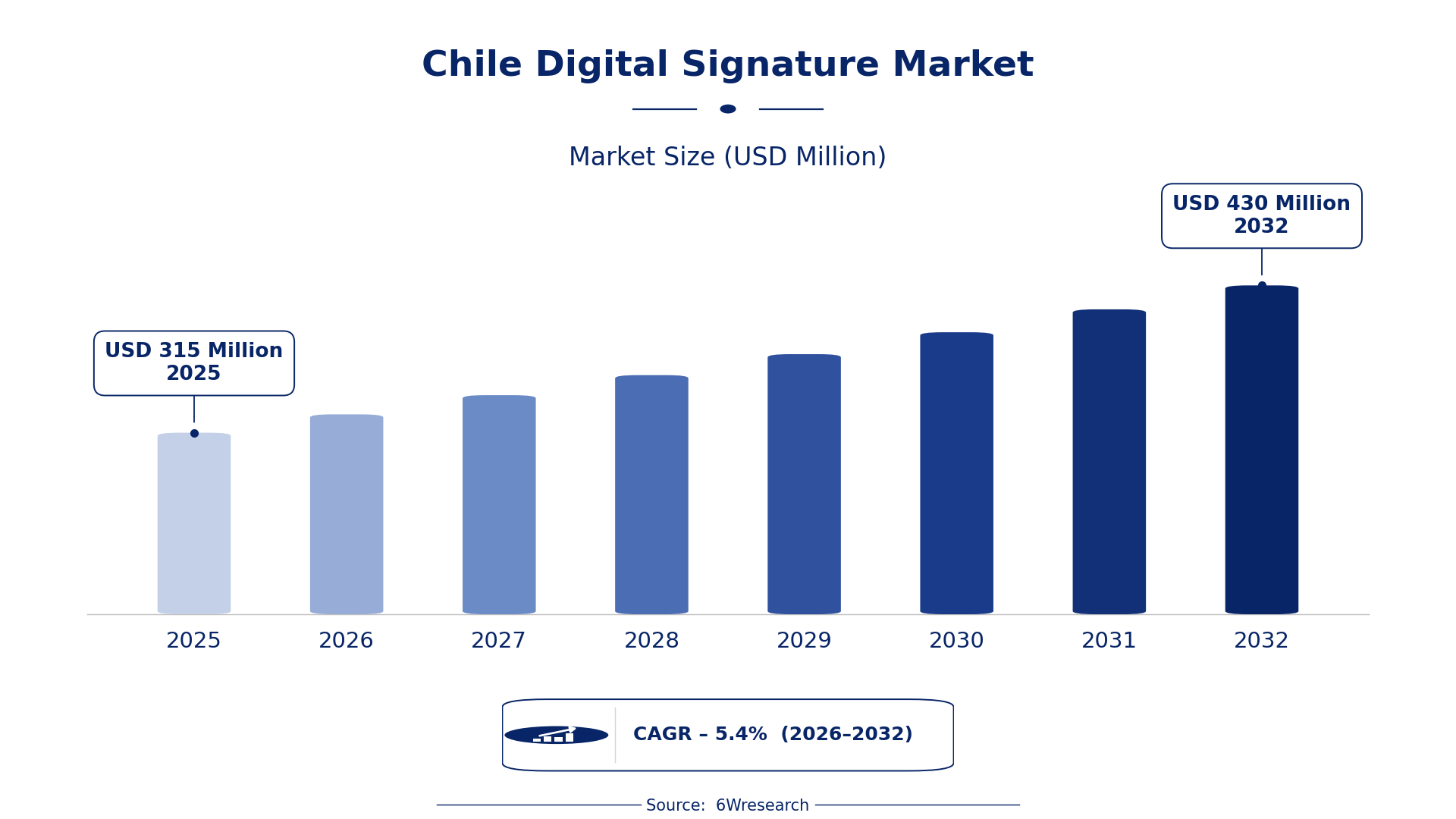
The Chile Digital Signature Market was estimated at USD 315 Million in 2025 and is projected to reach USD 430 Million by 2032, growing at a CAGR of 5.4% from 2026 to 2032.
Chile Digital Signature Market Synopsis
The demand for digital signatures in Chile is surging, particularly in sectors that require secure transactions, such as finance and government services. As organizations increasingly embrace electronic solutions for document management, the efficiency gained from digital signatures becomes a compelling argument for their adoption.
Organizations are also responding to the shift towards remote work, where traditional signing methods are not only cumbersome but often impractical. Digital signatures facilitate a smoother workflow, allowing businesses to maintain compliance while enhancing security in electronic transactions.
Chile Digital Signature Market Year-wise Growth Rate and Key Drivers
This graph illustrates the annual growth rates of the Chile Digital Signature Market from 2021 to 2032, highlighting a steady upward trajectory and projected expansion over the forecast period.
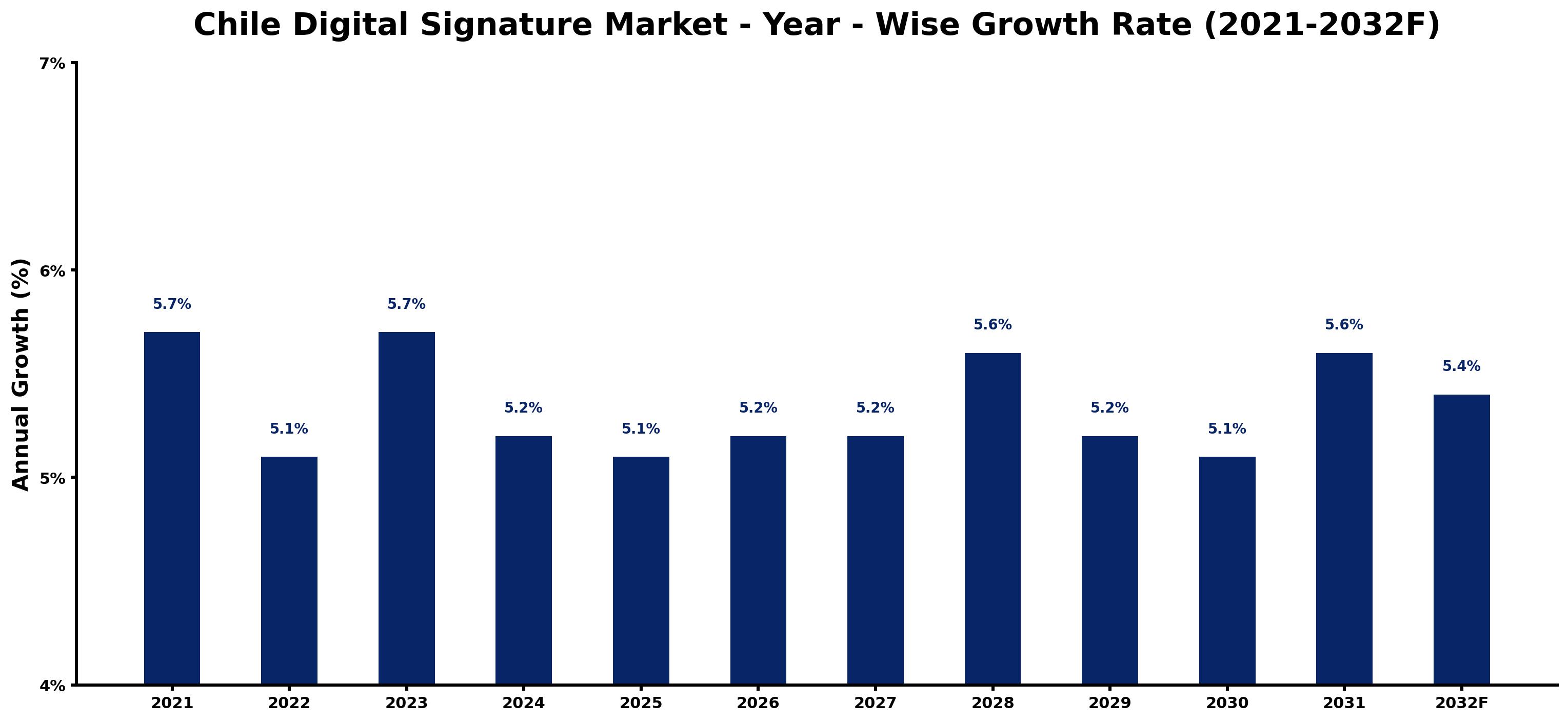
The table below presents the year‑wise growth rates along with the key drivers influencing the market
| Year | Growth Rate | Major Drivers |
| 2021 | 5.7% | Boost from Chile's electronic signature law implementation. |
| 2022 | 5.1% | Increased e-commerce transactions necessitating secure digital signatures. |
| 2023 | 5.7% | Growth in online banking services requiring digital verification. |
| 2024 | 5.2% | Government push for digital transformation in public sectors. |
| 2025 | 5.1% | Rise in teleworking driving demand for digital authentication. |
| 2026 | 5.2% | Adoption of e-government services needing secure digital signatures. |
| 2027 | 5.2% | Legal reforms enhancing the validity of electronic transactions. |
| 2028 | 5.6% | Increase in online education platforms requiring digital identity verification. |
| 2029 | 5.2% | Entry of fintech companies increasing digital compliance needs. |
| 2030 | 5.1% | Rising focus on cybersecurity regulations for digital signatures. |
| 2031 | 5.6% | Emergence of smart contracts in local startups requiring signatures. |
| 2032 | 5.4% | Expanding digital identity frameworks promoting electronic signature use. |
Note: Market size estimations and growth projections presented in this report are based on 6Wresearch's proprietary forecasting methodology, utilizing the latest available industry data, government publications, and primary research inputs.
Chile Digital Signature Market Key Takeaways
Below are some of the specific key takeaways from the market, including:
- The market is influenced by government policies that promote digital transactions.
- Remote work trends are accelerating the need for digital signature solutions.
- Advancements in technology, including encryption and biometrics, are driving innovation.
- Public awareness campaigns are crucial for fostering trust in digital signatures.
- Legal frameworks supporting digital signatures are evolving to match technological advancements.
Evaluation of Restraints in Chile Digital Signature Market
Despite its growth potential, the Chile Digital Signature Market faces hurdles, particularly in legal recognition. Many businesses remain hesitant due to uncertainties surrounding the authentication of digital signatures. To build trust, it's vital for industry stakeholders to collaborate with regulatory bodies and advocate for clear guidelines on the use and acceptance of these solutions. Until such frameworks are robustly established, adoption rates may lag.
Chile Digital Signature Market Trends
A notable trend is the integration of biometric authentication methods in digital signature platforms, enhancing security measures. Additionally, the push towards eco-friendly practices is leading businesses to seek paperless solutions, with digital signatures playing a key role. The rise of mobile-based applications for signing documents is also significant, catering to the increasing demand for on-the-go access.
Chile Digital Signature Market Opportunities
Investment in public-private partnerships to create interoperable systems presents a substantial opportunity. Companies that develop solutions addressing legal uncertainties will have a competitive edge. Furthermore, exploring sectors like healthcare and real estate, where secure transaction methods are critical, could unlock new revenue streams. The shift towards digital identity solutions is another promising avenue for growth.
Government Initiatives in the Chile Digital Signature Market
The Chilean government is actively promoting digital signatures as part of a broader strategy to enhance efficiency and transparency in both public and private sectors. By implementing supportive regulatory frameworks, the government is laying the groundwork for the secure use of digital signatures. This commitment to digital transformation is essential for fostering a robust digital economy in Chile.
- A regulatory framework introduced in 2025 mandates the use of digital signatures for government contracts, streamlining administrative processes.
- Currently underway is a national digital identity initiative aimed at increasing trust in electronic transactions, including digital signatures.
- Public-private partnerships focused on educational programs about digital signature technology launched recently to boost awareness and usage.
- Planned initiatives to upgrade national digital infrastructure by 2028 will enhance the security and accessibility of digital signature platforms.
Future Insights of the Chile Digital Signature Market
Looking ahead, the Chile Digital Signature Market is expected to evolve significantly. As regulations become clearer and more businesses recognize the benefits, adoption rates will likely accelerate. Integration with emerging technologies, such as blockchain for enhanced security, will reshape how digital signatures are utilized. The future will see a convergence of security and efficiency, positioning digital signatures as indispensable in modern business practices.
Chile Digital Signature Market Latest Developments
Recent months have seen a flurry of activity in the Chile Digital Signature Market as organizations and regulatory bodies push for wider adoption of electronic signatures. The increasing emphasis on cybersecurity is driving innovations and improvements across the sector.
- An initiative to enhance encryption standards for digital signatures launched in Q2 2025, aimed at boosting security measures.
- A major technology vendor is currently rolling out a cloud-based digital signature solution that promises greater accessibility and integration.
- In early 2025, a public-private partnership commenced to develop training programs for businesses on the implementation of digital signatures.
- Plans for a new digital signature validation framework are expected to be introduced by mid-2026, focusing on international compliance.
Chile Digital Signature Market - Key Attractiveness of the Report
- 10 Years of Market Numbers
- Historical Data Starting from 2022 to 2025
- Base Year: 2025
- Forecast Data until 2032
- Key Performance Indicators Impacting the Market
- Major Upcoming Developments and Projects
Key Highlights of the Report:
- Chile Digital Signature Market Outlook
- Market Size of Chile Digital Signature Market, 2025
- Forecast of Chile Digital Signature Market, 2032
- Historical Data and Forecast of Chile Digital Signature Revenues & Volume for the Period 2022-2032F
- Chile Digital Signature Market Trend Evolution
- Chile Digital Signature Market Drivers and Challenges
- Chile Digital Signature Price Trends
- Chile Digital Signature Porter's Five Forces
- Chile Digital Signature Industry Life Cycle
- Historical Data and Forecast of Chile Digital Signature Market Revenues & Volume By Component for the Period 2022-2032F
- Historical Data and Forecast of Chile Digital Signature Market Revenues & Volume By Solutions for the Period 2022-2032F
- Historical Data and Forecast of Chile Digital Signature Market Revenues & Volume By Services for the Period 2022-2032F
- Historical Data and Forecast of Chile Digital Signature Market Revenues & Volume By Solution for the Period 2022-2032F
- Historical Data and Forecast of Chile Digital Signature Market Revenues & Volume By Software for the Period 2022-2032F
- Historical Data and Forecast of Chile Digital Signature Market Revenues & Volume By Hardware for the Period 2022-2032F
- Historical Data and Forecast of Chile Digital Signature Market Revenues & Volume By Vertical for the Period 2022-2032F
- Historical Data and Forecast of Chile Digital Signature Market Revenues & Volume By BFSI for the Period 2022-2032F
- Historical Data and Forecast of Chile Digital Signature Market Revenues & Volume By Government for the Period 2022-2032F
- Historical Data and Forecast of Chile Digital Signature Market Revenues & Volume By Defense for the Period 2022-2032F
- Historical Data and Forecast of Chile Digital Signature Market Revenues & Volume By Legal for the Period 2022-2032F
- Historical Data and Forecast of Chile Digital Signature Market Revenues & Volume By Real Estate for the Period 2022-2032F
- Historical Data and Forecast of Chile Digital Signature Market Revenues & Volume By Organization Size for the Period 2022-2032F
- Historical Data and Forecast of Chile Digital Signature Market Revenues & Volume By Large Enterprises for the Period 2022-2032F
- Historical Data and Forecast of Chile Digital Signature Market Revenues & Volume By Small and Medium-Sized Enterprises (SMEs) for the Period 2022-2032F
- Historical Data and Forecast of Chile Digital Signature Market Revenues & Volume By Deployment Mode for the Period 2022-2032F
- Historical Data and Forecast of Chile Digital Signature Market Revenues & Volume By Cloud for the Period 2022-2032F
- Historical Data and Forecast of Chile Digital Signature Market Revenues & Volume By On-Premises for the Period 2022-2032F
- Chile Digital Signature Import Export Trade Statistics
- Market Opportunity Assessment By Component
- Market Opportunity Assessment By Solution
- Market Opportunity Assessment By Vertical
- Market Opportunity Assessment By Organization Size
- Market Opportunity Assessment By Deployment Mode
- Chile Digital Signature Top Companies Market Share
- Chile Digital Signature Competitive Benchmarking By Technical and Operational Parameters
- Chile Digital Signature Company Profiles
- Chile Digital Signature Key Strategic Recommendations






































