Chile Garden Furniture Market Summary
The chile garden furniture market was estimated at USD 456 Million in 2025 and is projected to reach USD 618 Million by 2032, growing at a CAGR of 5.1% from 2026 to 2032.
Chile Garden Furniture Market Year-wise Growth Rate and Key Drivers
This graph highlights how the Chile Garden Furniture Market has steadily grown over the past five years, supported by major growth factors.
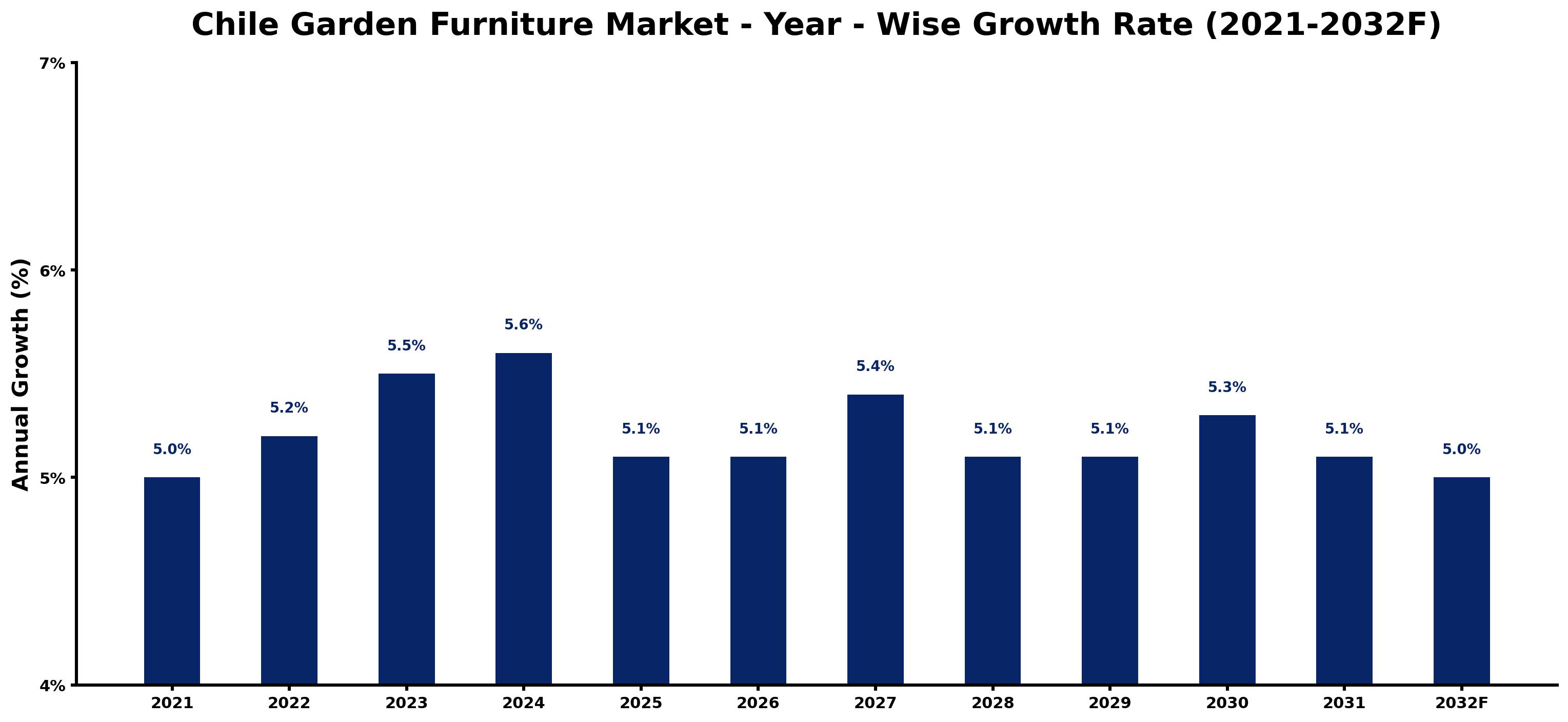
The table below presents the year wise growth rates along with the key drivers influencing the market
| Year | Growth Rate | Major Drivers |
| 2021 | 5.0% | Post-lockdown retail projects saw increased consumer interest in outdoor living spaces. |
| 2022 | 5.2% | Several homeowners focused on enhancing outdoor aesthetics for leisure and relaxation. |
| 2023 | 5.5% | Design trends emphasized sustainable materials, appealing to eco-conscious consumers in Chile. |
| 2024 | 5.6% | Rising disposable incomes allowed families to invest more in quality garden furniture. |
| 2025 | 5.1% | Urban expansion encouraged balcony and patio furnishing in residential complexes. |
| 2026 | 5.1% | E-commerce platforms gained traction, making garden furniture more accessible to buyers. |
| 2027 | 5.4% | Increased awareness about outdoor wellness prompted demand for multifunctional furniture. |
| 2028 | 5.1% | Innovations in weather-resistant materials improved the longevity and appeal of garden furniture. |
| 2029 | 5.1% | Home improvement projects surged, driving sales of stylish outdoor furnishings significantly. |
| 2030 | 5.3% | Social media influence showcased outdoor living trends, inspiring consumer purchasing decisions. |
| 2031 | 5.1% | Targeted marketing campaigns engaged younger demographics, expanding the customer base effectively. |
| 2032 | 5.0% | Collaborations with local artisans highlighted unique designs, attracting niche market segments. |
Note - Market size estimations and growth projections presented in this report are based on 6Wresearch's advanced forecasting approach, validated with industry datasets as of June 2026.
Chile Garden Furniture Market Synopsis
The Chile Garden Furniture Market is projected to reach 5.1% and witness significant growth during the forecast period (2026-2032). This growth is primarily driven by increasing urbanization, a rise in disposable incomes, and an evolving trend towards outdoor living spaces. The desire for high-quality, durable, and aesthetically pleasing garden furniture is prompting consumers to invest in products that enhance their outdoor experiences.
Chile Garden Furniture Market Growth Drivers
Several factors are propelling the Chile Garden Furniture Market forward. First, the steady urbanization in Chile is transforming residential areas and creating a demand for outdoor spaces where families can relax and socialize. Second, the rise in disposable income is enabling consumers to prioritize investments in home decor, particularly outdoor furniture.
- Outdoor living has become a lifestyle choice for many Chileans, encouraging the development of gardens, patios, and balconies that require suitable furniture.
- A growing awareness of wellness and mental health is leading to increased interest in comfortable and inviting outdoor spaces, which can promote relaxation and social interaction.
- Sustainable practices are gaining traction, prompting manufacturers to explore eco-friendly materials that appeal to environmentally conscious consumers.
- Online retail channels are becoming increasingly popular, offering convenience and a broader selection of products, thereby enhancing consumer accessibility.
- Cultural events and celebrations encourage outdoor gatherings, further boosting the demand for suitable garden furniture to accommodate these social activities.
Chile Garden Furniture Market Trends and Opportunities
The Chile Garden Furniture Market is adapting to modern consumer preferences, evidenced by several notable trends. The demand for sustainable and eco-friendly materials such as recycled plastic, bamboo, and certified wood continues to rise. Additionally, urban dwellers are increasingly interested in multifunctional and space-saving furniture, an essential feature for these consumers with limited outdoor spaces.
- Integration of technology, including solar-powered lights and smart features, has started becoming a significant selling point, appealing to the tech-savvy demographic.
- Customization options are gaining popularity, allowing consumers to personalize their outdoor furniture according to their individual style and preferences.
- The trend towards minimalistic design and elegance is influencing product offerings, with an increasing number of consumers seeking stylish yet functional outdoor furniture.
- Demand for innovative design solutions is opening doors for new entrants and creative thinkers in the market, who can provide unique outdoor furniture options.
- As outdoor living continues to gain traction, there is an opportunity for brands to engage in marketing campaigns emphasizing the lifestyle benefits of investing in garden furniture.
Chile Garden Furniture Market Challenges and Restraints
Despite the opportunities, the Chile Garden Furniture Market faces several challenges that could impact its growth trajectory. Heightened competition from domestic and international manufacturers is pressuring companies to constantly innovate and differentiate their products.
- Fluctuating raw material prices may affect production costs, leading to potential price increases that consumers might find unappealing.
- Consumer preferences are shifting toward more durable and sustainable products, which requires manufacturers to adapt quickly to meet these changing demands.
- Economic uncertainties and currency fluctuations can hinder consumer confidence in spending on non-essential items like garden furniture.
- Logistical challenges, particularly in delivering products to remote areas, can create inefficiencies and affect service levels.
- The seasonality of the market can lead to inconsistent revenue streams, as demand typically peaks during warmer months and dips during colder seasons, necessitating effective inventory management.
Chile Garden Furniture Market Investment Opportunities
Investors looking to enter the Chile Garden Furniture Market will find numerous opportunities thanks to the burgeoning interest in outdoor living and home decor. Companies focusing on sustainable and durable products are likely to attract a growing base of environmentally conscious consumers. Implementing innovative designs and customizable options can also position brands favorably in the marketplace.
- Collaborating with local artisans can enhance product offerings with unique, culturally relevant designs that resonate with consumers.
- Leveraging e-commerce platforms for marketing and sales can tap into the growing online shopping trend, reaching a broader consumer base.
- Investment in research and development for new materials and technologies can foster innovation, meeting consumer demand for modern outdoor furniture.
- Brands that emphasize ergonomic design will likely benefit from the increasing consumer focus on comfort and health.
- Exploring partnerships with lifestyle influencers can effectively promote products and enhance brand visibility within the outdoor living segment.
Chile Garden Furniture Market Government Investment and Initiatives
The Chilean government has implemented various policies aimed at enhancing the garden furniture market, focusing on sustainability and local manufacturing. These policies include regulations on the importation of raw materials, which can affect production costs and market dynamics.
- Environmental sustainability standards encourage manufacturers to adopt eco-friendly practices, fostering a greener industry.
- Support for local artisans through grants and initiatives aims to boost small-scale manufacturing and promote cultural heritage in garden furniture design.
- Labor laws are in place to ensure fair treatment of workers in the production process, ensuring compliance with safety and working conditions standards.
- Incentives for the adoption of sustainable materials can help manufacturers transition to more ecologically responsible production methods.
- Public spending on urban development plans includes provisions for enhancing public outdoor spaces, indirectly benefiting the garden furniture market.
Chile Garden Furniture Market Latest Developments (May 2025 - June 2026)
Recent developments in the Chile Garden Furniture Market (from May 2025 to June 2026) indicate a shift towards increased innovation and sustainability in product offerings. Manufacturers are responding to the growing consumer demand for eco-friendly materials and multifunctional designs. Online sales channels are witnessing rapid growth, providing a more accessible platform for consumers to purchase garden furniture.
- The market is seeing advancements in technology integration, including the use of solar-powered elements in garden furniture.
- Retailers are increasingly focusing on providing customizable options, allowing consumers to personalize their furniture according to their preferences.
- Sustainability initiatives are gaining traction, with more companies seeking certifications for eco-friendly materials.
- E-commerce platforms are being enhanced to improve user experience and facilitate smoother transactions for consumers.
- Collaborations with local artisans are becoming more common, promoting cultural aesthetics in garden furniture designs.
Chile Garden Furniture Market - Key Attractiveness of the Report
- 10 Years of Market Numbers
- Historical Data Starting from 2022 to 2025
- Base Year: 2025
- Forecast Data until 2032
- Key Performance Indicators Impacting the Market
- Major Upcoming Developments and Projects
Key Highlights of the Report:
- Chile Garden Furniture Market Outlook
- Market Size of Chile Garden Furniture Market, 2025
- Forecast of Chile Garden Furniture Market, 2032F
- Historical Data and Forecast of Chile Garden Furniture Revenues & Volume for the Period 2022-2032F
- Chile Garden Furniture Market Trend Evolution
- Chile Garden Furniture Market Drivers and Challenges
- Chile Garden Furniture Price Trends
- Chile Garden Furniture Porter's Five Forces
- Chile Garden Furniture Industry Life Cycle
- Historical Data and Forecast of Chile Garden Furniture Market Revenues & Volume By Type for the Period 2022-2032F
- Historical Data and Forecast of Chile Garden Furniture Market Revenues & Volume By Tables for the Period 2022-2032F
- Historical Data and Forecast of Chile Garden Furniture Market Revenues & Volume By Chairs for the Period 2022-2032F
- Historical Data and Forecast of Chile Garden Furniture Market Revenues & Volume By Dining Sets for the Period 2022-2032F
- Historical Data and Forecast of Chile Garden Furniture Market Revenues & Volume By Seating Sets for the Period 2022-2032F
- Historical Data and Forecast of Chile Garden Furniture Market Revenues & Volume By Others for the Period 2022-2032F
- Historical Data and Forecast of Chile Garden Furniture Market Revenues & Volume By Application for the Period 2022-2032F
- Historical Data and Forecast of Chile Garden Furniture Market Revenues & Volume By Brand Outlets for the Period 2022-2032F
- Historical Data and Forecast of Chile Garden Furniture Market Revenues & Volume By Franchised Furniture Store for the Period 2022-2032F
- Historical Data and Forecast of Chile Garden Furniture Market Revenues & Volume By E-Commerce for the Period 2022-2032F
- Historical Data and Forecast of Chile Garden Furniture Market Revenues & Volume By Others for the Period 2022-2032F
- Chile Garden Furniture Import Export Trade Statistics
- Market Opportunity Assessment By Type
- Market Opportunity Assessment By Application
- Chile Garden Furniture Top Companies Market Share
- Chile Garden Furniture Competitive Benchmarking By Technical and Operational Parameters
- Chile Garden Furniture Company Profiles
- Chile Garden Furniture Key Strategic Recommendations






































