Chile Glufosinate Market Top 5 Importing Countries and Market Competition (HHI) Analysis
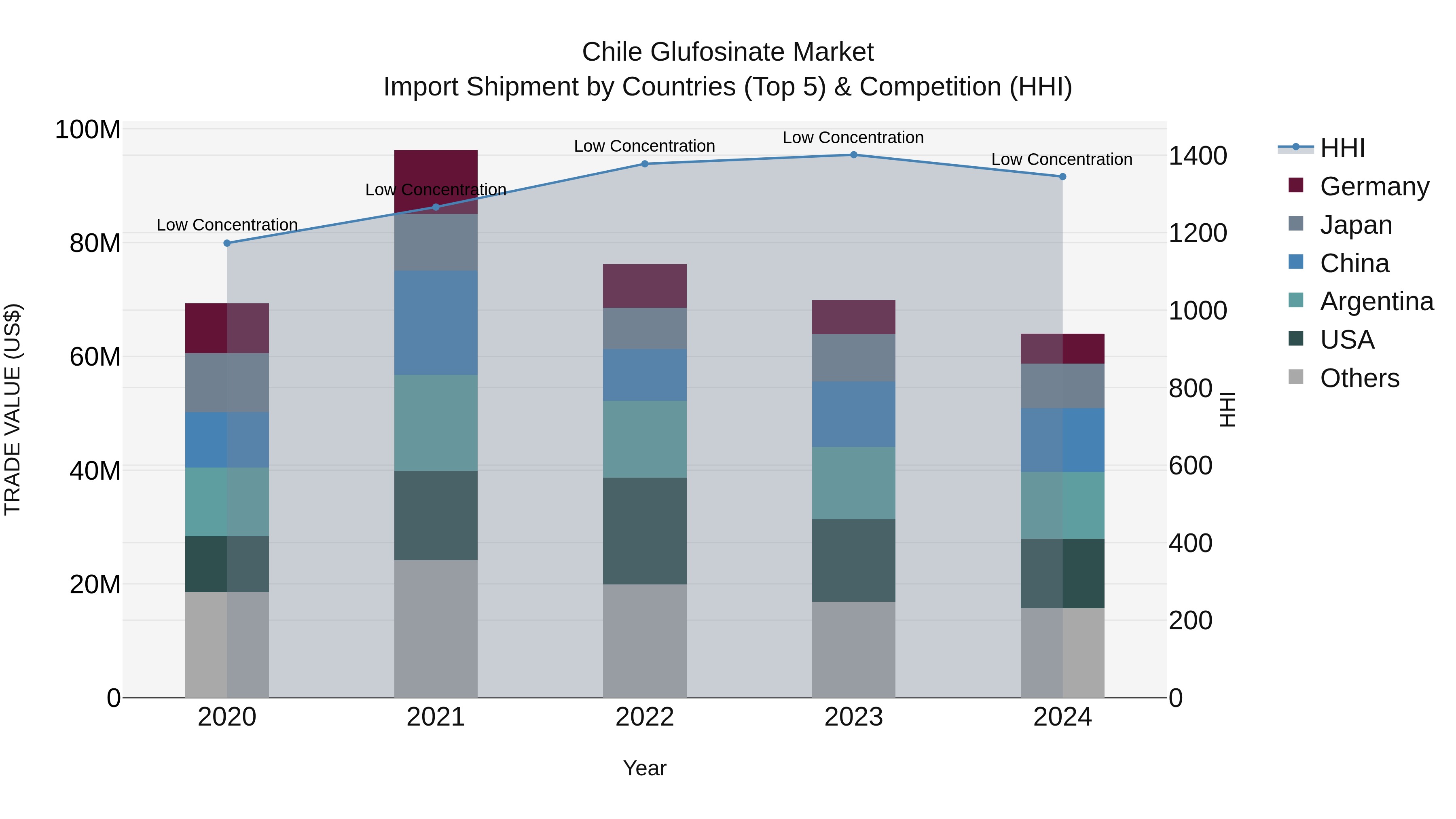
Despite the decline in the Compound Annual Growth Rate (CAGR) and negative growth rate in 2024, Chile`s import shipments of glufosinate continue to be sourced from a diverse range of countries including the USA, Argentina, China, Japan, and Colombia. The low concentration indicated by the Herfindahl-Hirschman Index (HHI) suggests a competitive market landscape. Understanding the dynamics of these top exporting countries and monitoring the market trends will be crucial for stakeholders in the chile glufosinate import industry to adapt to changing conditions and seize potential opportunities for growth.
Chile Glufosinate Market Synopsis
The Chile Glufosinate market is witnessing steady growth driven by the expanding agriculture sector and increasing adoption of herbicides to improve crop yields. Glufosinate, a non-selective herbicide, is widely used in Chile for controlling a broad spectrum of weeds in various crops such as corn, soybeans, and fruits. The growing focus on sustainable agriculture practices and the shift towards environmentally friendly herbicides are also contributing to the market`s growth. Key players in the Chile Glufosinate market include agricultural input suppliers, distributors, and manufacturers who are investing in research and development activities to introduce innovative formulations and enhance product efficacy. Government regulations and initiatives promoting sustainable farming practices are further shaping the market landscape in Chile.
Chile Glufosinate Market Trends
The Chile Glufosinate market is experiencing growth due to the rising demand for effective herbicides in the agriculture sector. The increasing adoption of genetically modified crops that are tolerant to glufosinate is driving market expansion. Additionally, the growing awareness among farmers about the benefits of glufosinate, such as its broad-spectrum weed control and non-residual nature, is further fueling market growth. Opportunities lie in the development of innovative formulations and application techniques to enhance the efficiency and sustainability of glufosinate use. Collaborations between key players and research institutions to introduce new products tailored to the specific needs of Chilean farmers can also drive market penetration. Overall, the Chile Glufosinate market presents promising prospects for companies looking to capitalize on the country`s evolving agricultural landscape.
Chile Glufosinate Market Challenges
In the Chile Glufosinate market, one of the key challenges faced is the increasing regulatory pressure on the use of agrochemicals. Government regulations aimed at protecting the environment and human health are becoming more stringent, leading to restrictions on the use of certain pesticides, including Glufosinate. This can impact the availability and usage of Glufosinate in the market, as well as increase compliance costs for producers. Additionally, there is growing consumer awareness and demand for sustainable and eco-friendly farming practices, which may further constrain the market for Glufosinate-based products. Adapting to these changing regulatory and consumer preferences while maintaining product efficacy and profitability poses a significant challenge for players in the Chile Glufosinate market.
Chile Glufosinate Market Investment Opportunities
The Chile Glufosinate market is primarily driven by the increasing adoption of genetically modified (GM) crops, which require herbicides like Glufosinate for effective weed control. The rising demand for high-yielding crops to meet the growing food requirements of the population is also fueling the market growth. Additionally, the shift towards sustainable agriculture practices and the need for efficient weed management solutions are driving the demand for Glufosinate in Chile. Government initiatives promoting the use of herbicides to improve agricultural productivity and reduce post-harvest losses further contribute to the market growth. The presence of key market players investing in research and development activities to introduce innovative formulations and enhance product efficiency is expected to drive the Chile Glufosinate market in the coming years.
Chile Glufosinate Market Government Polices
The Chilean government has implemented policies to regulate and manage the use of glufosinate in the agricultural sector. The country`s regulations focus on ensuring the safe and responsible use of this herbicide to minimize environmental impact and protect public health. Key aspects of the policies include setting maximum residue limits, establishing guidelines for proper application techniques, and monitoring compliance through inspections and enforcement measures. Additionally, the government promotes sustainable agricultural practices and encourages farmers to adopt alternative weed control methods to reduce reliance on glufosinate. Overall, the regulatory framework aims to balance the benefits of glufosinate use in crop production with the potential risks associated with its application, in line with international standards and best practices.
Chile Glufosinate Market Future Outlook
The Chile Glufosinate market is expected to experience steady growth in the coming years due to increasing demand for effective herbicides in the agriculture sector. Factors such as expanding farming activities, growing awareness about the benefits of glufosinate, and the need for sustainable weed management solutions are driving market growth. Additionally, advancements in agricultural technology and the introduction of innovative formulations are likely to further boost market expansion. However, factors such as stringent regulations on pesticide usage and concerns regarding environmental impact may pose challenges to market growth. Overall, the Chile Glufosinate market is anticipated to witness moderate yet consistent growth in the foreseeable future, with manufacturers focusing on product development and sustainable practices to meet the evolving needs of the agriculture industry.
Key Highlights of the Report:
- Chile Glufosinate Market Outlook
- Market Size of Chile Glufosinate Market, 2024
- Forecast of Chile Glufosinate Market, 2031
- Historical Data and Forecast of Chile Glufosinate Revenues & Volume for the Period 2021 - 2031
- Chile Glufosinate Market Trend Evolution
- Chile Glufosinate Market Drivers and Challenges
- Chile Glufosinate Price Trends
- Chile Glufosinate Porter's Five Forces
- Chile Glufosinate Industry Life Cycle
- Historical Data and Forecast of Chile Glufosinate Market Revenues & Volume By Crop Type for the Period 2021 - 2031
- Historical Data and Forecast of Chile Glufosinate Market Revenues & Volume By Genetically Modified Crops for the Period 2021 - 2031
- Historical Data and Forecast of Chile Glufosinate Market Revenues & Volume By Conventional Crops for the Period 2021 - 2031
- Historical Data and Forecast of Chile Glufosinate Market Revenues & Volume By Form for the Period 2021 - 2031
- Historical Data and Forecast of Chile Glufosinate Market Revenues & Volume By Liquid Formulation for the Period 2021 - 2031
- Historical Data and Forecast of Chile Glufosinate Market Revenues & Volume By Dry Formulation for the Period 2021 - 2031
- Historical Data and Forecast of Chile Glufosinate Market Revenues & Volume By Application for the Period 2021 - 2031
- Historical Data and Forecast of Chile Glufosinate Market Revenues & Volume By Agricultural for the Period 2021 - 2031
- Historical Data and Forecast of Chile Glufosinate Market Revenues & Volume By Non Agricultural for the Period 2021 - 2031
- Chile Glufosinate Import Export Trade Statistics
- Market Opportunity Assessment By Crop Type
- Market Opportunity Assessment By Form
- Market Opportunity Assessment By Application
- Chile Glufosinate Top Companies Market Share
- Chile Glufosinate Competitive Benchmarking By Technical and Operational Parameters
- Chile Glufosinate Company Profiles
- Chile Glufosinate Key Strategic Recommendations






































