Chile Inflatable Pools Market Top 5 Importing Countries and Market Competition (HHI) Analysis
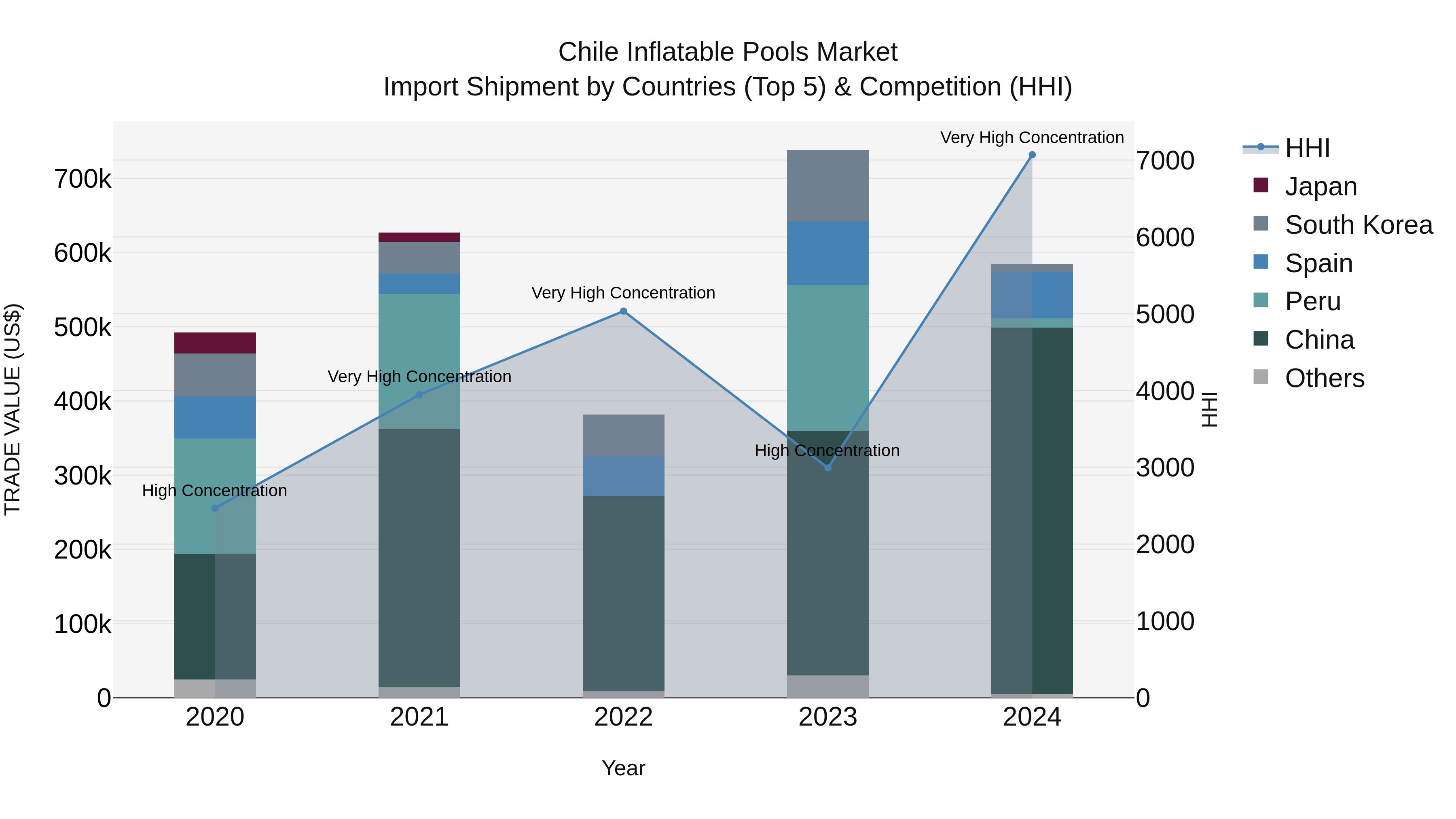
In 2024, Chile continued to see a strong demand for inflatable pools, with top import sources being China, Spain, Peru, South Korea, and the USA. Despite the high concentration of suppliers, the market experienced a moderate CAGR of 4.41% from 2020 to 2024. However, there was a notable decline in growth rate from 2023 to 2024 at -20.76%, indicating a potential shift in market dynamics. Chile`s import market for inflatable pools remains competitive and dynamic, with diverse sourcing channels contributing to its supply chain resilience.
Chile Inflatable Pools Market Overview
The Chile Inflatable Pools Market is experiencing steady growth, driven by factors such as increasing disposable income, changing consumer preferences towards affordable and convenient leisure activities, and a growing trend of staycations. Inflatable pools are becoming popular among Chilean families due to their portability, easy setup, and cost-effectiveness compared to traditional pools. Key players in the market are focusing on product innovation, offering a wide range of sizes, shapes, and designs to cater to diverse consumer needs. The market is characterized by intense competition, with players adopting strategies such as aggressive marketing campaigns, partnerships with online retailers, and expanding product portfolios to gain a competitive edge. Overall, the Chile Inflatable Pools Market is poised for further growth as consumer demand for recreational products continues to rise.
Chile Inflatable Pools Market Trends
Inflatable pools have been gaining popularity in Chile due to their affordability, ease of installation, and versatility. One current trend in the Chilean inflatable pools market is the increasing demand for larger and more durable options that can accommodate families and provide a more robust swimming experience. Consumers are also showing interest in inflatable pools with unique shapes, designs, and features such as built-in water sprayers or shading structures. Additionally, there is a growing preference for eco-friendly and sustainable materials in inflatable pool construction, reflecting a broader environmental consciousness among Chilean consumers. Overall, the market is witnessing a shift towards innovative, high-quality inflatable pools that offer both convenience and entertainment value to users.
Chile Inflatable Pools Market Challenges
In the Chile Inflatable Pools Market, there are several challenges that companies may encounter. One major challenge is seasonality, as demand for inflatable pools tends to be highly dependent on weather conditions, with peak sales occurring during the summer months. This can result in fluctuating revenues and the need for effective inventory management to avoid overstocking or understocking. Additionally, competition from other outdoor recreational products and traditional swimming pools can pose a threat to market share. Ensuring product differentiation, quality, and effective marketing strategies are crucial to stand out in the market. Furthermore, economic factors, such as fluctuations in disposable income and consumer spending patterns, can impact overall demand for inflatable pools, requiring companies to adapt their pricing and promotional strategies accordingly.
Chile Inflatable Pools Market Investment Opportunities
The Chile Inflatable Pools Market presents promising investment opportunities due to the increasing popularity of inflatable pools among consumers seeking affordable and convenient outdoor leisure options. With a growing trend towards staycations and home-based recreational activities, demand for inflatable pools is expected to rise. Investors can capitalize on this trend by investing in companies that manufacture or distribute inflatable pools, as well as retailers that sell these products. Additionally, there is potential for innovation in terms of product design, materials, and features to cater to evolving consumer preferences. Strategic partnerships with retailers or e-commerce platforms can also help companies expand their reach in the market. Overall, the Chile Inflatable Pools Market offers opportunities for investment and growth in response to changing consumer behaviors and preferences.
Chile Inflatable Pools Market Government Policy
The Chilean government has implemented regulations related to the safety standards and quality control of inflatable pools in the market. These policies aim to ensure that products meet specific requirements to guarantee consumer safety and prevent potential hazards. Additionally, there are guidelines regarding the labeling and marketing of inflatable pools to provide transparent information to consumers. The government also monitors compliance with these regulations through regular inspections and enforcement measures to uphold industry standards and protect the welfare of the public. Overall, these policies contribute to maintaining a competitive and trustworthy inflatable pools market in Chile.
Chile Inflatable Pools Market Future Outlook
The future outlook for the Chile Inflatable Pools Market appears promising, driven by factors such as increasing disposable income, changing consumer lifestyles, and a growing preference for recreational activities at home. The market is expected to witness steady growth as more Chilean households seek affordable and convenient options for outdoor entertainment. Additionally, the rise in urbanization and limited access to traditional swimming pools in urban areas are likely to further boost the demand for inflatable pools. Manufacturers are likely to focus on product innovation, including advanced materials and designs, to cater to evolving consumer preferences. Overall, the Chile Inflatable Pools Market is anticipated to expand in the coming years, offering opportunities for both domestic and international players to capitalize on the growing demand.
Key Highlights of the Report:
- Chile Inflatable Pools Market Outlook
- Market Size of Chile Inflatable Pools Market, 2024
- Forecast of Chile Inflatable Pools Market, 2031
- Historical Data and Forecast of Chile Inflatable Pools Revenues & Volume for the Period 2021 - 2031
- Chile Inflatable Pools Market Trend Evolution
- Chile Inflatable Pools Market Drivers and Challenges
- Chile Inflatable Pools Price Trends
- Chile Inflatable Pools Porter's Five Forces
- Chile Inflatable Pools Industry Life Cycle
- Historical Data and Forecast of Chile Inflatable Pools Market Revenues & Volume By Capacity for the Period 2021 - 2031
- Historical Data and Forecast of Chile Inflatable Pools Market Revenues & Volume By Maximum 3 Individuals for the Period 2021 - 2031
- Historical Data and Forecast of Chile Inflatable Pools Market Revenues & Volume By Maximum 6 Individuals for the Period 2021 - 2031
- Historical Data and Forecast of Chile Inflatable Pools Market Revenues & Volume By Maximum 12 Individuals for the Period 2021 - 2031
- Historical Data and Forecast of Chile Inflatable Pools Market Revenues & Volume By Age for the Period 2021 - 2031
- Historical Data and Forecast of Chile Inflatable Pools Market Revenues & Volume By Up To 4 Years for the Period 2021 - 2031
- Historical Data and Forecast of Chile Inflatable Pools Market Revenues & Volume By 5 To 10 Years for the Period 2021 - 2031
- Historical Data and Forecast of Chile Inflatable Pools Market Revenues & Volume By 11 Years & Above for the Period 2021 - 2031
- Historical Data and Forecast of Chile Inflatable Pools Market Revenues & Volume By Shape for the Period 2021 - 2031
- Historical Data and Forecast of Chile Inflatable Pools Market Revenues & Volume By Round for the Period 2021 - 2031
- Historical Data and Forecast of Chile Inflatable Pools Market Revenues & Volume By Rectangle for the Period 2021 - 2031
- Historical Data and Forecast of Chile Inflatable Pools Market Revenues & Volume By Square for the Period 2021 - 2031
- Historical Data and Forecast of Chile Inflatable Pools Market Revenues & Volume By Oval for the Period 2021 - 2031
- Historical Data and Forecast of Chile Inflatable Pools Market Revenues & Volume By Others for the Period 2021 - 2031
- Historical Data and Forecast of Chile Inflatable Pools Market Revenues & Volume By Distribution Channel for the Period 2021 - 2031
- Historical Data and Forecast of Chile Inflatable Pools Market Revenues & Volume By Store Based for the Period 2021 - 2031
- Historical Data and Forecast of Chile Inflatable Pools Market Revenues & Volume By Non Store Based for the Period 2021 - 2031
- Chile Inflatable Pools Import Export Trade Statistics
- Market Opportunity Assessment By Capacity
- Market Opportunity Assessment By Age
- Market Opportunity Assessment By Shape
- Market Opportunity Assessment By Distribution Channel
- Chile Inflatable Pools Top Companies Market Share
- Chile Inflatable Pools Competitive Benchmarking By Technical and Operational Parameters
- Chile Inflatable Pools Company Profiles
- Chile Inflatable Pools Key Strategic Recommendations






































