Chile Milk Protein Market Size, Share & Growth Rate
The Chile Milk Protein Market was estimated at USD 162 Million in 2025 and is projected to reach USD 227 Million by 2032, growing at a CAGR of 4.9% from 2026 to 2032. This growth trajectory is primarily fueled by a burgeoning awareness of the health benefits associated with protein-rich diets, alongside a significant demand for functional foods and beverages. As Chilean consumers increasingly prioritize nutrition in their dietary choices, the market is witnessing a surge in the adoption of milk proteins, particularly in products related to sports nutrition and meal replacements.
Chile Milk Protein Market Year-wise Growth Rate and Key Drivers
This graph highlights how the Chile Milk Protein Market has steadily grown over the years, supported by major growth factors.
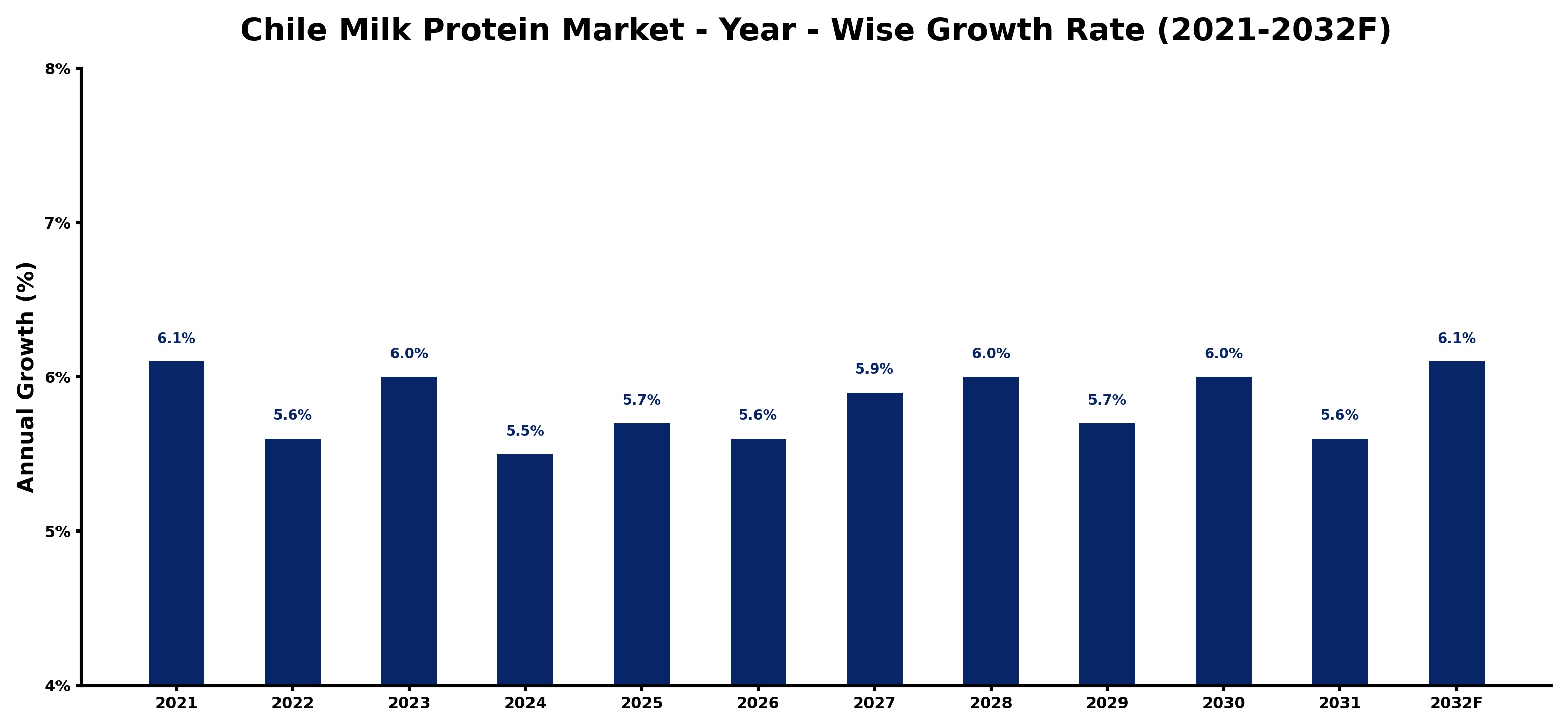
The table below presents the year‑wise growth rates along with the key drivers influencing the market
| Year | Growth Rate | Major Drivers |
| 2021 | 6.1% | Investment in advanced filtration systems boosted milk protein processing efficiency |
| 2022 | 5.6% | Milk protein exports boost local dairy processing plant investments |
| 2023 | 6.0% | Milk protein manufacturing investments boosted domestic supply chain capabilities |
| 2024 | 5.5% | Higher dairy processing efficiency bolstered Chile's milk protein exports |
| 2025 | 5.7% | New milk protein extraction technologies enhance production efficiency and yields |
| 2026 | 5.6% | Higher milk protein processing capacity boosts export competitiveness for dairy producers |
| 2027 | 5.9% | Accelerated dairy processing plant investments boosted milk protein output |
| 2028 | 6.0% | Technological upgrades in dairy processing boosted milk protein yields |
| 2029 | 5.7% | Domestic dairy processing facility upgrades boosted milk protein output |
| 2030 | 6.0% | Milk processing plants upgrade technologies to optimize production efficiency |
| 2031 | 5.6% | Cheese production expansion boosted whey protein ingredient utilization |
| 2032 | 6.1% | New dairy processing plants boost local milk protein production capacity |
Note - Market size estimations and growth projections presented in this report are based on 6Wresearch’s advanced forecasting approach, validated with industry datasets as of June 2026.
Chile Milk Protein Market Synopsis
A notable driver of the Chile Milk Protein Market is the rising popularity of whey protein, widely recognized for its effectiveness in muscle recovery and weight management. This trend is complemented by a growing array of fortified dairy beverages designed to address specific health concerns, such as enhancing bone health and supporting immune functions.
Furthermore, the increasing prevalence of health-conscious consumers in Chile is steering the industry towards more innovative and functional dairy products. As technology advances in protein extraction and processing, manufacturers are able to offer higher quality and more versatile milk protein options, further solidifying the market's position.
Chile Milk Protein Market Key Takeaways
- The market is projected to grow significantly, reflecting a strong consumer shift towards protein-rich diets.
- Technological advancements in protein extraction are enhancing product quality and variety.
- Consumer preferences are evolving, with a notable interest in fortified dairy products.
- Challenges exist due to competition from alternative protein sources and regulatory constraints.
- The ongoing trend in sports nutrition is driving demand for whey and casein proteins.
Evaluation of Restraints in Chile Milk Protein Market
Despite the promising growth outlook for the Chile Milk Protein Market, several factors pose significant constraints. Fluctuating milk prices, largely influenced by global supply and demand dynamics, can adversely impact profitability for producers. Moreover, the rising popularity of plant-based protein alternatives presents a competitive challenge, compelling traditional dairy producers to differentiate their offerings. Additionally, regulatory complexities surrounding dairy product labeling and marketing create hurdles in reaching consumers effectively, which could stifle market growth.
Chile Milk Protein Market Trends
Current trends within the Chile Milk Protein Market reflect a shift towards increased personalization in nutritional products. Consumers are not only seeking protein but also looking for specific health benefits tailored to their individual needs, such as improved digestion and enhanced athletic performance. Innovations in product formulation are also becoming prominent, with companies exploring flavor enhancements and functional additives to broaden appeal.
Moreover, the rise of e-commerce platforms is changing how consumers purchase milk protein products, allowing for greater accessibility and convenience. This digital shift is accompanied by a growing engagement in health and wellness communities online, fostering a culture of informed consumption.
Chile Milk Protein Market Opportunities
The Chile Milk Protein Market holds several opportunities for investment and growth, particularly in the development of specialized protein products for niche markets such as elderly nutrition and sports recovery. There is also potential in expanding distribution channels, particularly through online platforms that cater to the tech-savvy consumer base. Furthermore, the increasing trend towards sustainable and organic dairy farming presents avenues for brands to appeal to environmentally conscious consumers, thereby differentiating themselves in a competitive landscape.
Government Initiatives in the Chile Milk Protein Market
Government initiatives play a critical role in shaping the Chile Milk Protein Market. Policies concerning agricultural subsidies, food safety regulations, and nutrition guidelines significantly influence the production and marketing landscape of dairy products. Moreover, public spending on health and wellness education is fostering an environment that encourages consumers to adopt healthier dietary practices, thereby propelling demand for milk protein products.
Future Insights of the Chile Milk Protein Market
Looking ahead to the period from 2026 to 2032, the Chile Milk Protein Market is poised for robust growth. As more consumers prioritize health and wellness, the demand for high-quality, nutrient-dense milk proteins will continue to rise. The market is likely to see further innovation in product development, driven by consumer trends towards transparency and functional health benefits. Additionally, as manufacturers adapt to the competitive landscape, we can expect more diverse product offerings that cater to varying dietary preferences and health goals.
Chile Milk Protein Market Latest Developments (May 2025 - June 2026)
Recent developments within the Chile Milk Protein Market indicate a growing emphasis on product innovation and quality enhancement. Companies are increasingly focusing on sustainable sourcing practices and transparency in ingredient sourcing, which resonates well with health-conscious consumers. Additionally, collaborative efforts between dairy producers and research institutions are leading to advancements in protein formulation technologies, enhancing the efficacy of milk protein in various applications.
Chile Milk Protein Market - Key Attractiveness of the Report
- 10 Years of Market Numbers
- Historical Data Starting from 2022 to 2025
- Base Year: 2025
- Forecast Data until 2032
- Key Performance Indicators Impacting the Market
- Major Upcoming Developments and Projects
Key Highlights of the Report:
- Chile Milk Protein Market Outlook
- Market Size of Chile Milk Protein Market, 2025
- Forecast of Chile Milk Protein Market, 2032
- Historical Data and Forecast of Chile Milk Protein Revenues & Volume for the Period 2022-2032F
- Chile Milk Protein Market Trend Evolution
- Chile Milk Protein Market Drivers and Challenges
- Chile Milk Protein Price Trends
- Chile Milk Protein Porter's Five Forces
- Chile Milk Protein Industry Life Cycle
- Historical Data and Forecast of Chile Milk Protein Market Revenues & Volume By Type for the Period 2022-2032F
- Historical Data and Forecast of Chile Milk Protein Market Revenues & Volume By Whey Protein Isolates for the Period 2022-2032F
- Historical Data and Forecast of Chile Milk Protein Market Revenues & Volume By Whey Protein Concentrates for the Period 2022-2032F
- Historical Data and Forecast of Chile Milk Protein Market Revenues & Volume By Milk Protein Hydrolysates for the Period 2022-2032F
- Historical Data and Forecast of Chile Milk Protein Market Revenues & Volume By Milk Protein Isolates for the Period 2022-2032F
- Historical Data and Forecast of Chile Milk Protein Market Revenues & Volume By Milk Protein Concentrates for the Period 2022-2032F
- Historical Data and Forecast of Chile Milk Protein Market Revenues & Volume By Others for the Period 2022-2032F
- Historical Data and Forecast of Chile Milk Protein Market Revenues & Volume By Form for the Period 2022-2032F
- Historical Data and Forecast of Chile Milk Protein Market Revenues & Volume By Liquid for the Period 2022-2032F
- Historical Data and Forecast of Chile Milk Protein Market Revenues & Volume By Dry for the Period 2022-2032F
- Historical Data and Forecast of Chile Milk Protein Market Revenues & Volume By Applications for the Period 2022-2032F
- Historical Data and Forecast of Chile Milk Protein Market Revenues & Volume By Dairy Products for the Period 2022-2032F
- Historical Data and Forecast of Chile Milk Protein Market Revenues & Volume By Sports Nutrition for the Period 2022-2032F
- Historical Data and Forecast of Chile Milk Protein Market Revenues & Volume By Infant Formula for the Period 2022-2032F
- Historical Data and Forecast of Chile Milk Protein Market Revenues & Volume By Others for the Period 2022-2032F
- Chile Milk Protein Import Export Trade Statistics
- Market Opportunity Assessment By Type
- Market Opportunity Assessment By Form
- Market Opportunity Assessment By Applications
- Chile Milk Protein Top Companies Market Share
- Chile Milk Protein Competitive Benchmarking By Technical and Operational Parameters
- Chile Milk Protein Company Profiles
- Chile Milk Protein Key Strategic Recommendations






































