China Bidets Market Size, Share & Growth Rate
The China Bidets Market was estimated at USD 202 Million in 2025 and is projected to reach USD 232 Million by 2032, growing at a CAGR of 2.0% from 2026 to 2032. This trajectory is fueled by heightened awareness of hygiene and sanitation, alongside a growing middle class that prioritizes health and wellness. Moreover, the increasing integration of smart home technologies is influencing consumer preferences, thereby enhancing the appeal of bidets as a modern bathroom essential.
China Bidets Market Year-wise Growth Rate and Key Drivers
This graph highlights how the China Bidets Market has steadily grown over the years, supported by major growth factors.
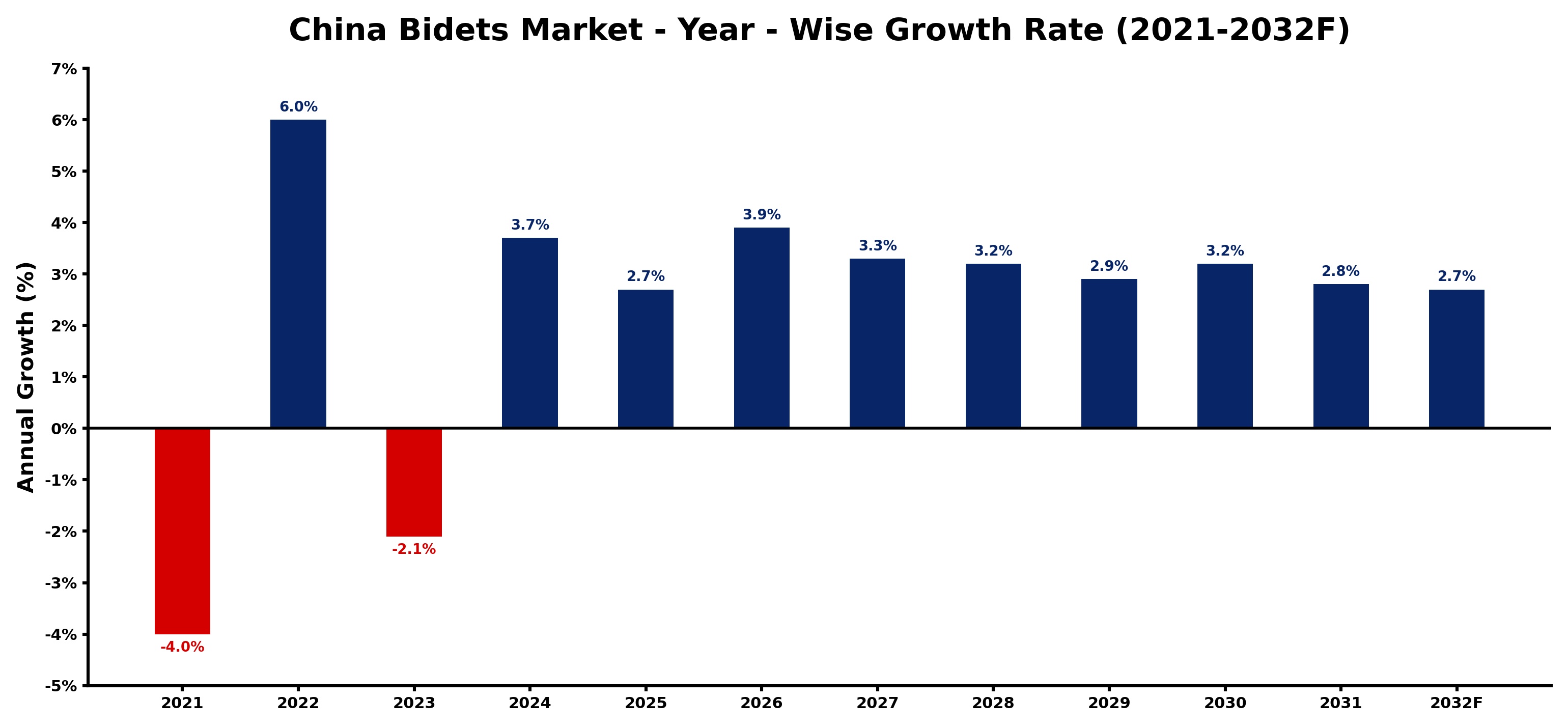
The table below presents the year‑wise growth rates along with the key drivers influencing the market
| Year | Growth Rate | Major Drivers |
| 2021 | -4.0% | Increasing industrial infrastructure investments |
| 2022 | 6.0% | Increasing smart city development projects |
| 2023 | -2.1% | Expansion of manufacturing activities |
| 2024 | 3.7% | Government infrastructure modernization initiatives |
| 2025 | 2.7% | Rising electricity demand across industries |
| 2026 | 3.9% | Increasing adoption of advanced technologies |
| 2027 | 3.3% | Growing renewable energy integration projects |
| 2028 | 3.2% | Increasing industrial automation investments |
| 2029 | 2.9% | Increasing industrial infrastructure investments |
| 2030 | 3.2% | Increasing industrial infrastructure investments |
| 2031 | 2.8% | Expansion of manufacturing activities |
| 2032 | 2.7% | Increasing adoption of advanced technologies |
Note - Market size estimations and growth projections presented in this report are based on 6Wresearch's advanced forecasting approach, validated with industry datasets as of June 2026.
China Bidets Market Synopsis
In recent years, the bidet has emerged as a transformative fixture in Chinese households, marking a shift toward more hygienic and environmentally sustainable bathroom practices. The growing acceptance of bidets stems from a confluence of factors, including rising disposable incomes and a cultural shift towards adopting Western lifestyle trends.
As consumers increasingly prioritize personal hygiene, the demand for advanced bidet technologies—such as heated seats and adjustable water pressure—continues to rise. This trend is complemented by efforts to educate the public about the benefits of bidets over traditional toilet paper, further propelling market growth.
China Bidets Market Key Takeaways
- Significant growth projected, reflecting a cultural shift towards modern hygiene practices.
- Technological innovations enhance bidet functionality and consumer appeal.
- Environmental awareness and water conservation initiatives support market expansion.
- Investment opportunities are ripe for manufacturers and service providers alike.
- Domestic production capabilities are increasingly emphasized to reduce import reliance.
Evaluation of Restraints in China Bidets Market
Despite the promising growth, the China Bidets Market faces notable restraints. Cultural preferences remain a significant barrier, as many consumers are still accustomed to traditional hygiene practices, such as using toilet paper or water containers. This reluctance is compounded by a general lack of awareness regarding the hygienic and environmental benefits of bidets, which can hinder market penetration. Additionally, the competitive landscape is crowded, with numerous brands vying for market share, leading to pricing pressures that could stifle potential growth for newer entrants.
China Bidets Market Trends
The demand for bidets is increasingly influenced by a focus on hygiene, with consumers seeking alternatives to toilet paper that are both more effective and eco-friendly. The incorporation of smart technology into bidet products is also on the rise, with features like air drying, customizable settings, and water efficiency becoming prominent. Additionally, the influence of Western consumer trends is evident as more middle-class families adopt modern bathroom solutions.
China Bidets Market Opportunities
The China Bidets Market presents a wealth of investment opportunities. As urbanization continues to accelerate, the demand for modern, hygienic bathroom solutions is expected to surge. Companies can explore avenues in manufacturing, distribution, and aftermarket services, such as installation and maintenance. Furthermore, focusing on research and development to tailor products for local consumer preferences can yield considerable returns, especially through collaborations with local partners and leveraging e-commerce platforms for broader market access.
Government Initiatives in the China Bidets Market
Government policies play a vital role in shaping the landscape of the China Bidets Market. Initiatives aimed at promoting water conservation, such as the Water Efficiency Labeling System, encourage manufacturers to develop bidet products that utilize resources more sustainably. Additionally, regulatory measures ensuring product quality and safety standards are in place to protect consumers. These policies reflect the government's commitment to fostering domestic production and technological innovation while aligning with broader environmental objectives.
Future Insights of the China Bidets Market
Looking ahead to 2026-2032, the China Bidets Market is poised for steady growth, driven by ongoing shifts in consumer attitudes towards hygiene and increasing disposable incomes. The demand for technologically advanced bidets is expected to grow, as consumers seek convenience and enhanced sanitation solutions. Moreover, government initiatives aimed at promoting sustainability and water efficiency are likely to support market expansion, making it an attractive opportunity for both domestic and international stakeholders.
China Bidets Market Latest Developments (May 2025 - June 2026)
Recent developments in the China Bidets Market indicate a shift towards greater technological integration. As manufacturers invest in smart features and eco-friendly designs, consumers are becoming increasingly engaged with these innovative products. Furthermore, a noticeable uptick in marketing efforts aimed at educating the public about the benefits of bidets has been observed, with campaigns highlighting both hygiene and environmental sustainability. Industry players are also focusing on enhancing customer experience through improved service offerings.
China Bidets Market - Key Attractiveness of the Report
- 10 Years of Market Numbers
- Historical Data Starting from 2022 to 2025
- Base Year: 2025
- Forecast Data until 2032
- Key Performance Indicators Impacting the Market
- Major Upcoming Developments and Projects
Key Highlights of the Report:
- China Bidets Market Outlook
- Market Size of China Bidets Market, 2025
- Forecast of China Bidets Market, 2032
- Historical Data and Forecast of China Bidets Revenues & Volume for the Period 2022-2032F
- China Bidets Market Trend Evolution
- China Bidets Market Drivers and Challenges
- China Bidets Price Trends
- China Bidets Porter's Five Forces
- China Bidets Industry Life Cycle
- Historical Data and Forecast of China Bidets Market Revenues & Volume By Product Type for the Period 2022-2032F
- Historical Data and Forecast of China Bidets Market Revenues & Volume By Conventional Bidet for the Period 2022-2032F
- Historical Data and Forecast of China Bidets Market Revenues & Volume By Bidet Shower for the Period 2022-2032F
- Historical Data and Forecast of China Bidets Market Revenues & Volume By Add-on Bidets for the Period 2022-2032F
- Historical Data and Forecast of China Bidets Market Revenues & Volume By Applications for the Period 2022-2032F
- Historical Data and Forecast of China Bidets Market Revenues & Volume By Household for the Period 2022-2032F
- Historical Data and Forecast of China Bidets Market Revenues & Volume By Commercial for the Period 2022-2032F
- China Bidets Import Export Trade Statistics
- Market Opportunity Assessment By Product Type
- Market Opportunity Assessment By Applications
- China Bidets Top Companies Market Share
- China Bidets Competitive Benchmarking By Technical and Operational Parameters
- China Bidets Company Profiles
- China Bidets Key Strategic Recommendations






































