China Botanical Supplements Market Size Growth Rate
The China Botanical Supplements Market may undergo a gradual slowdown in growth rates between 2025 and 2029. Beginning strongly at 7.68% in 2025, growth softens to 5.92% in 2029.
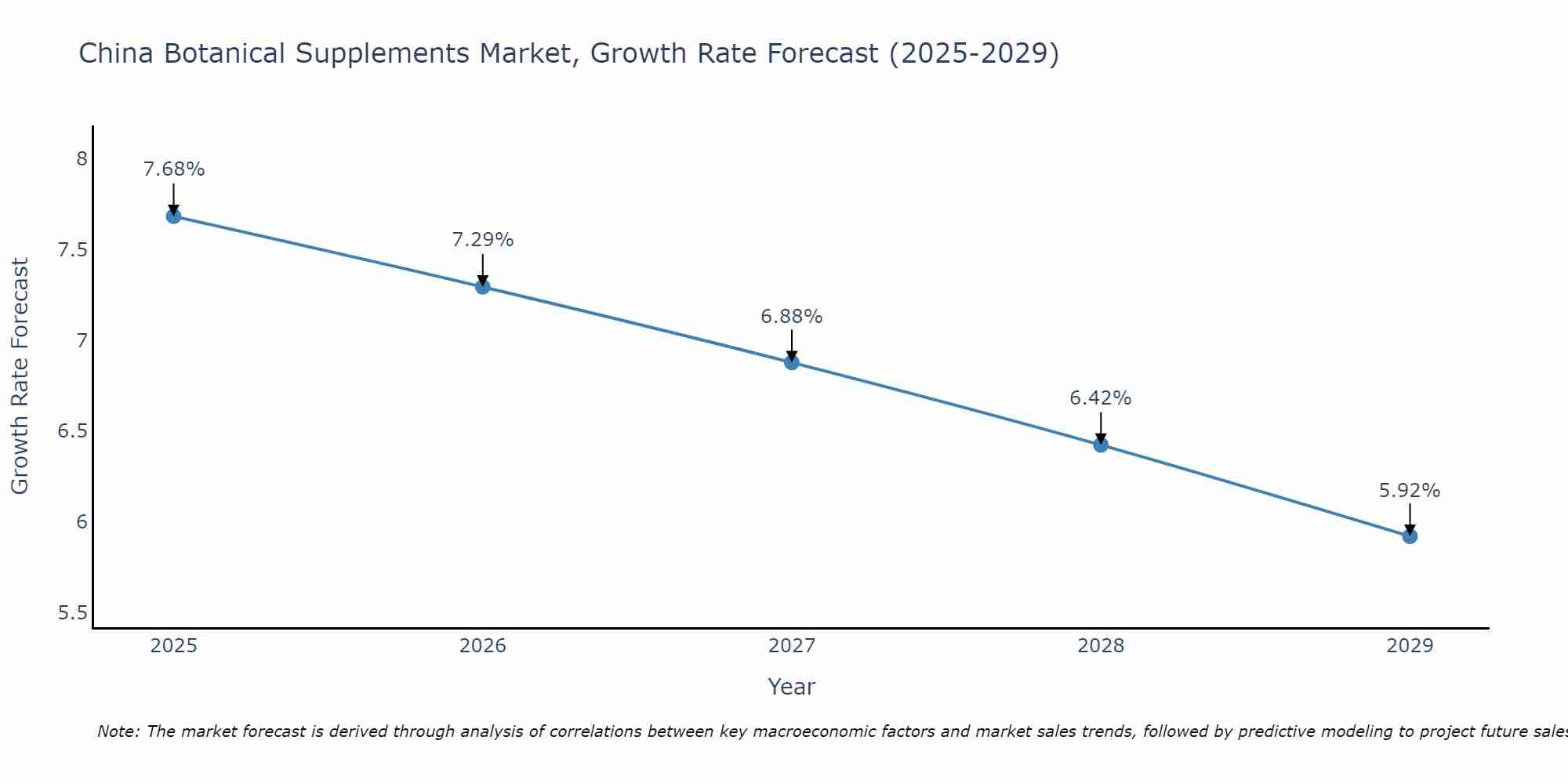
China Botanical Supplements Market Synopsis
The China Botanical Supplements Market is experiencing significant growth due to increasing consumer awareness of health and wellness. The market is driven by factors such as the rising prevalence of lifestyle diseases, growing disposable income, and a shift towards natural and herbal remedies. Traditional Chinese medicine practices have also contributed to the popularity of botanical supplements in the country. Key players in the market are focusing on product innovation, quality control, and expanding distribution channels to capitalize on the growing demand. The market is characterized by a wide range of products, including herbal extracts, vitamins, minerals, and other dietary supplements. Government initiatives to promote traditional medicine and regulations to ensure product safety and efficacy are also shaping the market landscape.
China Botanical Supplements Market Trends
The China Botanical Supplements Market is experiencing significant growth driven by increasing consumer awareness and interest in natural health products. Key trends include a rising demand for traditional Chinese herbal remedies like ginseng, goji berries, and astragalus, as well as the popularity of Western botanical supplements such as turmeric and green tea extract. Consumers are increasingly seeking products with clean labels, organic certifications, and transparent sourcing practices. E-commerce platforms are playing a crucial role in expanding market reach, offering a wide range of botanical supplements to tech-savvy Chinese consumers. The market is also seeing a shift towards personalized nutrition with customized botanical supplement formulations tailored to individual health needs. Overall, the China Botanical Supplements Market is poised for continued growth and innovation in response to evolving consumer preferences.
China Botanical Supplements Market Challenges
In the China botanical supplements market, challenges primarily include regulatory uncertainties and quality control issues. The regulatory landscape in China is constantly evolving, leading to ambiguity around product registration and approval processes, which can create barriers to market entry for companies. Quality control is another major concern, as ensuring the authenticity and safety of botanical ingredients can be challenging due to the complexity of supply chains and potential for adulteration. Additionally, cultural beliefs and traditional Chinese medicine practices can influence consumer preferences and perceptions of botanical supplements, requiring companies to navigate unique market dynamics. Overall, addressing these challenges requires a deep understanding of the regulatory environment, a robust quality control system, and tailored marketing strategies to effectively penetrate and succeed in the China botanical supplements market.
China Botanical Supplements Market Investment Opportunities
The China Botanical Supplements Market presents promising investment opportunities due to the growing trend of health and wellness awareness among Chinese consumers. With an increasing focus on preventive healthcare and natural remedies, there is a rising demand for botanical supplements derived from traditional Chinese medicine ingredients such as ginseng, goji berries, and astragalus. Investing in this market offers potential for growth as consumers seek out products that are perceived as natural and beneficial for overall well-being. Furthermore, the Chinese government`s support for the development of the traditional medicine industry provides a favorable regulatory environment for botanical supplement companies. Investing in research and development, establishing partnerships with local suppliers, and marketing innovative products tailored to Chinese consumer preferences can position investors for success in this burgeoning market.
Jordan Agar Market Government Policies
The Chinese government has implemented regulations governing the botanical supplements market to ensure product safety and quality. The State Food and Drug Administration (SFDA) oversees the registration and approval process for botanical supplements, requiring manufacturers to meet strict standards for production, labeling, and advertising. Additionally, the government has imposed restrictions on the use of certain herbs and botanicals deemed unsafe or potentially harmful. In recent years, there has been a push towards greater transparency and traceability in the supply chain, with a focus on monitoring the sourcing of raw materials and ensuring compliance with Good Manufacturing Practices (GMP). Overall, the government`s policies aim to protect consumers, promote industry development, and enhance the reputation of Chinese botanical supplements both domestically and internationally.
China Botanical Supplements Market Future Outlook
The future outlook for the China Botanical Supplements Market appears promising, driven by increasing consumer awareness of health and wellness, rising disposable incomes, and growing interest in natural and traditional remedies. The market is expected to experience steady growth due to the rising prevalence of lifestyle-related diseases, aging population, and shifting consumer preferences towards plant-based products. Key trends such as the adoption of e-commerce platforms for purchasing supplements, emphasis on quality and safety standards, and innovation in product formulations are likely to shape the market landscape. As Chinese consumers continue to prioritize preventive healthcare and seek out products with natural ingredients, the botanical supplements market in China is poised for expansion and opportunities for both domestic and international players.
Key Highlights of the Report:
- China Botanical Supplements Market Outlook
- Market Size of China Botanical Supplements Market, 2021
- Forecast of China Botanical Supplements Market, 2031
- Historical Data and Forecast of China Botanical Supplements Revenues & Volume for the Period 2018 - 2031
- China Botanical Supplements Market Trend Evolution
- China Botanical Supplements Market Drivers and Challenges
- China Botanical Supplements Price Trends
- China Botanical Supplements Porter's Five Forces
- China Botanical Supplements Industry Life Cycle
- Historical Data and Forecast of China Botanical Supplements Market Revenues & Volume By Source for the Period 2018 - 2031
- Historical Data and Forecast of China Botanical Supplements Market Revenues & Volume By Herbs for the Period 2018 - 2031
- Historical Data and Forecast of China Botanical Supplements Market Revenues & Volume By Leaves for the Period 2018 - 2031
- Historical Data and Forecast of China Botanical Supplements Market Revenues & Volume By Spices for the Period 2018 - 2031
- Historical Data and Forecast of China Botanical Supplements Market Revenues & Volume By Flowers for the Period 2018 - 2031
- Historical Data and Forecast of China Botanical Supplements Market Revenues & Volume By Others for the Period 2018 - 2031
- Historical Data and Forecast of China Botanical Supplements Market Revenues & Volume By Form for the Period 2018 - 2031
- Historical Data and Forecast of China Botanical Supplements Market Revenues & Volume By Powder for the Period 2018 - 2031
- Historical Data and Forecast of China Botanical Supplements Market Revenues & Volume By Liquid for the Period 2018 - 2031
- Historical Data and Forecast of China Botanical Supplements Market Revenues & Volume By Tablets for the Period 2018 - 2031
- Historical Data and Forecast of China Botanical Supplements Market Revenues & Volume By Capsules for the Period 2018 - 2031
- Historical Data and Forecast of China Botanical Supplements Market Revenues & Volume By Gummies for the Period 2018 - 2031
- Historical Data and Forecast of China Botanical Supplements Market Revenues & Volume By Others for the Period 2018 - 2031
- Historical Data and Forecast of China Botanical Supplements Market Revenues & Volume By Application for the Period 2018 - 2031
- Historical Data and Forecast of China Botanical Supplements Market Revenues & Volume By Energy & Weight Management for the Period 2018 - 2031
- Historical Data and Forecast of China Botanical Supplements Market Revenues & Volume By General Health for the Period 2018 - 2031
- Historical Data and Forecast of China Botanical Supplements Market Revenues & Volume By Bone & Joint Health for the Period 2018 - 2031
- Historical Data and Forecast of China Botanical Supplements Market Revenues & Volume By Gastrointestinal Health for the Period 2018 - 2031
- Historical Data and Forecast of China Botanical Supplements Market Revenues & Volume By Immunity for the Period 2018 - 2031
- Historical Data and Forecast of China Botanical Supplements Market Revenues & Volume By Cardiac Health for the Period 2018 - 2031
- Historical Data and Forecast of China Botanical Supplements Market Revenues & Volume By Diabetes for the Period 2018 - 2031
- Historical Data and Forecast of China Botanical Supplements Market Revenues & Volume By Anti-cancer for the Period 2018 - 2031
- Historical Data and Forecast of China Botanical Supplements Market Revenues & Volume By Distribution Channel for the Period 2018 - 2031
- Historical Data and Forecast of China Botanical Supplements Market Revenues & Volume By Offline for the Period 2018 - 2031
- Historical Data and Forecast of China Botanical Supplements Market Revenues & Volume By Online for the Period 2018 - 2031
- China Botanical Supplements Import Export Trade Statistics
- Market Opportunity Assessment By Source
- Market Opportunity Assessment By Form
- Market Opportunity Assessment By Application
- Market Opportunity Assessment By Distribution Channel
- China Botanical Supplements Top Companies Market Share
- China Botanical Supplements Competitive Benchmarking By Technical and Operational Parameters
- China Botanical Supplements Company Profiles
- China Botanical Supplements Key Strategic Recommendations






































