China Coconut Products Market Top 5 Importing Countries and Market Competition (HHI) Analysis
China continues to be a major player in the coconut products market, with a high concentration of imports from top exporting countries like Indonesia, Philippines, Malaysia, Vietnam, and Sri Lanka. The Herfindahl-Hirschman Index (HHI) indicates a significant level of market concentration in 2024. The Compound Annual Growth Rate (CAGR) between 2020-2024 stands at a strong 10.35%, showcasing sustained growth in demand for coconut products. Additionally, the growth rate from 2023 to 2024 is recorded at 4.95%, indicating a steady upward trend in import shipments.
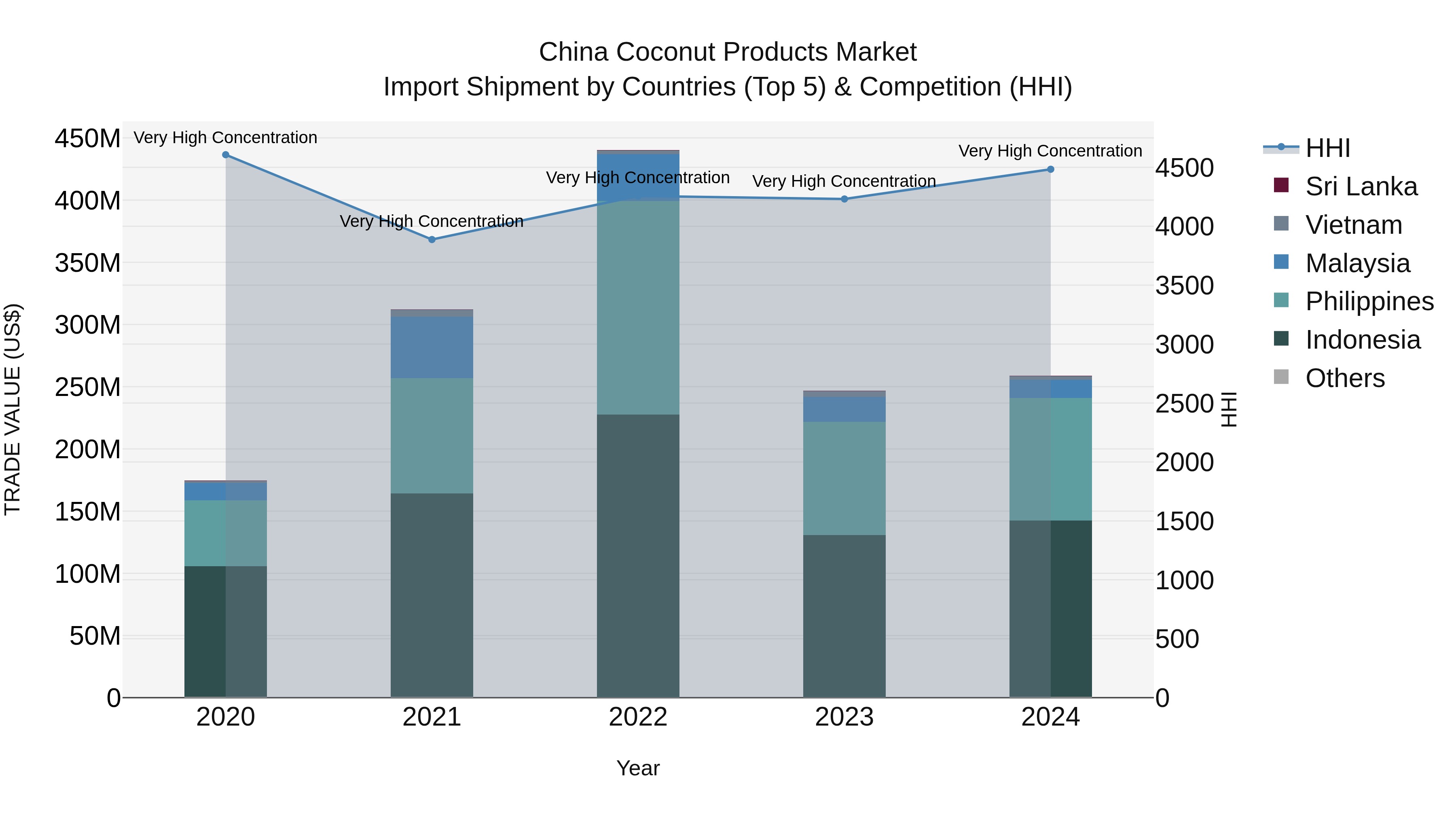
China Coconut Products Market Overview
The coconut products market in China includes a variety of items such as coconut milk, coconut water, and desiccated coconut. The market is expanding due to increasing consumer demand for healthy and natural products. Factors driving the market include the growing popularity of coconut-based beverages and the use of coconut products in cooking and baking. Challenges include supply chain issues and competition from alternative natural products.
Drivers of the market
The China Coconut Products market is influenced by the growing consumer demand for various coconut-based products, including coconut water, coconut milk, and desiccated coconut. The rise in health consciousness and the trend towards natural and organic products drive market expansion. Additionally, the increasing use of coconut products in the food and beverage industry and advancements in processing technologies support market growth.
Challenges of the market
The coconut products market in China encounters challenges related to raw material supply and environmental impact. The availability and cost of coconut resources can affect the production and pricing of coconut products. There is also increasing demand for sustainable and ethically sourced coconut products, which can drive up costs and require adherence to new regulations. The market faces competition from alternative products and fluctuating consumer preferences, influencing market dynamics and growth prospects.
Government Policy of the market
The coconut products market in China is regulated to ensure the safety and quality of a wide range of coconut-based goods. Government policies include standards for product processing, labeling, and health safety. Regulations focus on preventing contamination and ensuring that coconut products meet consumer safety standards. The government also supports sustainable production practices and the development of innovative coconut-based products.
Key Highlights of the Report:
- China Coconut Products Market Outlook
- Market Size of China Coconut Products Market, 2024
- Forecast of China Coconut Products Market, 2031
- Historical Data and Forecast of China Coconut Products Revenues & Volume for the Period 2021-2031
- China Coconut Products Market Trend Evolution
- China Coconut Products Market Drivers and Challenges
- China Coconut Products Price Trends
- China Coconut Products Porter's Five Forces
- China Coconut Products Industry Life Cycle
- Historical Data and Forecast of China Coconut Products Market Revenues & Volume By Type for the Period 2021-2031
- Historical Data and Forecast of China Coconut Products Market Revenues & Volume By Coconut Water for the Period 2021-2031
- Historical Data and Forecast of China Coconut Products Market Revenues & Volume By Coconut Oil for the Period 2021-2031
- Historical Data and Forecast of China Coconut Products Market Revenues & Volume By Coconut Milk for the Period 2021-2031
- Historical Data and Forecast of China Coconut Products Market Revenues & Volume By Dried Coconut Products for the Period 2021-2031
- Historical Data and Forecast of China Coconut Products Market Revenues & Volume By Others for the Period 2021-2031
- Historical Data and Forecast of China Coconut Products Market Revenues & Volume By Application for the Period 2021-2031
- Historical Data and Forecast of China Coconut Products Market Revenues & Volume By Food for the Period 2021-2031
- Historical Data and Forecast of China Coconut Products Market Revenues & Volume By Beverage for the Period 2021-2031
- Historical Data and Forecast of China Coconut Products Market Revenues & Volume By Cosmetics for the Period 2021-2031
- Historical Data and Forecast of China Coconut Products Market Revenues & Volume By Others for the Period 2021-2031
- Historical Data and Forecast of China Coconut Products Market Revenues & Volume By Form for the Period 2021-2031
- Historical Data and Forecast of China Coconut Products Market Revenues & Volume By Solid for the Period 2021-2031
- Historical Data and Forecast of China Coconut Products Market Revenues & Volume By Liquid for the Period 2021-2031
- China Coconut Products Import Export Trade Statistics
- Market Opportunity Assessment By Type
- Market Opportunity Assessment By Application
- Market Opportunity Assessment By Form
- China Coconut Products Top Companies Market Share
- China Coconut Products Competitive Benchmarking By Technical and Operational Parameters
- China Coconut Products Company Profiles
- China Coconut Products Key Strategic Recommendations






































