China Desiccated Coconut Market Top 5 Importing Countries and Market Competition (HHI) Analysis
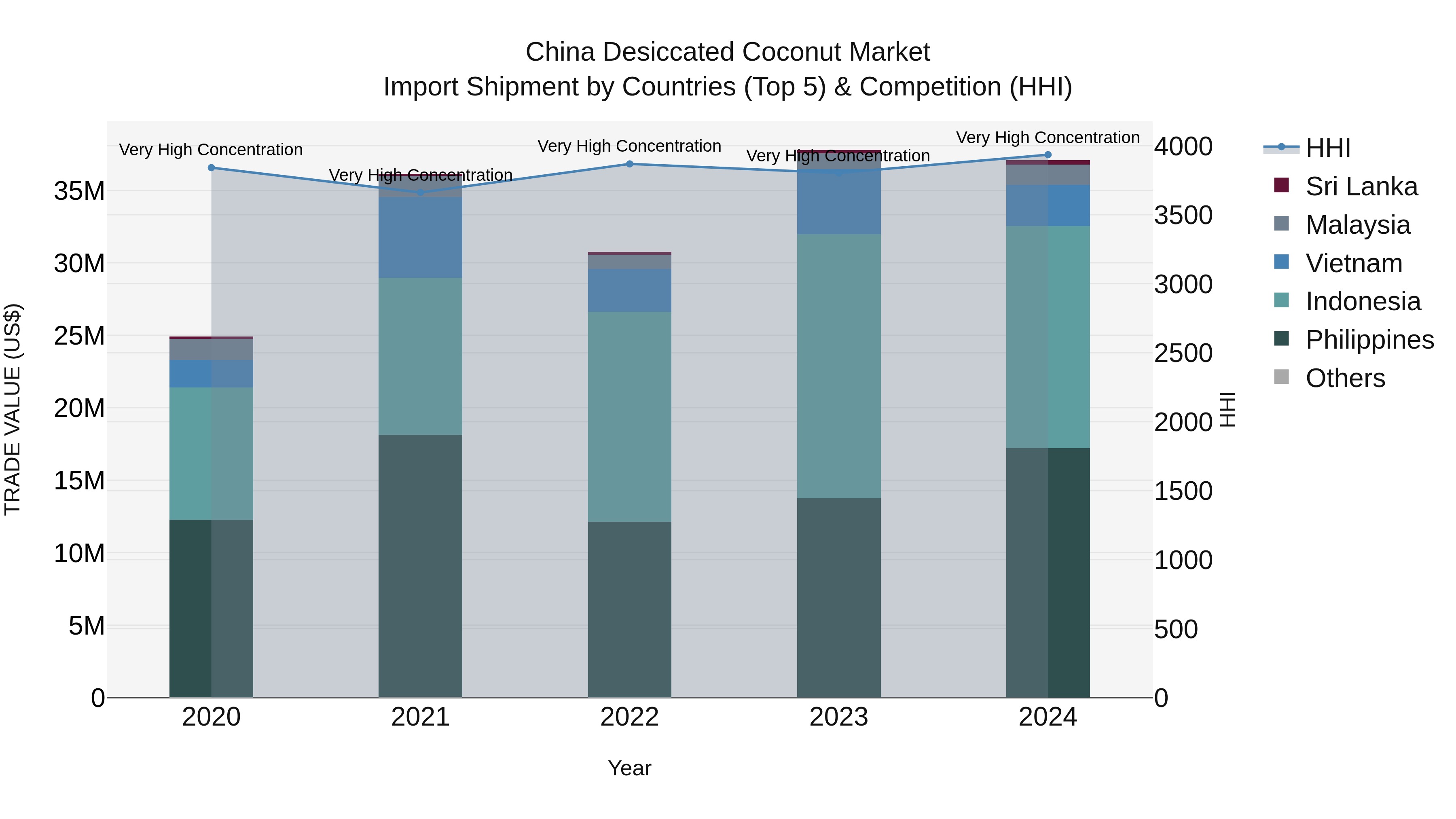
In 2024, China continued to be a key destination for desiccated coconut imports, with top suppliers including Philippines, Indonesia, Vietnam, Malaysia, and Sri Lanka. Despite a slight decline in growth rate from 2023 to 2024, the industry maintained a high concentration level, indicating strong market dominance by these key players. With a compound annual growth rate (CAGR) of 10.45% from 2020 to 2024, the desiccated coconut market in China demonstrates steady expansion and opportunities for both suppliers and stakeholders to capitalize on the growing demand in the region.
China Desiccated Coconut Market Overview
The China desiccated coconut market is experiencing steady growth driven by increasing consumer demand for healthy and natural food products. Desiccated coconut, known for its versatility in various culinary applications and long shelf life, is gaining popularity among health-conscious Chinese consumers. The market is witnessing a rise in the adoption of desiccated coconut by food manufacturers for use in confectionery, bakery, and snack products. Key players in the industry are focusing on product innovation, quality control, and expanding distribution channels to capitalize on the growing demand. The market is also influenced by factors such as changing dietary preferences, rising disposable income, and the influence of Western food trends. As a result, the China desiccated coconut market is poised for further growth and offers opportunities for new entrants and existing players to expand their market presence.
China Desiccated Coconut Market Trends
The China Desiccated Coconut Market is experiencing growth due to increasing demand for coconut-based products in the food and beverage industry. Consumers are increasingly seeking healthier and natural alternatives, driving the popularity of desiccated coconut as a versatile ingredient in various cuisines. The market is also benefiting from the rising awareness of the health benefits associated with coconut consumption, such as being rich in fiber and nutrients. Manufacturers are focusing on product innovation to cater to changing consumer preferences, including organic and sustainably sourced desiccated coconut options. Additionally, the growing popularity of plant-based diets is further fueling the demand for desiccated coconut as a vegan-friendly ingredient. Overall, the China Desiccated Coconut Market is poised for continued growth in the foreseeable future.
China Desiccated Coconut Market Challenges
The China Desiccated Coconut Market faces several challenges, including fluctuating raw material prices due to factors like weather conditions and market demand, competition from other coconut products, and the need for continuous quality control to meet stringent food safety standards. Additionally, logistical issues such as transportation costs and storage facilities can impact the supply chain efficiency. Moreover, consumer preferences and trends towards healthier alternatives may also pose challenges for the desiccated coconut market in China, requiring companies to innovate and diversify their product offerings to stay competitive in the market. Overall, navigating these challenges requires strategic planning, market research, and a deep understanding of consumer preferences and industry trends.
China Desiccated Coconut Market Investment Opportunities
The China Desiccated Coconut Market presents promising investment opportunities due to several factors. The increasing consumer demand for healthy and natural food products has fueled the growth of the coconut market in China. Desiccated coconut, with its long shelf life and versatility in various food applications, is gaining popularity among health-conscious consumers and the food industry. Additionally, the rising disposable income and changing dietary preferences in China have contributed to the growing demand for desiccated coconut products. Investors can explore opportunities in establishing desiccated coconut processing plants, investing in distribution networks, or partnering with local suppliers to capitalize on the expanding market. Conducting thorough market research and understanding consumer preferences will be crucial for successful investments in this dynamic sector.
China Desiccated Coconut Market Government Policy
The Chinese government does not have specific policies focused solely on the desiccated coconut market. However, the general agricultural policies and regulations in China impact the production, import, and export of desiccated coconut. These policies include agricultural subsidy programs, quality control measures, food safety regulations, and trade agreements. Import regulations and tariffs also play a role in shaping the desiccated coconut market in China. Additionally, environmental policies related to sustainable agriculture and resource management may influence the production processes and practices within the desiccated coconut industry. Overall, while there are no direct policies targeting the desiccated coconut market, the broader agricultural and trade policies in China have implications for this sector.
China Desiccated Coconut Market Future Outlook
The future outlook for the China Desiccated Coconut Market appears promising, driven by the growing consumer preference for healthy and natural food products. The increasing adoption of desiccated coconut in various food and beverage applications, such as bakery, confectionery, and snacks, is expected to fuel market growth. Additionally, the rising awareness about the nutritional benefits of desiccated coconut, including its high fiber content and versatility in cooking, is likely to further boost demand. With a growing middle-class population and improving disposable incomes in China, there is a significant opportunity for market expansion. However, factors such as fluctuating raw material prices and potential supply chain disruptions may pose challenges to market growth in the coming years. Overall, the China Desiccated Coconut Market is poised for steady growth driven by shifting consumer preferences and increasing product innovation.
Key Highlights of the Report:
- China Desiccated Coconut Market Outlook
- Market Size of China Desiccated Coconut Market, 2024
- Forecast of China Desiccated Coconut Market, 2031
- Historical Data and Forecast of China Desiccated Coconut Revenues & Volume for the Period 2021 - 2031
- China Desiccated Coconut Market Trend Evolution
- China Desiccated Coconut Market Drivers and Challenges
- China Desiccated Coconut Price Trends
- China Desiccated Coconut Porter's Five Forces
- China Desiccated Coconut Industry Life Cycle
- Historical Data and Forecast of China Desiccated Coconut Market Revenues & Volume By Cut Type for the Period 2021 - 2031
- Historical Data and Forecast of China Desiccated Coconut Market Revenues & Volume By Regular cut for the Period 2021 - 2031
- Historical Data and Forecast of China Desiccated Coconut Market Revenues & Volume By Fancy cut for the Period 2021 - 2031
- Historical Data and Forecast of China Desiccated Coconut Market Revenues & Volume By Fat Content for the Period 2021 - 2031
- Historical Data and Forecast of China Desiccated Coconut Market Revenues & Volume By High fat content for the Period 2021 - 2031
- Historical Data and Forecast of China Desiccated Coconut Market Revenues & Volume By Low fat content for the Period 2021 - 2031
- Historical Data and Forecast of China Desiccated Coconut Market Revenues & Volume By Distribution Channel for the Period 2021 - 2031
- Historical Data and Forecast of China Desiccated Coconut Market Revenues & Volume By Supermarket for the Period 2021 - 2031
- Historical Data and Forecast of China Desiccated Coconut Market Revenues & Volume By Specialty stores for the Period 2021 - 2031
- Historical Data and Forecast of China Desiccated Coconut Market Revenues & Volume By Online sales for the Period 2021 - 2031
- Historical Data and Forecast of China Desiccated Coconut Market Revenues & Volume By Retail stores for the Period 2021 - 2031
- China Desiccated Coconut Import Export Trade Statistics
- Market Opportunity Assessment By Cut Type
- Market Opportunity Assessment By Fat Content
- Market Opportunity Assessment By Distribution Channel
- China Desiccated Coconut Top Companies Market Share
- China Desiccated Coconut Competitive Benchmarking By Technical and Operational Parameters
- China Desiccated Coconut Company Profiles
- China Desiccated Coconut Key Strategic Recommendations






































