China Disinfectant Market Top 5 Importing Countries and Market Competition (HHI) Analysis
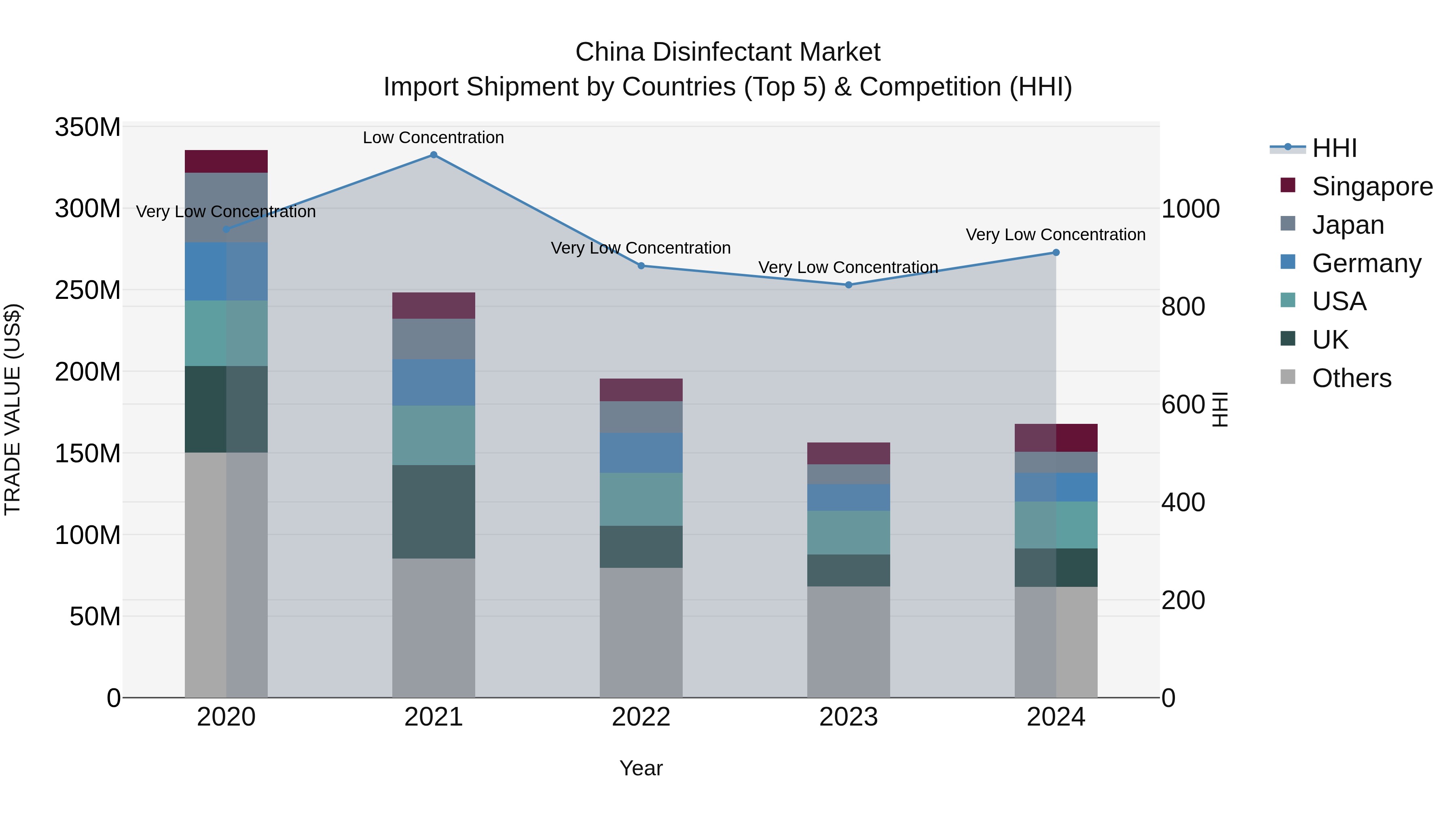
Despite the low concentration levels in the China disinfectant import market, the top exporting countries in 2024 include the USA, UK, Germany, Singapore, and Japan. The industry experienced a negative Compound Annual Growth Rate (CAGR) of -15.89% from 2020 to 2024, but there was a promising growth rate of 7.38% from 2023 to 2024. This indicates potential opportunities for both domestic and international disinfectant manufacturers to tap into the Chinese market and cater to the growing demand for hygiene products.
China Disinfectant Market Overview
The China disinfectant market is witnessing significant growth due to increasing awareness about hygiene and the importance of disinfection in preventing the spread of diseases. The market is driven by factors such as the ongoing COVID-19 pandemic, rising concerns about food safety, and the growing healthcare sector. Key players in the market are focusing on product innovation, developing eco-friendly and effective disinfectants, and expanding their distribution networks. The market is segmented into various categories such as surface disinfectants, air disinfectants, and water disinfectants to cater to different end-user industries including healthcare, food and beverage, and household sectors. Government initiatives to promote hygiene practices and stringent regulations regarding disinfectant use are also influencing market growth. Overall, the China disinfectant market is expected to continue expanding in the coming years.
China Disinfectant Market Trends
The China disinfectant market is experiencing a shift towards more eco-friendly and sustainable products, driven by increasing awareness of environmental concerns and health issues. Consumers are seeking products that are effective against pathogens but also safe for both people and the environment. This has led to a rise in demand for natural and non-toxic disinfectants made from ingredients such as plant-based extracts and essential oils. Additionally, there is a growing emphasis on convenience and ease of use, with a preference for products in convenient formats such as wipes or sprays. The market is also seeing an increased focus on advanced technologies such as UV disinfection and electrostatic sprayers. Overall, the trend in the China disinfectant market is towards products that are effective, safe, and sustainable.
China Disinfectant Market Challenges
In the China disinfectant market, some of the key challenges faced include strict regulations and standards set by the government, intense competition among both domestic and international brands, increasing consumer demand for eco-friendly and natural products, and the constant need for innovation to meet evolving customer preferences. Additionally, counterfeit products and issues related to product safety and efficacy have also posed challenges for companies operating in the market. With the ongoing COVID-19 pandemic highlighting the importance of disinfection and hygiene practices, companies in the China disinfectant market are under pressure to maintain high-quality standards while navigating these complex challenges to stay competitive and meet the growing demand for effective disinfection solutions.
China Disinfectant Market Investment Opportunities
Investment opportunities in the China disinfectant market are promising due to increasing awareness about hygiene and sanitation, especially in light of recent public health crises. The market is witnessing a surge in demand for disinfectant products across various sectors such as healthcare, hospitality, and residential spaces. Key areas for investment include advanced disinfectant technologies such as UV disinfection systems, robotic disinfection devices, and eco-friendly disinfectants. Additionally, there is a growing trend towards online sales channels for disinfectant products, presenting opportunities for e-commerce platforms and digital marketing strategies. Investors can also explore partnerships with local manufacturers to capitalize on the expanding market and leverage China`s strong manufacturing capabilities. Overall, the China disinfectant market offers lucrative prospects for investors looking to tap into the country`s growing focus on health and safety.
China Disinfectant Market Government Policy
The Chinese government has implemented various policies related to the disinfectant market to ensure product safety and consumer protection. These policies include regulations on product registration and approval processes, labeling requirements, and restrictions on the use of certain chemicals in disinfectant products. Additionally, the government has established guidelines for manufacturing practices and quality control standards to uphold product efficacy and safety. Furthermore, the authorities have set limits on the pricing of disinfectant products to prevent price gouging and ensure affordability for consumers. Overall, these policies aim to regulate the disinfectant market, promote transparency, and safeguard public health in China.
China Disinfectant Market Future Outlook
The future outlook for the China disinfectant market looks promising, with steady growth anticipated in the coming years. Factors driving this growth include increasing awareness about hygiene and cleanliness, rising demand for effective disinfection products in various sectors such as healthcare, food processing, and hospitality, and the ongoing focus on preventing infectious diseases. The market is expected to witness innovation and product development to meet evolving consumer needs, with a shift towards eco-friendly and sustainable disinfectant solutions. Additionally, the government`s stringent regulations on hygiene standards and public health measures will further boost the demand for disinfectant products in China. Overall, the China disinfectant market is likely to experience robust growth and present opportunities for manufacturers and suppliers in the foreseeable future.
Key Highlights of the Report:
- China Disinfectant Market Outlook
- Market Size of China Disinfectant Market,2024
- Forecast of China Disinfectant Market, 2031
- Historical Data and Forecast of China Disinfectant Revenues & Volume for the Period 2021-2031
- China Disinfectant Market Trend Evolution
- China Disinfectant Market Drivers and Challenges
- China Disinfectant Price Trends
- China Disinfectant Porter's Five Forces
- China Disinfectant Industry Life Cycle
- Historical Data and Forecast of China Disinfectant Market Revenues & Volume By Product Type for the Period 2021-2031
- Historical Data and Forecast of China Disinfectant Market Revenues & Volume By Alcoholbased for the Period 2021-2031
- Historical Data and Forecast of China Disinfectant Market Revenues & Volume By Hydrogen Peroxide for the Period 2021-2031
- Historical Data and Forecast of China Disinfectant Market Revenues & Volume By Quaternary Ammonium Compounds for the Period 2021-2031
- Historical Data and Forecast of China Disinfectant Market Revenues & Volume By Application for the Period 2021-2031
- Historical Data and Forecast of China Disinfectant Market Revenues & Volume By Surface Cleaning for the Period 2021-2031
- Historical Data and Forecast of China Disinfectant Market Revenues & Volume By Wound Care for the Period 2021-2031
- Historical Data and Forecast of China Disinfectant Market Revenues & Volume By Industrial Cleaning for the Period 2021-2031
- Historical Data and Forecast of China Disinfectant Market Revenues & Volume By End Use for the Period 2021-2031
- Historical Data and Forecast of China Disinfectant Market Revenues & Volume By Healthcare for the Period 2021-2031
- Historical Data and Forecast of China Disinfectant Market Revenues & Volume By Pharmaceuticals for the Period 2021-2031
- Historical Data and Forecast of China Disinfectant Market Revenues & Volume By Foodservice for the Period 2021-2031
- Historical Data and Forecast of China Disinfectant Market Revenues & Volume By Form for the Period 2021-2031
- Historical Data and Forecast of China Disinfectant Market Revenues & Volume By Liquid for the Period 2021-2031
- Historical Data and Forecast of China Disinfectant Market Revenues & Volume By Gel for the Period 2021-2031
- Historical Data and Forecast of China Disinfectant Market Revenues & Volume By Spray for the Period 2021-2031
- Historical Data and Forecast of China Disinfectant Market Revenues & Volume By Distribution Channel for the Period 2021-2031
- Historical Data and Forecast of China Disinfectant Market Revenues & Volume By Online Retail for the Period 2021-2031
- Historical Data and Forecast of China Disinfectant Market Revenues & Volume By Offline Retail for the Period 2021-2031
- Historical Data and Forecast of China Disinfectant Market Revenues & Volume By B2B Sales for the Period 2021-2031
- China Disinfectant Import Export Trade Statistics
- Market Opportunity Assessment By Product Type
- Market Opportunity Assessment By Application
- Market Opportunity Assessment By End Use
- Market Opportunity Assessment By Form
- Market Opportunity Assessment By Distribution Channel
- China Disinfectant Top Companies Market Share
- China Disinfectant Competitive Benchmarking By Technical and Operational Parameters
- China Disinfectant Company Profiles
- China Disinfectant Key Strategic Recommendations






































