China Flower and Ornamental Plants Market Summary
The china flower and ornamental plants market was estimated at USD 174 Million in 2025 and is projected to reach USD 201 Million by 2032, growing at a CAGR of 4.3% from 2026 to 2032.
China Flower and Ornamental Plants Market Year-wise Growth Rate and Key Drivers
This graph highlights how the China Flower and Ornamental Plants Market has steadily grown over the past five years, supported by major growth factors.
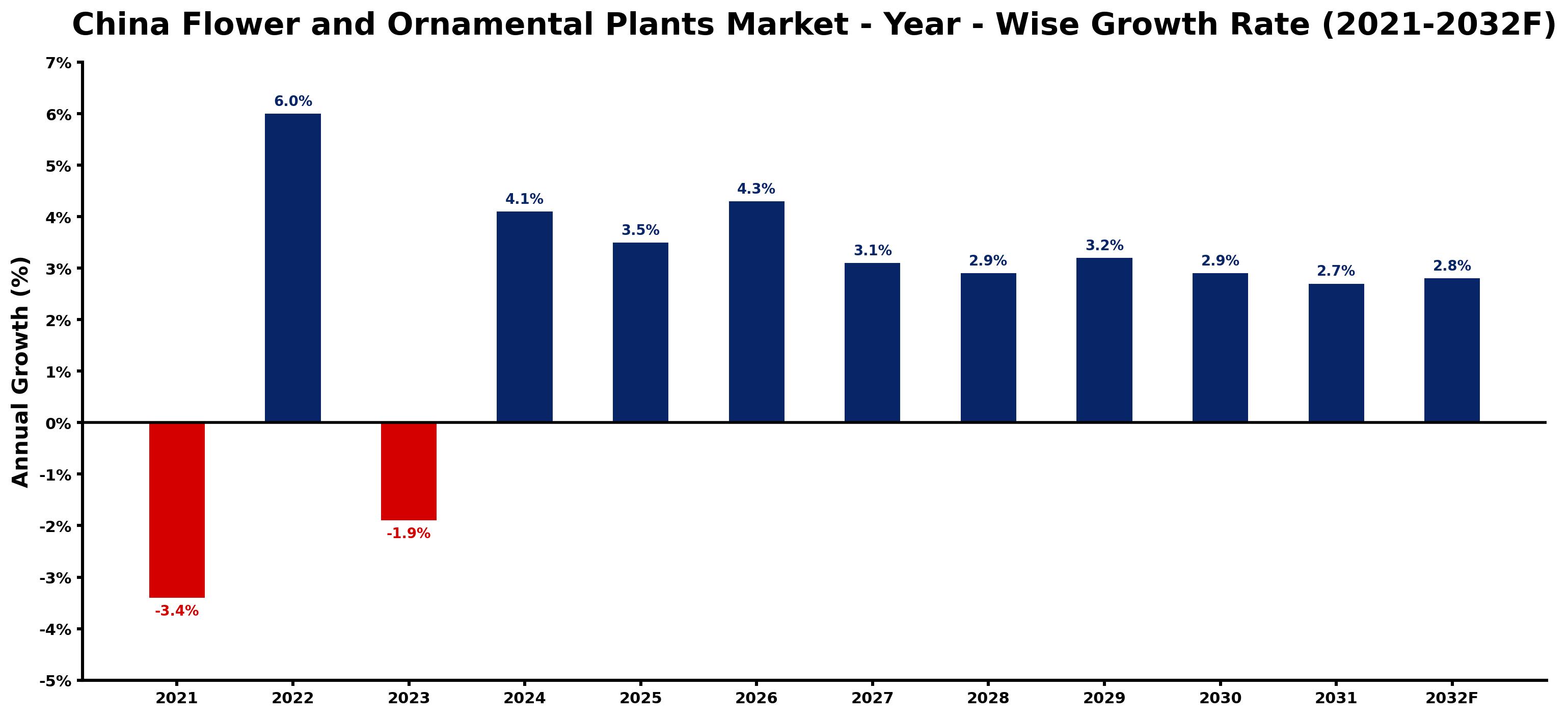
The table below presents the year wise growth rates along with the key drivers influencing the market
| Year | Growth Rate | Major Drivers |
| 2021 | -3.4% | Severe weather events disrupted supply chains, negatively impacting availability and driving up prices for ornamental plants. |
| 2022 | 6.0% | E-commerce platforms have become essential for flower sales and distribution expansion. |
| 2023 | -1.9% | Severe weather events disrupted supply chains, leading to reduced availability of floral products in China. |
| 2024 | 4.1% | Celebrity endorsements and social media influencers are driving interest in premium ornamental plants. |
| 2025 | 3.5% | Regional floral events are fostering community engagement and increasing local business opportunities. |
| 2026 | 4.3% | Technological innovations in greenhouse management are enhancing yield and reducing costs. |
| 2027 | 3.1% | Increased disposable income is encouraging households to invest in home beautification projects. |
| 2028 | 2.9% | Interest in wellness and biophilic design is boosting demand for indoor plants. |
| 2029 | 3.2% | Emerging trends in landscaping are inspiring homeowners to embrace diverse plant varieties. |
| 2030 | 2.9% | Collaboration between local producers and designers is enhancing product offerings and market reach. |
| 2031 | 2.7% | Resilience against climate change is prompting investments in drought-tolerant ornamental species. |
| 2032 | 2.8% | A shift towards regional sourcing is supporting local economies and reducing transportation impacts. |
Note - Market size estimations and growth projections presented in this report are based on 6Wresearch's advanced forecasting approach, validated with industry datasets as of June 2026.
China Flower and Ornamental Plants Market Synopsis
The China Flower and Ornamental Plants Market is projected to reach 4.3% and witness significant growth during the forecast period (2026-2032). This growth is driven by several interlinked factors, including rising disposable incomes, increasing urbanization rates, and a growing consciousness regarding the importance of green spaces for enhancing urban landscapes. Furthermore, a surge in demand for visually appealing gardens is prompting consumers to invest in a variety of flowers, shrubs, grasses, and trees, thereby stimulating market expansion in this sector. Additionally, supportive government initiatives aimed at promoting floriculture are playing a pivotal role in bolstering the industry.
China Flower and Ornamental Plants Market Growth Drivers
The primary drivers fueling the China Flower and Ornamental Plants Market include:
- Rising Disposable Income: The rapid increase in disposable income among urban dwellers is enabling more consumers to allocate budgets for landscape beautification and gardening projects.
- Urbanization Trends: As China continues to urbanize, there is a heightened demand for ornamental plants to enhance aesthetic appeal in residential and commercial spaces.
- Environmental Awareness: A growing emphasis on environmental sustainability is fostering interest in green spaces, further bolstering demand for flowers and ornamental plants.
- Technological Advancements: Innovations in cultivation techniques are leading to improved crop quality and reduced costs, enhancing the market's appeal to both consumers and growers.
- Increase in Recreational Gardening: The upsurge in gardening as a leisure activity, particularly among millennials, is driving demand for a diverse array of ornamental plants.
China Flower and Ornamental Plants Market Trends and Opportunities
Several notable trends are emerging within the China Flower and Ornamental Plants Market:
- Shift Towards Native Plants: Consumers are increasingly favoring the use of native plants that are better adapted to local climates and ecological conditions, promoting biodiversity and sustainability.
- Digitalization of Sales Channels: The rise of e-commerce platforms is transforming how consumers purchase flowers and ornamental plants, with online shopping presenting a convenient alternative.
- Integration of Smart Technologies: The adoption of smart gardening technologies, such as automated irrigation systems and plant care apps, is enhancing consumer engagement and satisfaction.
- Focus on Landscape Architecture: As more urban environments prioritize landscape architecture, demand for specialized ornamental plants to complement architectural designs is on the rise.
- Health and Wellness Connection: Growing awareness of the mental and physical health benefits associated with gardening and green spaces is driving increased consumer interest in ornamental plants.
China Flower and Ornamental Plants Market Challenges and Restraints
While the China Flower and Ornamental Plants Market presents numerous opportunities, several challenges need to be addressed:
- Climate Change Impacts: Adverse weather conditions and shifts in climate can affect plant growth and survival rates, posing risks to growers.
- Supply Chain Disruptions: The market is susceptible to disruptions in supply chains, particularly concerning the logistics of transporting live plants.
- Pesticide Regulations: Stringent regulations surrounding pesticide use can limit the availability of certain products and restrict cultivation practices.
- Market Saturation: As the market grows, increased competition may lead to saturation in certain regions, impacting profit margins.
- Consumer Awareness: There remains a need for greater consumer education regarding plant care and the environmental benefits of ornamental gardening.
China Flower and Ornamental Plants Market Government Investment and Initiatives
Government investment and initiatives are crucial to supporting the growth of the China Flower and Ornamental Plants Market. The China Flower Association (CFA) has been instrumental in promoting floriculture through various programs aimed at enhancing cultivation practices and increasing market reach. Public spending focused on urban green space development and beautification projects encourages local governments to invest in ornamental plants. Incentives for sustainable farming practices, along with policies encouraging biodiversity and conservation efforts, also play a significant role. Furthermore, partnerships between governmental bodies and the private sector are fostering innovation within the industry, enabling research into better cultivation techniques and plant varieties.
China Flower and Ornamental Plants Market Latest Developments (May 2025 - June 2026)
Recent developments in the China Flower and Ornamental Plants Market highlight a progressive trend towards sustainability and innovation. Initiatives focusing on eco-friendly practices have gained traction, encouraging growers to adopt more sustainable cultivating methods. The popularity of indoor plants has surged, leading to a diversifying market catering to residential customers. Additionally, advancements in technology are significantly improving production processes, thereby enhancing product quality. Industry exhibitions and trade fairs are becoming platforms for introducing novel plant varieties and cultivation techniques. Collectively, these developments underline a forward-looking direction in the market, emphasizing the balance between aesthetics and ecological responsibility.
China Flower and Ornamental Plants Market - Key Attractiveness of the Report
- 10 Years of Market Numbers
- Historical Data Starting from 2022 to 2025
- Base Year: 2025
- Forecast Data until 2032
- Key Performance Indicators Impacting the Market
- Major Upcoming Developments and Projects
Key Highlights of the Report:
- China Flower and Ornamental Plants Market Outlook
- Market Size of China Flower and Ornamental Plants Market, 2025
- Forecast of China Flower and Ornamental Plants Market, 2032F
- Historical Data and Forecast of China Flower and Ornamental Plants Revenues & Volume for the Period 2022-2032F
- China Flower and Ornamental Plants Market Trend Evolution
- China Flower and Ornamental Plants Market Drivers and Challenges
- China Flower and Ornamental Plants Price Trends
- China Flower and Ornamental Plants Porter's Five Forces
- China Flower and Ornamental Plants Industry Life Cycle
- Historical Data and Forecast of China Flower and Ornamental Plants Market Revenues & Volume By Product Type for the Period 2022-2032F
- Historical Data and Forecast of China Flower and Ornamental Plants Market Revenues & Volume By Potted Plants for the Period 2022-2032F
- Historical Data and Forecast of China Flower and Ornamental Plants Market Revenues & Volume By Cut Flowers for the Period 2022-2032F
- Historical Data and Forecast of China Flower and Ornamental Plants Market Revenues & Volume By Application for the Period 2022-2032F
- Historical Data and Forecast of China Flower and Ornamental Plants Market Revenues & Volume By Home for the Period 2022-2032F
- Historical Data and Forecast of China Flower and Ornamental Plants Market Revenues & Volume By Commercial for the Period 2022-2032F
- China Flower and Ornamental Plants Import Export Trade Statistics
- Market Opportunity Assessment By Product Type
- Market Opportunity Assessment By Application
- China Flower and Ornamental Plants Top Companies Market Share
- China Flower and Ornamental Plants Competitive Benchmarking By Technical and Operational Parameters
- China Flower and Ornamental Plants Company Profiles
- China Flower and Ornamental Plants Key Strategic Recommendations






































