China Glass Beads Market Growth Rate Analysis (2025 - 2031)
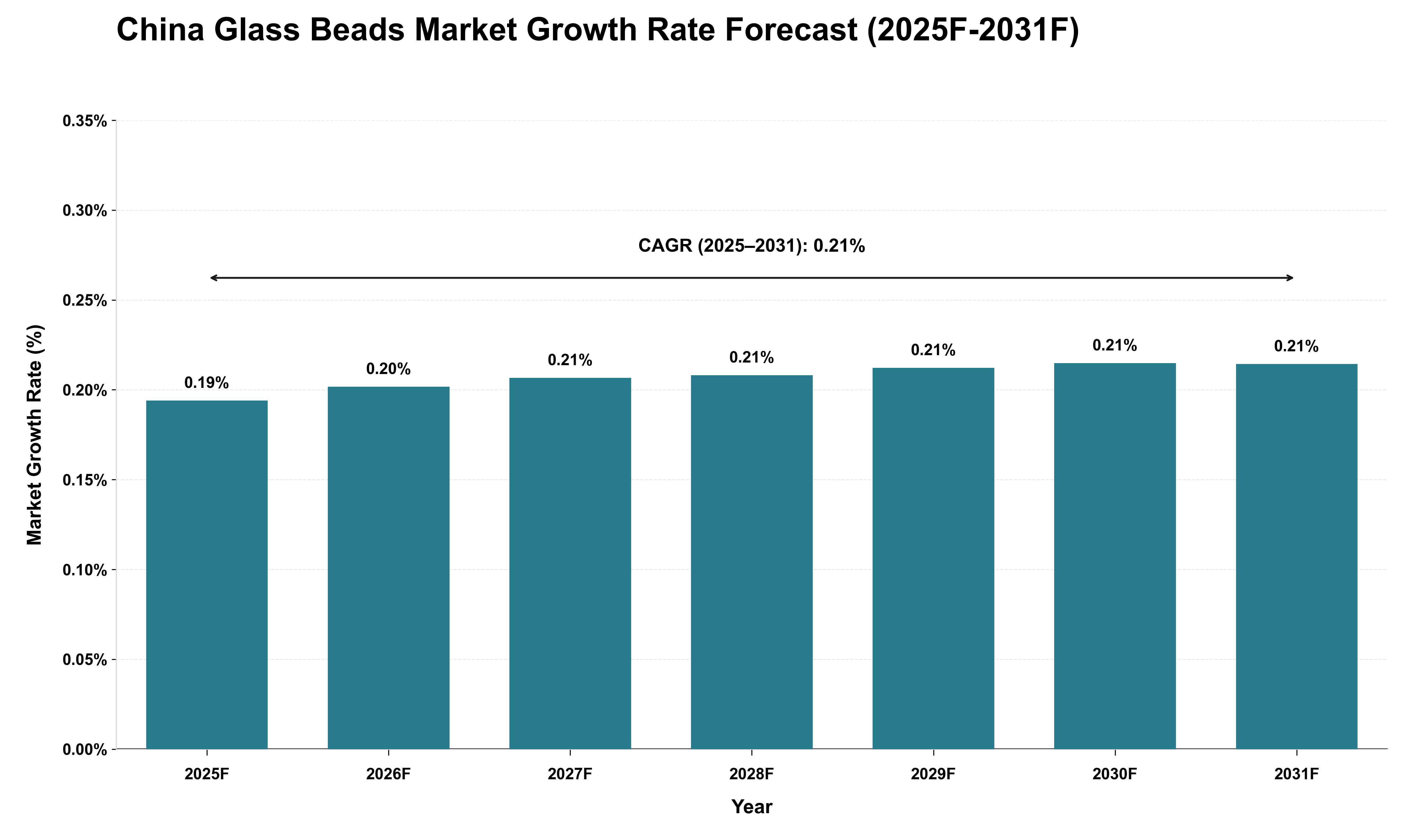
The China glass beads market is projected to experience a compound annual growth rate (CAGR) of 0.21% from 2025 to 2031, reflecting a period characterized by modest economic dynamics. This growth trajectory will likely be influenced by macroeconomic factors such as fluctuations in construction and manufacturing sectors, which are critical end-users of glass beads. As urbanization continues, albeit at a slower pace, demand for reflective materials in safety applications may stabilize. Additionally, import dependencies on raw materials could introduce volatility in pricing and availability, impacting production costs and ultimately influencing market growth. The consistent annual growth rates from 2025 through 2031 suggest that while the market will not face drastic changes, it will remain sensitive to broader economic cycles and shifts in consumer preferences towards sustainable materials, potentially affecting long-term demand patterns within this niche segment.
Key Highlights of the Report:
- China Glass Beads? Market Outlook
- Market Size of China Glass Beads? Market, 2025
- Forecast of China Glass Beads? Market, 2032
- Historical Data and Forecast of China Glass Beads? Revenues & Volume for the Period 2022 - 2032F
- China Glass Beads? Market Trend Evolution
- China Glass Beads? Market Drivers and Challenges
- China Glass Beads? Price Trends
- China Glass Beads? Porter's Five Forces
- China Glass Beads? Industry Life Cycle
- Historical Data and Forecast of China Glass Beads? Market Revenues & Volume By Type for the Period 2022 - 2032F
- Historical Data and Forecast of China Glass Beads? Market Revenues & Volume By Soild for the Period 2022 - 2032F
- Historical Data and Forecast of China Glass Beads? Market Revenues & Volume By Hollow for the Period 2022 - 2032F
- Historical Data and Forecast of China Glass Beads? Market Revenues & Volume By Other for the Period 2022 - 2032F
- Historical Data and Forecast of China Glass Beads? Market Revenues & Volume By Application for the Period 2022 - 2032F
- Historical Data and Forecast of China Glass Beads? Market Revenues & Volume By Reflective meterial for the Period 2022 - 2032F
- Historical Data and Forecast of China Glass Beads? Market Revenues & Volume By Industry polishing& meterial for the Period 2022 - 2032F
- Historical Data and Forecast of China Glass Beads? Market Revenues & Volume By Thermal insulating meterial for the Period 2022 - 2032F
- Historical Data and Forecast of China Glass Beads? Market Revenues & Volume By Other for the Period 2022 - 2032F
- China Glass Beads? Import Export Trade Statistics
- Market Opportunity Assessment By Type
- Market Opportunity Assessment By Application
- China Glass Beads? Top Companies Market Share
- China Glass Beads? Competitive Benchmarking By Technical and Operational Parameters
- China Glass Beads? Company Profiles
- China Glass Beads? Key Strategic Recommendations






































