China Glycolic Acid Market Top 5 Importing Countries and Market Competition (HHI) Analysis
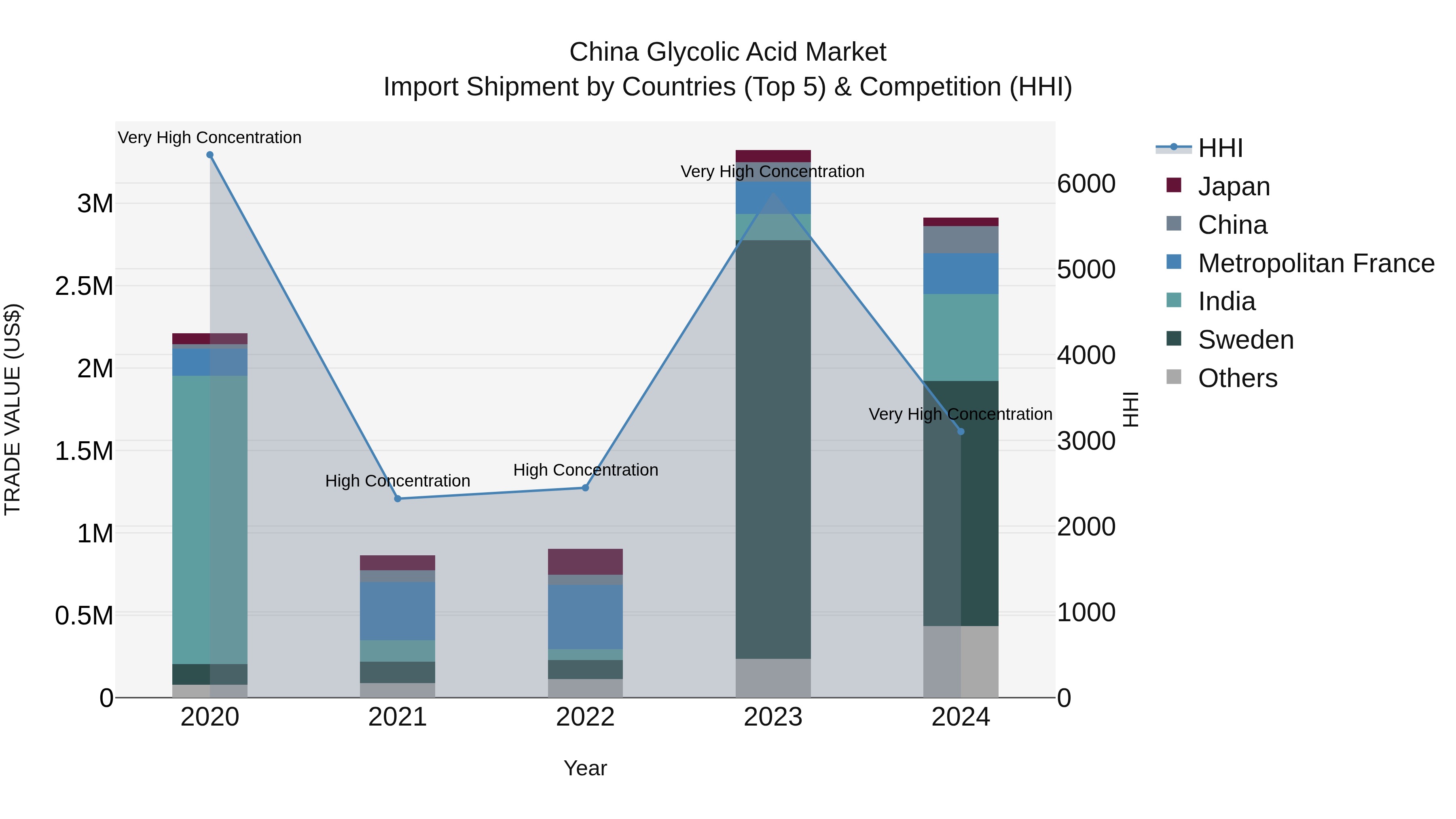
In 2024, China glycolic acid import market continues to see significant concentration, with top exporting countries being Sweden, India, Metropolitan France, Germany, and China itself. Despite a slight decline in growth rate from 2023 to 2024, the compound annual growth rate (CAGR) from 2020 to 2024 stands at a healthy 7.15%. The high concentration in the market suggests a strong competitive landscape among the key exporting countries, indicating continued demand and opportunities for market players in the glycolic acid industry.
China Glycolic Acid Market Overview
The Glycolic Acid Market in China is expanding as the demand for this alpha-hydroxy acid increases in the cosmetic and pharmaceutical industries. Glycolic acid is used in skincare products for its exfoliating and anti-aging properties, as well as in medical applications for treating certain skin conditions. The market growth is driven by the rising consumer interest in skincare and anti-aging products, the increasing use of glycolic acid in professional and over-the-counter products, and advancements in production technologies that enhance product efficacy and safety.
Drivers of the market
China`s glycolic acid market is driven by the increasing demand for glycolic acid in personal care and cosmetic products. Glycolic acid is widely used in skincare products, such as exfoliants, cleansers, and peels, due to its ability to remove dead skin cells and improve skin texture. The growing awareness of skincare and beauty, coupled with rising disposable incomes, supports market growth. Additionally, advancements in glycolic acid production technology and the development of new applications further drive market expansion.
Challenges of the market
The China glycolic acid market faces challenges related to environmental regulations and production costs. Glycolic acid production involves processes that can be environmentally taxing, and as China enforces stricter environmental laws, manufacturers may need to invest in cleaner technologies, impacting profitability. Additionally, fluctuations in the prices of raw materials and competition from international producers can pressure local manufacturers to optimize their cost structures while maintaining product quality.
Government Policy of the market
The Glycolic Acid market in China benefits from government policies that support advancements in chemical production and promote high-quality skincare ingredients. The government`s focus on improving production efficiency and supporting the development of innovative glycolic acid products drives the demand in this market. Policies encouraging the adoption of glycolic acid in various applications, including cosmetics, personal care, and chemical peels, also contribute to market growth. Additionally, initiatives aimed at fostering innovation in chemical technology and supporting the growth of the skincare and cosmetics sectors further support the expansion of the glycolic acid market.
Key Highlights of the Report:
- China Glycolic Acid Market Outlook
- Market Size of China Glycolic Acid Market, 2024
- Forecast of China Glycolic Acid Market, 2031
- Historical Data and Forecast of China Glycolic Acid Revenues & Volume for the Period 2021-2031
- China Glycolic Acid Market Trend Evolution
- China Glycolic Acid Market Drivers and Challenges
- China Glycolic Acid Price Trends
- China Glycolic Acid Porter's Five Forces
- China Glycolic Acid Industry Life Cycle
- Historical Data and Forecast of China Glycolic Acid Market Revenues & Volume By Grade for the Period 2021-2031
- Historical Data and Forecast of China Glycolic Acid Market Revenues & Volume By Cosmetic for the Period 2021-2031
- Historical Data and Forecast of China Glycolic Acid Market Revenues & Volume By Technical for the Period 2021-2031
- Historical Data and Forecast of China Glycolic Acid Market Revenues & Volume By Application for the Period 2021-2031
- Historical Data and Forecast of China Glycolic Acid Market Revenues & Volume By Personal Care & Dermatology for the Period 2021-2031
- Historical Data and Forecast of China Glycolic Acid Market Revenues & Volume By Industrial for the Period 2021-2031
- Historical Data and Forecast of China Glycolic Acid Market Revenues & Volume By Household for the Period 2021-2031
- China Glycolic Acid Import Export Trade Statistics
- Market Opportunity Assessment By Grade
- Market Opportunity Assessment By Application
- China Glycolic Acid Top Companies Market Share
- China Glycolic Acid Competitive Benchmarking By Technical and Operational Parameters
- China Glycolic Acid Company Profiles
- China Glycolic Acid Key Strategic Recommendations






































