China Ingots Market Growth Rate Analysis (2025 - 2031)
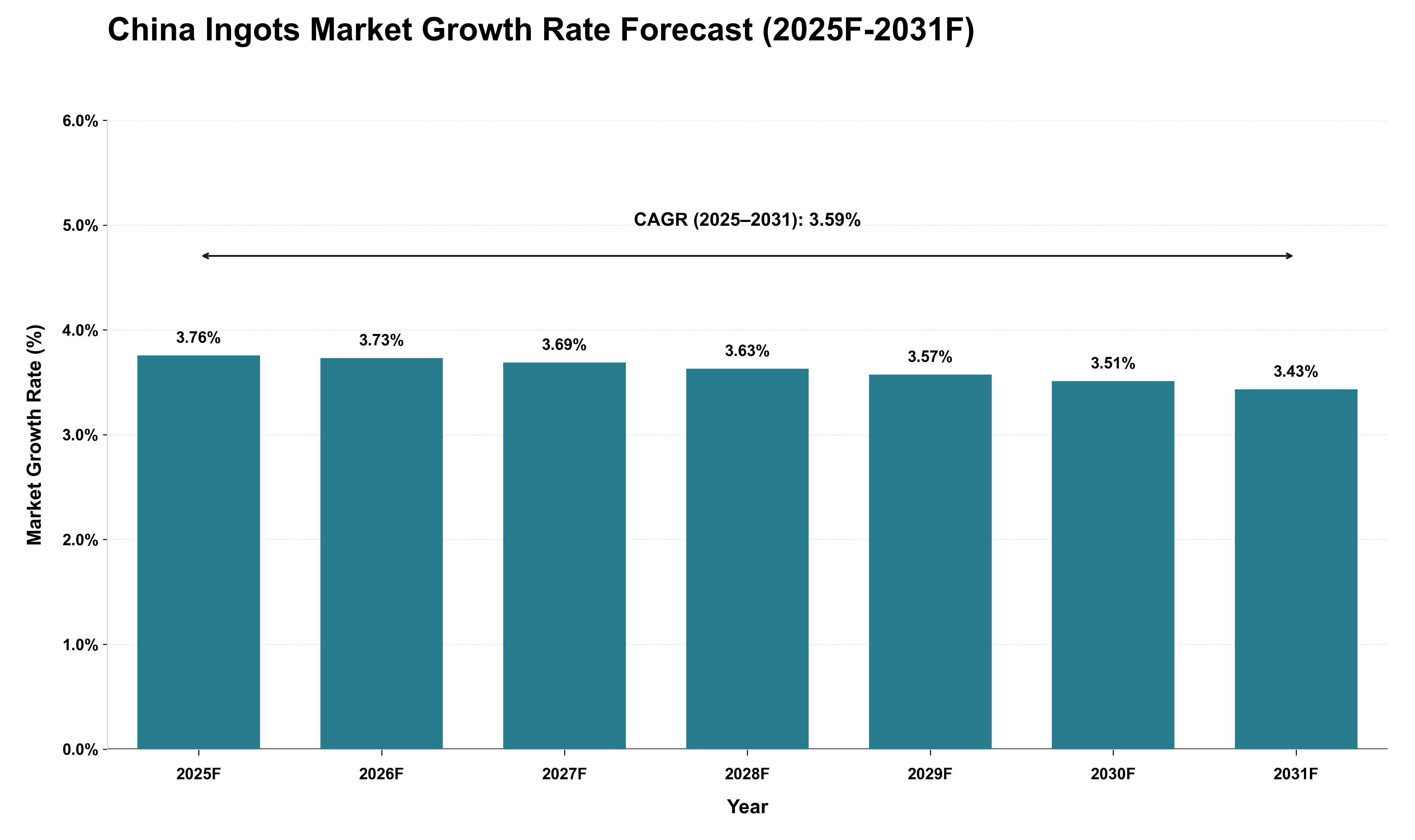
From 2025 onward, the China ingots market is anticipated to experience a steady growth trajectory, with a compound annual growth rate (CAGR) of 3.59%. This growth will be influenced by evolving regulatory frameworks and trade policies that shape import dependencies and domestic production capabilities. As global demand for ingots increases, China’s strategic positioning as both a major producer and consumer will likely drive import adjustments, particularly in response to international tariffs and trade agreements. The projected annual growth rates, starting at 3.76% in 2025 and gradually declining to 3.43% by 2031, suggest an adaptive market responding to cyclical trends in raw material sourcing and environmental regulations aimed at reducing carbon footprints. Consequently, the interplay between domestic policy shifts and global market dynamics will play a crucial role in shaping the future landscape of the ingots sector in China.
Key Highlights of the Report:
- China Ingots Market Outlook
- Market Size of China Ingots Market, 2024
- Forecast of China Ingots Market, 2026
- Historical Data and Forecast of China Ingots Revenues & Volume for the Period 2021 - 2031
- China Ingots Market Trend Evolution
- China Ingots Market Drivers and Challenges
- China Ingots Price Trends
- China Ingots Porter's Five Forces
- China Ingots Industry Life Cycle
- Historical Data and Forecast of China Ingots Market Revenues & Volume By Product Types for the Period 2021 - 2031
- Historical Data and Forecast of China Ingots Market Revenues & Volume By Single Crystals for the Period 2021 - 2031
- Historical Data and Forecast of China Ingots Market Revenues & Volume By Copper Alloys for the Period 2021 - 2031
- Historical Data and Forecast of China Ingots Market Revenues & Volume By Material Types for the Period 2021 - 2031
- Historical Data and Forecast of China Ingots Market Revenues & Volume By Aluminium for the Period 2021 - 2031
- Historical Data and Forecast of China Ingots Market Revenues & Volume By Steel for the Period 2021 - 2031
- Historical Data and Forecast of China Ingots Market Revenues & Volume By Gold for the Period 2021 - 2031
- Historical Data and Forecast of China Ingots Market Revenues & Volume By Tin for the Period 2021 - 2031
- Historical Data and Forecast of China Ingots Market Revenues & Volume By Others for the Period 2021 - 2031
- Historical Data and Forecast of China Ingots Market Revenues & Volume By Applications for the Period 2021 - 2031
- Historical Data and Forecast of China Ingots Market Revenues & Volume By Petroleum for the Period 2021 - 2031
- Historical Data and Forecast of China Ingots Market Revenues & Volume By Oil & Gas for the Period 2021 - 2031
- Historical Data and Forecast of China Ingots Market Revenues & Volume By Chemical for the Period 2021 - 2031
- Historical Data and Forecast of China Ingots Market Revenues & Volume By Marine for the Period 2021 - 2031
- Historical Data and Forecast of China Ingots Market Revenues & Volume By Others for the Period 2021 - 2031
- China Ingots Import Export Trade Statistics
- Market Opportunity Assessment By Product Types
- Market Opportunity Assessment By Material Types
- Market Opportunity Assessment By Applications
- China Ingots Top Companies Market Share
- China Ingots Competitive Benchmarking By Technical and Operational Parameters
- China Ingots Company Profiles
- China Ingots Key Strategic Recommendations






































