China Injection Moulding Machines Market Growth Rate Analysis (2025 - 2031)
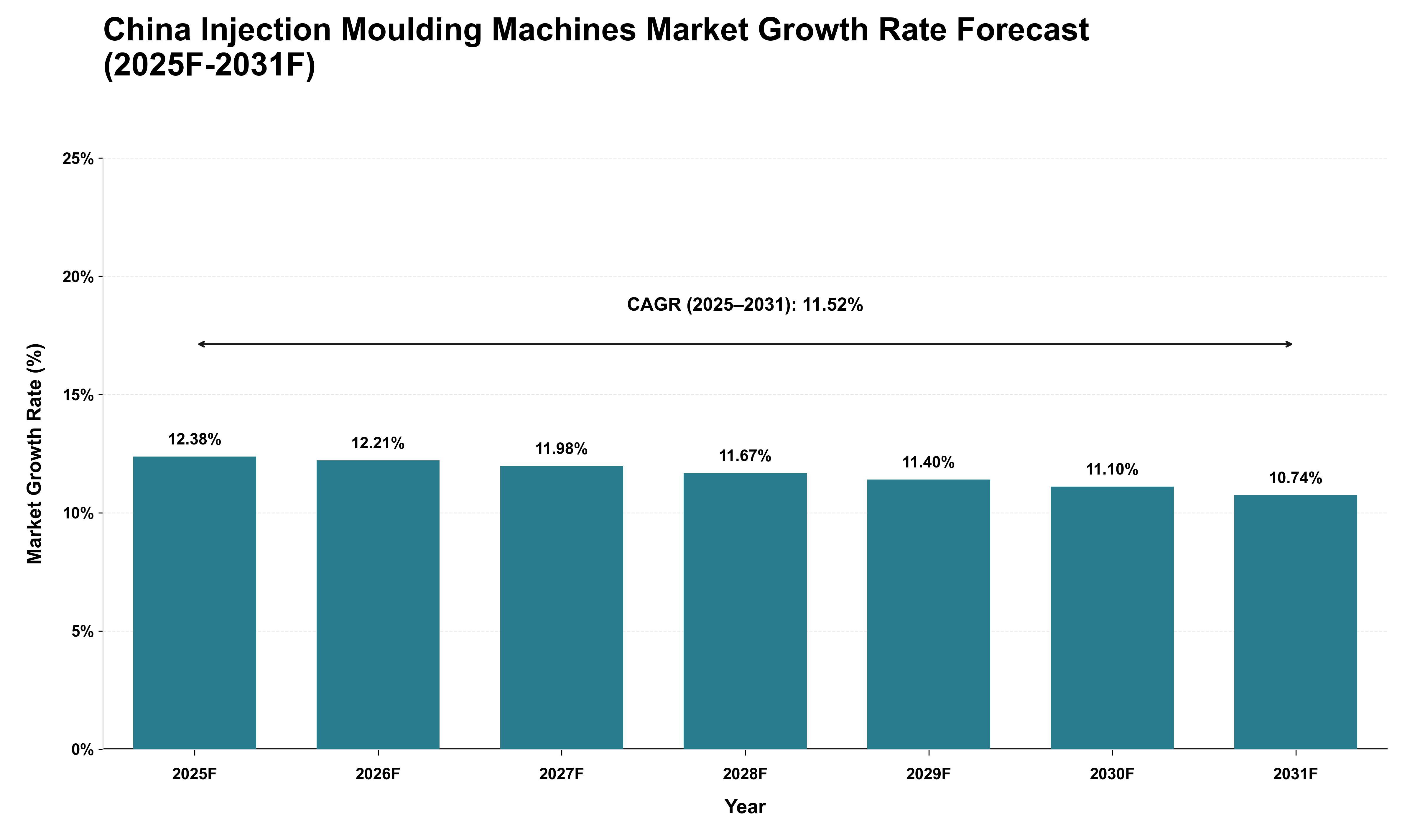
The China injection moulding machines market is projected to experience a robust compound annual growth rate of 11.52% from 2025 to 2031, reflecting a strong demand driven by evolving manufacturing needs and technological advancements. Regulatory frameworks favoring automation and efficiency in production processes will likely enhance the adoption of these machines across various sectors, including automotive and consumer goods. As import dependencies shift, domestic manufacturers may increasingly focus on innovation to meet both local and international standards, thereby fostering competitive pricing strategies. The anticipated cyclical trends suggest that as global supply chains stabilize post-pandemic, there will be heightened investment in capital equipment like injection moulding machines, further propelling growth rates that start at 12.38% in 2025 and gradually taper off to 10.74% by 2031, indicating sustained yet adaptive market dynamics amidst changing economic conditions.
Key Highlights of the Report:
- China Injection Moulding Machines Market Outlook
- Market Size of China Injection Moulding Machines Market, 2025
- Forecast of China Injection Moulding Machines Market, 2032
- Historical Data and Forecast of China Injection Moulding Machines Revenues & Volume for the Period 2022 - 2032F
- China Injection Moulding Machines Market Trend Evolution
- China Injection Moulding Machines Market Drivers and Challenges
- China Injection Moulding Machines Price Trends
- China Injection Moulding Machines Porter's Five Forces
- China Injection Moulding Machines Industry Life Cycle
- Historical Data and Forecast of China Injection Moulding Machines Market Revenues & Volume By Clamping Force for the Period 2022 - 2032F
- Historical Data and Forecast of China Injection Moulding Machines Market Revenues & Volume By Less than 200 Tons Force for the Period 2022 - 2032F
- Historical Data and Forecast of China Injection Moulding Machines Market Revenues & Volume By 200 Tons Force To 500 Tons Force for the Period 2022 - 2032F
- Historical Data and Forecast of China Injection Moulding Machines Market Revenues & Volume By More Than 500 Tons Force for the Period 2022 - 2032F
- Historical Data and Forecast of China Injection Moulding Machines Market Revenues & Volume By Machine Type for the Period 2022 - 2032F
- Historical Data and Forecast of China Injection Moulding Machines Market Revenues & Volume By All-electric for the Period 2022 - 2032F
- Historical Data and Forecast of China Injection Moulding Machines Market Revenues & Volume By Hydraulic for the Period 2022 - 2032F
- Historical Data and Forecast of China Injection Moulding Machines Market Revenues & Volume By Hybrid for the Period 2022 - 2032F
- Historical Data and Forecast of China Injection Moulding Machines Market Revenues & Volume By Solution for the Period 2022 - 2032F
- Historical Data and Forecast of China Injection Moulding Machines Market Revenues & Volume By New Sales for the Period 2022 - 2032F
- Historical Data and Forecast of China Injection Moulding Machines Market Revenues & Volume By Aftermarket for the Period 2022 - 2032F
- China Injection Moulding Machines Import Export Trade Statistics
- Market Opportunity Assessment By Clamping Force
- Market Opportunity Assessment By Machine Type
- Market Opportunity Assessment By Solution
- China Injection Moulding Machines Top Companies Market Share
- China Injection Moulding Machines Competitive Benchmarking By Technical and Operational Parameters
- China Injection Moulding Machines Company Profiles
- China Injection Moulding Machines Key Strategic Recommendations






































