China Jewellery Market Growth Rate Analysis (2025 - 2031)
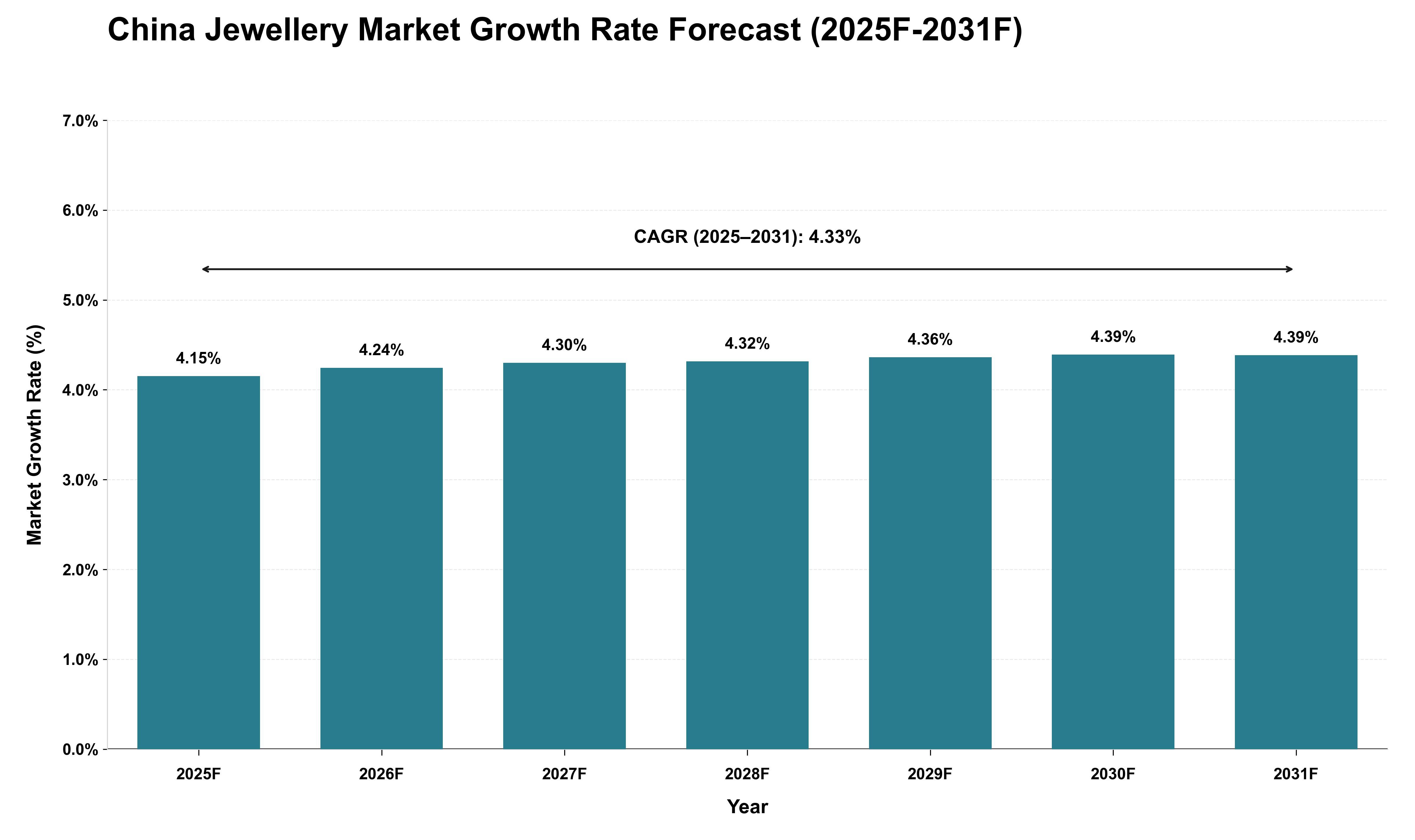
The China jewellery market will experience a steady growth trajectory, driven by evolving consumer preferences and increasing disposable incomes, projected to expand at a CAGR of 4.33% from 2025 to 2031. This growth will be underpinned by rising demand for both traditional and contemporary designs, as well as an anticipated increase in import dependencies for precious metals and gemstones, which may influence input costs. As global supply chains adapt to geopolitical shifts and environmental regulations, fluctuations in raw material availability could lead to variable pricing dynamics. The annual growth rates will reflect this complexity, with a gradual increase from 4.15% in 2025 to a peak of 4.39% in both 2030 and 2031, indicating that while demand remains robust, the market will also navigate challenges related to sourcing and cost management throughout the forecast period.
Key Highlights of the Report:
- China Jewellery Market Outlook
- Market Size of China Jewellery Market, 2024
- Forecast of China Jewellery Market, 2031
- Historical Data and Forecast of China Jewellery Revenues & Volume for the Period 2021 - 2031
- China Jewellery Market Trend Evolution
- China Jewellery Market Drivers and Challenges
- China Jewellery Price Trends
- China Jewellery Porter's Five Forces
- China Jewellery Industry Life Cycle
- Historical Data and Forecast of China Jewellery Market Revenues & Volume By Product for the Period 2021 - 2031
- Historical Data and Forecast of China Jewellery Market Revenues & Volume By Necklace for the Period 2021 - 2031
- Historical Data and Forecast of China Jewellery Market Revenues & Volume By Ring for the Period 2021 - 2031
- Historical Data and Forecast of China Jewellery Market Revenues & Volume By Earrings for the Period 2021 - 2031
- Historical Data and Forecast of China Jewellery Market Revenues & Volume By Bracelet for the Period 2021 - 2031
- Historical Data and Forecast of China Jewellery Market Revenues & Volume By Others for the Period 2021 - 2031
- Historical Data and Forecast of China Jewellery Market Revenues & Volume By Material for the Period 2021 - 2031
- Historical Data and Forecast of China Jewellery Market Revenues & Volume By Gold for the Period 2021 - 2031
- Historical Data and Forecast of China Jewellery Market Revenues & Volume By Platinum for the Period 2021 - 2031
- Historical Data and Forecast of China Jewellery Market Revenues & Volume By Diamond for the Period 2021 - 2031
- Historical Data and Forecast of China Jewellery Market Revenues & Volume By Others for the Period 2021 - 2031
- China Jewellery Import Export Trade Statistics
- Market Opportunity Assessment By Product
- Market Opportunity Assessment By Material
- China Jewellery Top Companies Market Share
- China Jewellery Competitive Benchmarking By Technical and Operational Parameters
- China Jewellery Company Profiles
- China Jewellery Key Strategic Recommendations






































