China Leather goods Market Size Growth Rate
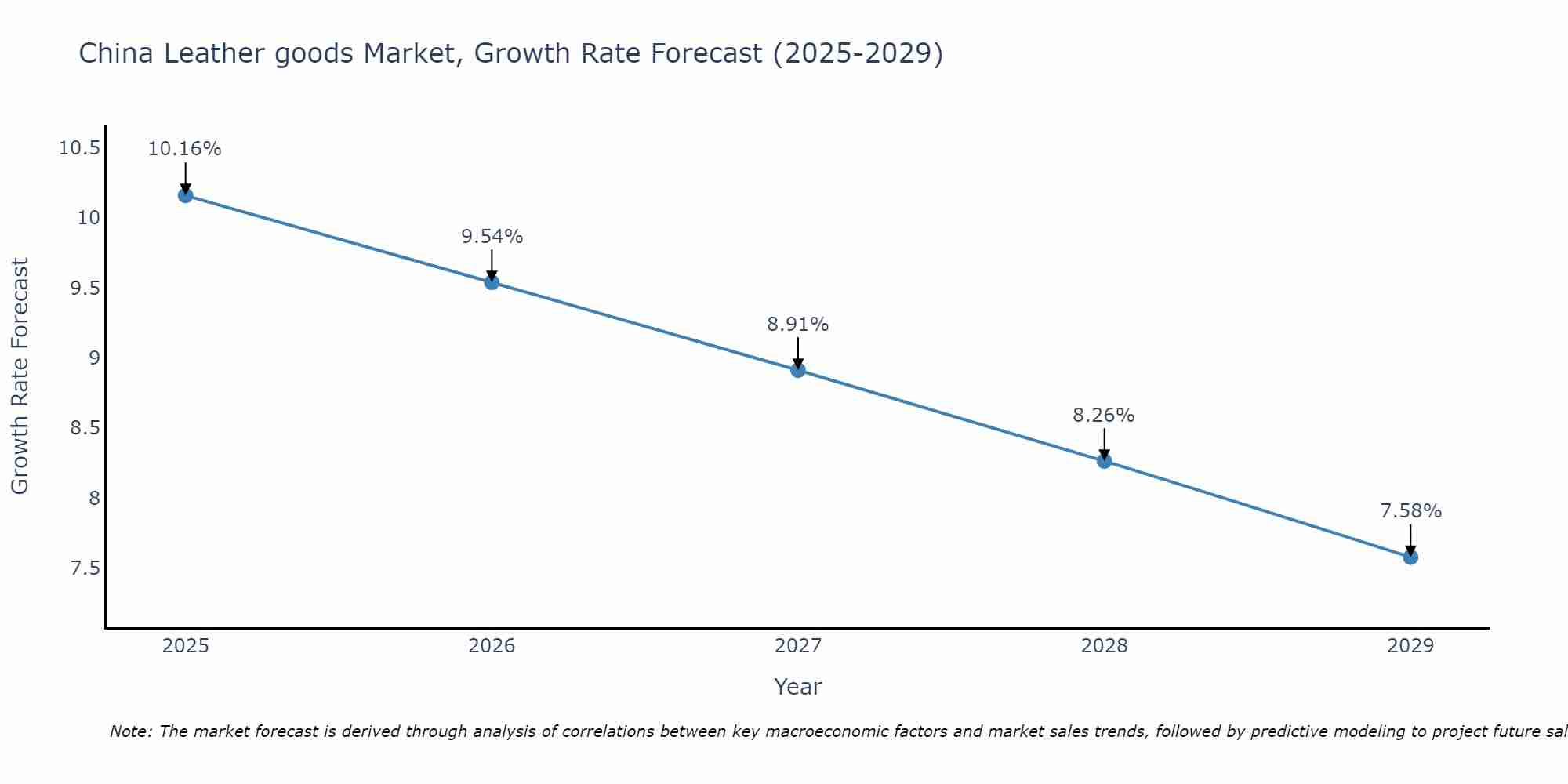
The China Leather goods Market may undergo a gradual slowdown in growth rates between 2025 and 2029. Starting high at 10.16% in 2025, the market steadily declines to 7.58% by 2029.
China Leather goods Market Overview
The Leather Goods Market in China is growing due to the increasing demand for high-quality leather products such as bags, wallets, and footwear. Leather goods are valued for their durability, aesthetics, and luxury appeal. The market expansion is driven by rising disposable incomes, changing fashion trends, and the growth of online retail channels. Innovations in leather processing and design, along with the focus on sustainability and ethical sourcing, support market development. The emphasis on creating premium and unique leather products contributes to the growth of the leather goods market.
Drivers of the market
The leather goods market in China is influenced by the growing demand for high-quality leather products, including handbags, shoes, and accessories. Leather goods are valued for their durability, aesthetic appeal, and luxury. The rise in consumer spending on fashion and accessories, the expanding retail sector, and advancements in leather processing technologies support market growth. Additionally, the focus on improving product design, quality, and sustainability contributes to market expansion.
Challenges of the market
The leather goods market in China faces challenges related to product quality and market competition. Developing high-quality leather goods that meet consumer expectations while managing production costs is crucial. The market is highly competitive, with numerous domestic and international brands vying for market share. Ensuring compliance with industry standards and adapting to changing consumer preferences for design and sustainability presents additional difficulties.
Government Policy of the market
China`s leather goods market is regulated by policies aimed at product quality, environmental sustainability, and consumer protection. Regulations ensure that leather goods meet safety and quality standards, including guidelines for materials and manufacturing processes. The government promotes sustainable practices in the leather industry, including waste reduction and recycling initiatives. Policies related to trade and consumer safety also impact the availability and pricing of leather goods.
Key Highlights of the Report:
- China Leather goods Market Outlook
- Market Size of China Leather goods Market, 2024
- Forecast of China Leather goods Market, 2031
- Historical Data and Forecast of China Leather goods Revenues & Volume for the Period 2021-2031
- China Leather goods Market Trend Evolution
- China Leather goods Market Drivers and Challenges
- China Leather goods Price Trends
- China Leather goods Porter's Five Forces
- China Leather goods Industry Life Cycle
- Historical Data and Forecast of China Leather goods Market Revenues & Volume By Product Type for the Period 2021-2031
- Historical Data and Forecast of China Leather goods Market Revenues & Volume By Footwear for the Period 2021-2031
- Historical Data and Forecast of China Leather goods Market Revenues & Volume By Luggage for the Period 2021-2031
- Historical Data and Forecast of China Leather goods Market Revenues & Volume By Wallets & Purses for the Period 2021-2031
- Historical Data and Forecast of China Leather goods Market Revenues & Volume By Clothing and Apparel for the Period 2021-2031
- Historical Data and Forecast of China Leather goods Market Revenues & Volume By Others for the Period 2021-2031
- Historical Data and Forecast of China Leather goods Market Revenues & Volume By Distribution Channel for the Period 2021-2031
- Historical Data and Forecast of China Leather goods Market Revenues & Volume By Supermarkets/Hypermarkets for the Period 2021-2031
- Historical Data and Forecast of China Leather goods Market Revenues & Volume By Convenience Stores for the Period 2021-2031
- Historical Data and Forecast of China Leather goods Market Revenues & Volume By Online Stores for the Period 2021-2031
- China Leather goods Import Export Trade Statistics
- Market Opportunity Assessment By Product Type
- Market Opportunity Assessment By Distribution Channel
- China Leather goods Top Companies Market Share
- China Leather goods Competitive Benchmarking By Technical and Operational Parameters
- China Leather goods Company Profiles
- China Leather goods Key Strategic Recommendations






































