China Pearl Jewelry Market Size, Share & Growth Rate
The China Pearl Jewelry Market was estimated at USD 195 Million in 2025 and is projected to reach USD 223 Million by 2032, growing at a CAGR of 1.9% from 2026 to 2032. This steady growth trajectory is fueled by rising disposable incomes among consumers, who increasingly view pearl jewelry as a symbol of luxury and elegance. Additionally, the growing emphasis on sustainable and ethically sourced materials is reshaping purchasing behavior, attracting a new demographic of environmentally conscious buyers.
China Pearl Jewelry Market Year-wise Growth Rate and Key Drivers
This graph highlights how the China Pearl Jewelry Market has steadily grown over the years, supported by major growth factors.
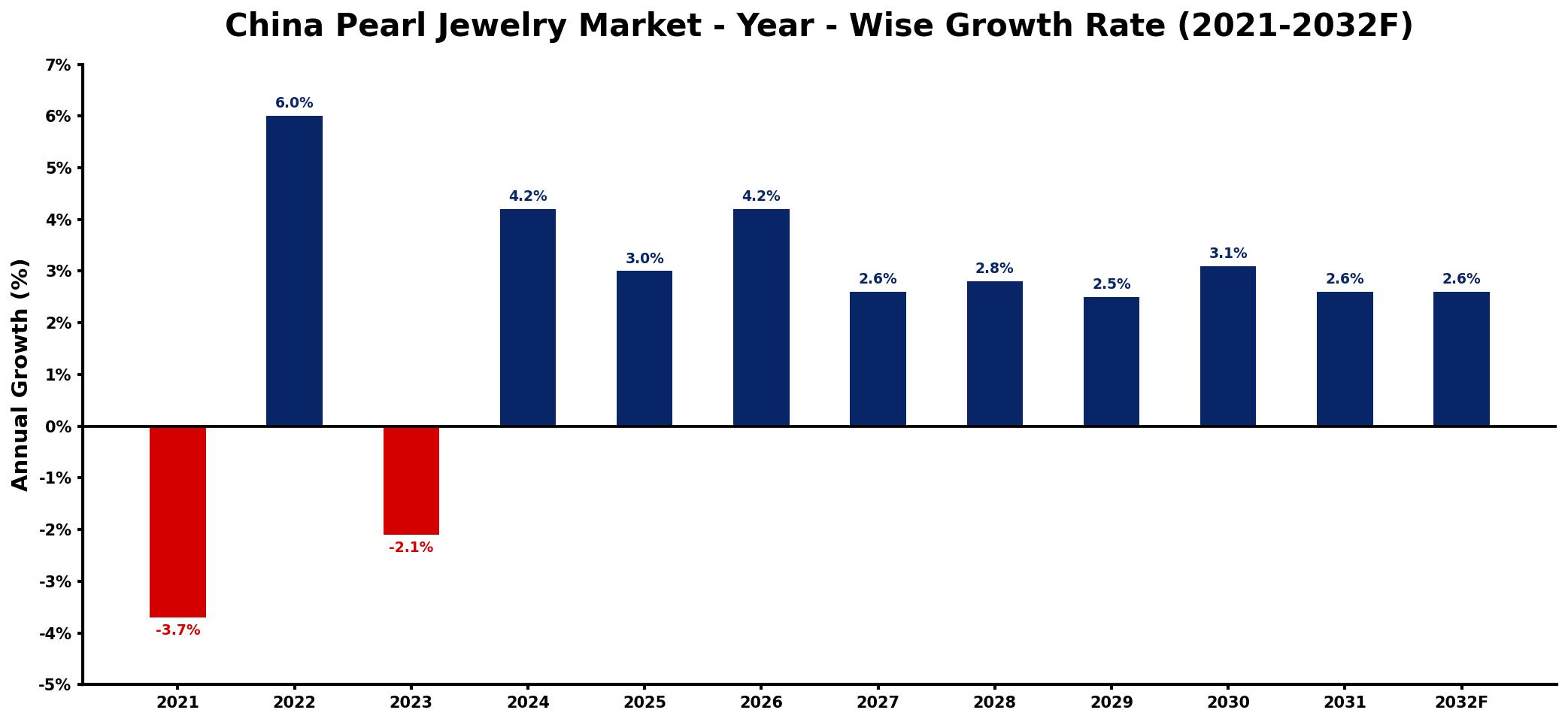
The table below presents the year‑wise growth rates along with the key drivers influencing the market
| Year | Growth Rate | Major Drivers |
| 2021 | -3.7% | Reduced consumer spending on luxury |
| 2022 | 6.0% | Increased online retail presence |
| 2023 | -2.1% | Falling interest in traditional gifts |
| 2024 | 4.2% | Expanding luxury market opportunities |
| 2025 | 3.0% | Growing interest in sustainable practices |
| 2026 | 4.2% | Rising demand for unique designs |
| 2027 | 2.6% | Enhanced marketing strategies employed |
| 2028 | 2.8% | Boosted presence in social media |
| 2029 | 2.5% | Increased international trade partnerships |
| 2030 | 3.1% | Strengthened local artisan collaborations |
| 2031 | 2.6% | Wider acceptance of alternative materials |
| 2032 | 2.6% | Growing appreciation for craftsmanship |
Note: Market size estimations and growth projections presented in this report are based on 6Wresearch's proprietary forecasting methodology, utilizing the latest available industry data, government publications, and primary research inputs.
China Pearl Jewelry Market Synopsis
Recently, the China Pearl Jewelry Market has witnessed a surge in both traditional and modern designs, reflecting the rich cultural heritage of pearl crafting. As consumer preferences evolve, the market is poised for significant growth, particularly as younger demographics show a preference for unique, personalized pieces that combine elegance with contemporary aesthetics.
This burgeoning market is characterized by a diverse array of offerings, driven by innovation and a growing online retail presence. As sustainable practices gain traction, consumers are increasingly prioritizing ethically sourced products, which is anticipated to further enhance the market's appeal.
China Pearl Jewelry Market Key Takeaways
- The market reflects a strong cultural affinity for pearls, promoting both traditional craftsmanship and modern design.
- Sustainability is emerging as a key driver, with consumers favoring ethically sourced and environmentally friendly jewelry.
- The increasing use of e-commerce platforms is significantly widening the reach of pearl jewelry brands.
- Customization and personalization are becoming essential components to meet the diverse preferences of consumers.
- Growing disposable income among the Chinese population fuels demand for luxury goods, including pearl jewelry.
Evaluation of Restraints in China Pearl Jewelry Market
The China Pearl Jewelry Market is encountering significant challenges, primarily due to the prevalence of counterfeit products that compromise the integrity and trust of genuine pearls. Such counterfeits threaten established brands and deter discerning consumers. Additionally, fluctuating pearl prices, influenced by environmental factors such as climate change and overfishing, pose substantial risks to supply and pricing stability. Furthermore, the market must navigate competition from alternative luxury goods and shifting consumer trends towards more contemporary accessories, making it crucial to adapt quickly to maintain relevance.
China Pearl Jewelry Market Trends
The China Pearl Jewelry Market is currently witnessing several transformative trends. There is a notable shift towards modern and innovative designs appealing to the younger generation, who favor unique, statement pieces. Furthermore, sustainability and ethical sourcing have gained traction, with consumers increasingly scrutinizing the environmental impact of their purchases. Customization options, such as mix-and-match sets, are on the rise, allowing consumers to express their individuality while adhering to classic elegance. Lastly, the proliferation of online sales channels is reshaping the market, as more brands leverage e-commerce to enhance customer engagement and accessibility.
China Pearl Jewelry Market Opportunities
With China's deep-rooted cultural affinity for pearls, there exists significant potential for investment in high-quality pearl farms and specialized processing companies. The retail landscape also offers promising opportunities, particularly in e-commerce, as digital platforms continue to attract the tech-savvy younger demographic. Moreover, the increasing consumer focus on sustainable luxury goods presents a ripe market for brands that prioritize ethical sourcing and innovative design, thus positioning themselves for substantial growth in this evolving landscape.
Government Initiatives in the China Pearl Jewelry Market
The Chinese government has enacted various initiatives to bolster the pearl jewelry market and ensure sustainable practices. These include regulations focusing on quality standards in pearl farming and processing, aimed at enhancing the reputation of Chinese pearls in the global market. Additionally, there has been an emphasis on promoting domestic consumption through marketing campaigns that highlight the cultural significance of pearl jewelry. The government also encourages the integration of advanced technologies in design and production, fostering competitiveness on an international scale.
Future Insights of the China Pearl Jewelry Market
Looking ahead to 2026-2032, the outlook for the China Pearl Jewelry Market appears robust. With an expected increase in disposable income and a growing appreciation for traditional elegance, the demand for pearl jewelry is poised for continued growth. The influence of digital retail platforms will further enhance accessibility, while the focus on sustainable sourcing aligns with global consumer trends. As the market evolves, innovations in product offerings and marketing strategies will be key to attracting new customers, ensuring the pearl jewelry sector remains a vibrant segment of the luxury goods market.
China Pearl Jewelry Market Latest Developments (2025 - 2026)
In recent months, the China Pearl Jewelry Market has begun to reflect increased innovation in product design, with several brands unveiling collections that blend classic pearl aesthetics with contemporary style elements. The rise in online shopping continues to reshape consumer engagement, with many brands enhancing their digital platforms to offer personalized shopping experiences. Additionally, a growing emphasis on sustainability has led to more brands adopting transparent sourcing practices, appealing to the environmentally conscious consumer base.
China Pearl Jewelry Market - Key Attractiveness of the Report
- 10 Years of Market Numbers
- Historical Data Starting from 2022 to 2025
- Base Year: 2025
- Forecast Data until 2032
- Key Performance Indicators Impacting the Market
- Major Upcoming Developments and Projects
Key Highlights of the Report:
- China Pearl Jewelry Market Outlook
- Market Size of China Pearl Jewelry Market, 2025
- Forecast of China Pearl Jewelry Market, 2032
- Historical Data and Forecast of China Pearl Jewelry Revenues & Volume for the Period 2022-2032F
- China Pearl Jewelry Market Trend Evolution
- China Pearl Jewelry Market Drivers and Challenges
- China Pearl Jewelry Price Trends
- China Pearl Jewelry Porter's Five Forces
- China Pearl Jewelry Industry Life Cycle
- Historical Data and Forecast of China Pearl Jewelry Market Revenues & Volume By Pearl Type for the Period 2022-2032F
- Historical Data and Forecast of China Pearl Jewelry Market Revenues & Volume By Freshwater for the Period 2022-2032F
- Historical Data and Forecast of China Pearl Jewelry Market Revenues & Volume By Saltwater for the Period 2022-2032F
- Historical Data and Forecast of China Pearl Jewelry Market Revenues & Volume By Material Type for the Period 2022-2032F
- Historical Data and Forecast of China Pearl Jewelry Market Revenues & Volume By Gold for the Period 2022-2032F
- Historical Data and Forecast of China Pearl Jewelry Market Revenues & Volume By Silver for the Period 2022-2032F
- Historical Data and Forecast of China Pearl Jewelry Market Revenues & Volume By Others for the Period 2022-2032F
- Historical Data and Forecast of China Pearl Jewelry Market Revenues & Volume By Jewelry Type for the Period 2022-2032F
- Historical Data and Forecast of China Pearl Jewelry Market Revenues & Volume By Necklace for the Period 2022-2032F
- Historical Data and Forecast of China Pearl Jewelry Market Revenues & Volume By Earrings for the Period 2022-2032F
- Historical Data and Forecast of China Pearl Jewelry Market Revenues & Volume By Rings for the Period 2022-2032F
- Historical Data and Forecast of China Pearl Jewelry Market Revenues & Volume By Others for the Period 2022-2032F
- China Pearl Jewelry Import Export Trade Statistics
- Market Opportunity Assessment By Pearl Type
- Market Opportunity Assessment By Material Type
- Market Opportunity Assessment By Jewelry Type
- China Pearl Jewelry Top Companies Market Share
- China Pearl Jewelry Competitive Benchmarking By Technical and Operational Parameters
- China Pearl Jewelry Company Profiles
- China Pearl Jewelry Key Strategic Recommendations






































