China Peas Market Top 5 Importing Countries and Market Competition (HHI) Analysis
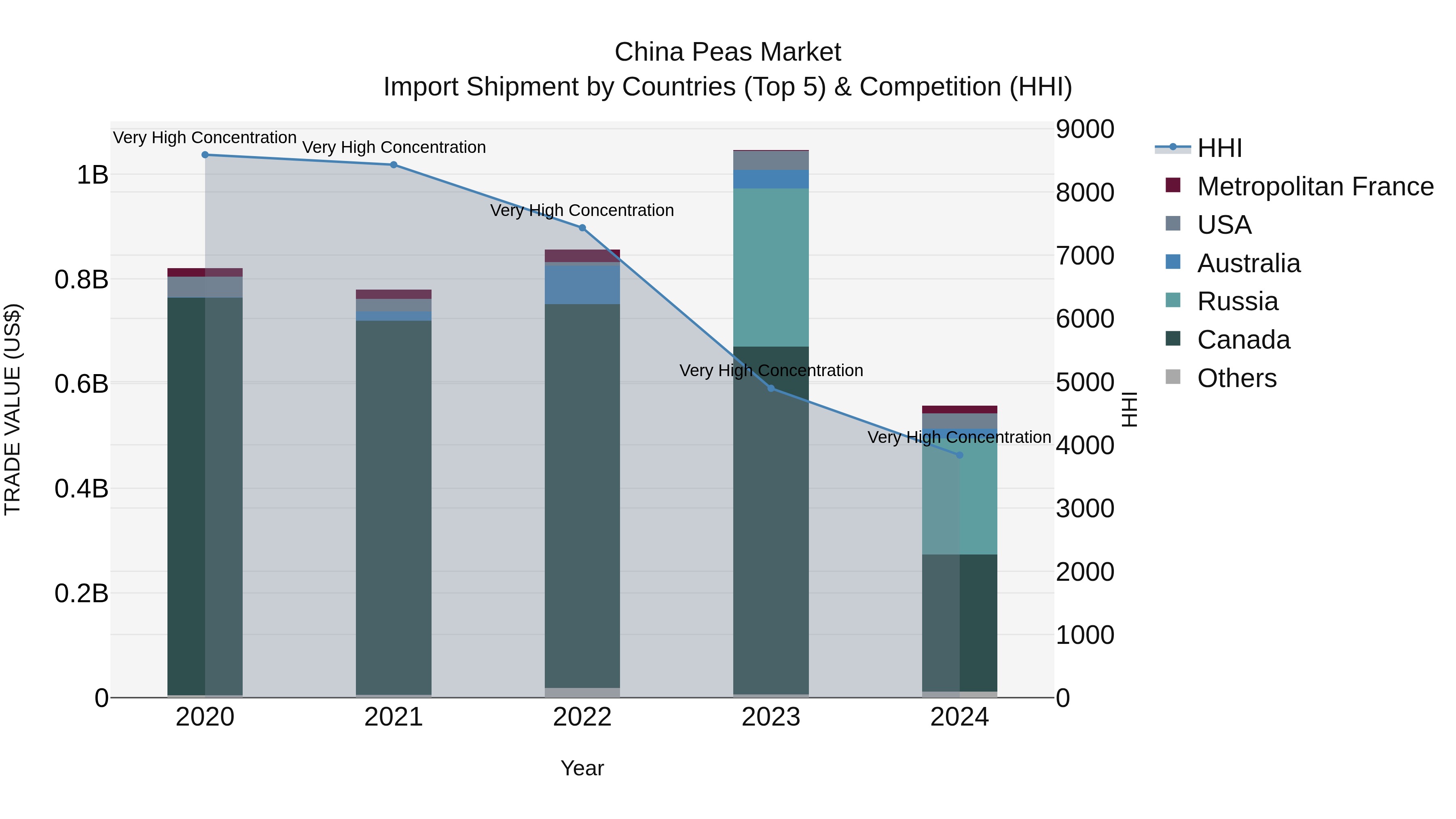
In 2024, China pea import market continued to be dominated by top suppliers including Canada, Russia, USA, Australia, and Metropolitan France. Despite a high concentration with a high Herfindahl-Hirschman Index (HHI), the market experienced a significant decline with a compound annual growth rate (CAGR) of -9.2% from 2020 to 2024. The growth rate plummeted by -46.67% from 2023 to 2024, indicating a challenging year for pea imports in China. Understanding these trends is crucial for stakeholders navigating the evolving dynamics of the global pea trade market.
China Peas Market Overview
The China peas market is experiencing significant growth driven by increasing consumer awareness of the health benefits associated with peas consumption. Peas are a rich source of protein, fiber, vitamins, and minerals, making them a popular choice among health-conscious individuals. The market is witnessing a shift towards plant-based diets, further boosting the demand for peas in various forms such as fresh, frozen, canned, and dried. Additionally, the growing trend of meat alternatives and vegetarian/vegan diets is driving the demand for pea protein isolates and concentrates in the food and beverage industry. With a focus on sustainability and environmental concerns, peas are also gaining traction as a sustainable crop with lower water and carbon footprints compared to other protein sources. Overall, the China peas market is poised for continued growth in the coming years.
China Peas Market Trends
The China peas market is witnessing a growing demand for plant-based protein sources, driving an increase in consumption of peas as a meat alternative. With an increasing awareness of health and sustainability, consumers are seeking out pea-based products such as pea protein powders, snacks, and meat substitutes. This trend is further supported by the rising popularity of vegetarian and flexitarian diets in China. Additionally, the government`s push towards reducing meat consumption and promoting healthier eating habits is also contributing to the growth of the peas market. As a result, food manufacturers and retailers are expanding their product offerings to cater to this growing segment of health-conscious consumers in China.
China Peas Market Challenges
In the China Peas Market, some of the challenges faced include intense competition from domestic and international suppliers, fluctuating prices due to factors like weather conditions and government policies, quality control issues, and difficulties in meeting the diverse consumer preferences in terms of pea varieties and packaging. Additionally, navigating through complex regulations and import/export procedures can pose challenges for market players. The market also faces pressure to adopt sustainable farming practices and minimize environmental impact, which can increase production costs. Overall, staying competitive in the China Peas Market requires constant adaptation to market dynamics, investing in technology and innovation, and maintaining strong relationships with suppliers and distributors to ensure a reliable supply chain.
China Peas Market Investment Opportunities
The China peas market offers various investment opportunities, particularly in the growing demand for plant-based protein sources. With the increasing health consciousness among consumers and a shift towards vegetarian and vegan diets, there is a rising demand for peas and pea-based products such as pea protein powder, snacks, and meat alternatives. Investing in pea cultivation, processing facilities, and value-added products could prove to be lucrative in the Chinese market. Additionally, the government`s support for sustainable agriculture and food security initiatives further enhances the investment potential in the peas market. Partnering with local farmers, leveraging technology for efficient production, and catering to the evolving consumer preferences can help investors capitalize on the opportunities in the China peas market.
China Peas Market Government Policy
The Chinese government has implemented various policies related to the peas market to support domestic production and ensure food security. These policies include subsidies for pea farmers, price supports to stabilize market prices, and regulations on imports to protect domestic producers. Additionally, the government has invested in research and development to improve pea crop productivity and quality. Overall, the government aims to promote self-sufficiency in pea production and reduce reliance on imports, while also ensuring that consumers have access to high-quality and affordable peas in the market.
China Peas Market Future Outlook
The China peas market is expected to show steady growth in the coming years due to increasing consumer awareness about the health benefits of peas and the rising demand for plant-based protein sources. As more Chinese consumers adopt healthier eating habits and incorporate peas into their diets, the market is likely to expand further. Additionally, the growing popularity of plant-based diets and the increasing focus on sustainability and environmental concerns are expected to drive the demand for peas in various food products. However, challenges such as fluctuating prices, weather conditions affecting crop yields, and competition from other protein sources may impact the market`s growth. Overall, the China peas market is poised for a positive outlook with opportunities for innovation and market expansion in the future.
Key Highlights of the Report:
- China Peas Market Outlook
- Market Size of China Peas Market, 2024
- Forecast of China Peas Market, 2031
- Historical Data and Forecast of China Peas Revenues & Volume for the Period 2021 - 2031
- China Peas Market Trend Evolution
- China Peas Market Drivers and Challenges
- China Peas Price Trends
- China Peas Porter's Five Forces
- China Peas Industry Life Cycle
- Historical Data and Forecast of China Peas Market Revenues & Volume By Type for the Period 2021 - 2031
- Historical Data and Forecast of China Peas Market Revenues & Volume By Field Peas for the Period 2021 - 2031
- Historical Data and Forecast of China Peas Market Revenues & Volume By Garden Peas for the Period 2021 - 2031
- Historical Data and Forecast of China Peas Market Revenues & Volume By Others for the Period 2021 - 2031
- Historical Data and Forecast of China Peas Market Revenues & Volume By Application for the Period 2021 - 2031
- Historical Data and Forecast of China Peas Market Revenues & Volume By Food for the Period 2021 - 2031
- Historical Data and Forecast of China Peas Market Revenues & Volume By Others for the Period 2021 - 2031
- Historical Data and Forecast of China Peas Market Revenues & Volume By Distribution Channel for the Period 2021 - 2031
- Historical Data and Forecast of China Peas Market Revenues & Volume By Online for the Period 2021 - 2031
- Historical Data and Forecast of China Peas Market Revenues & Volume By Offline for the Period 2021 - 2031
- Historical Data and Forecast of China Peas Market Revenues & Volume By Others for the Period 2021 - 2031
- China Peas Import Export Trade Statistics
- Market Opportunity Assessment By Type
- Market Opportunity Assessment By Application
- Market Opportunity Assessment By Distribution Channel
- China Peas Top Companies Market Share
- China Peas Competitive Benchmarking By Technical and Operational Parameters
- China Peas Company Profiles
- China Peas Key Strategic Recommendations






































