China Physiological Saline Market Top 5 Importing Countries and Market Competition (HHI) Analysis
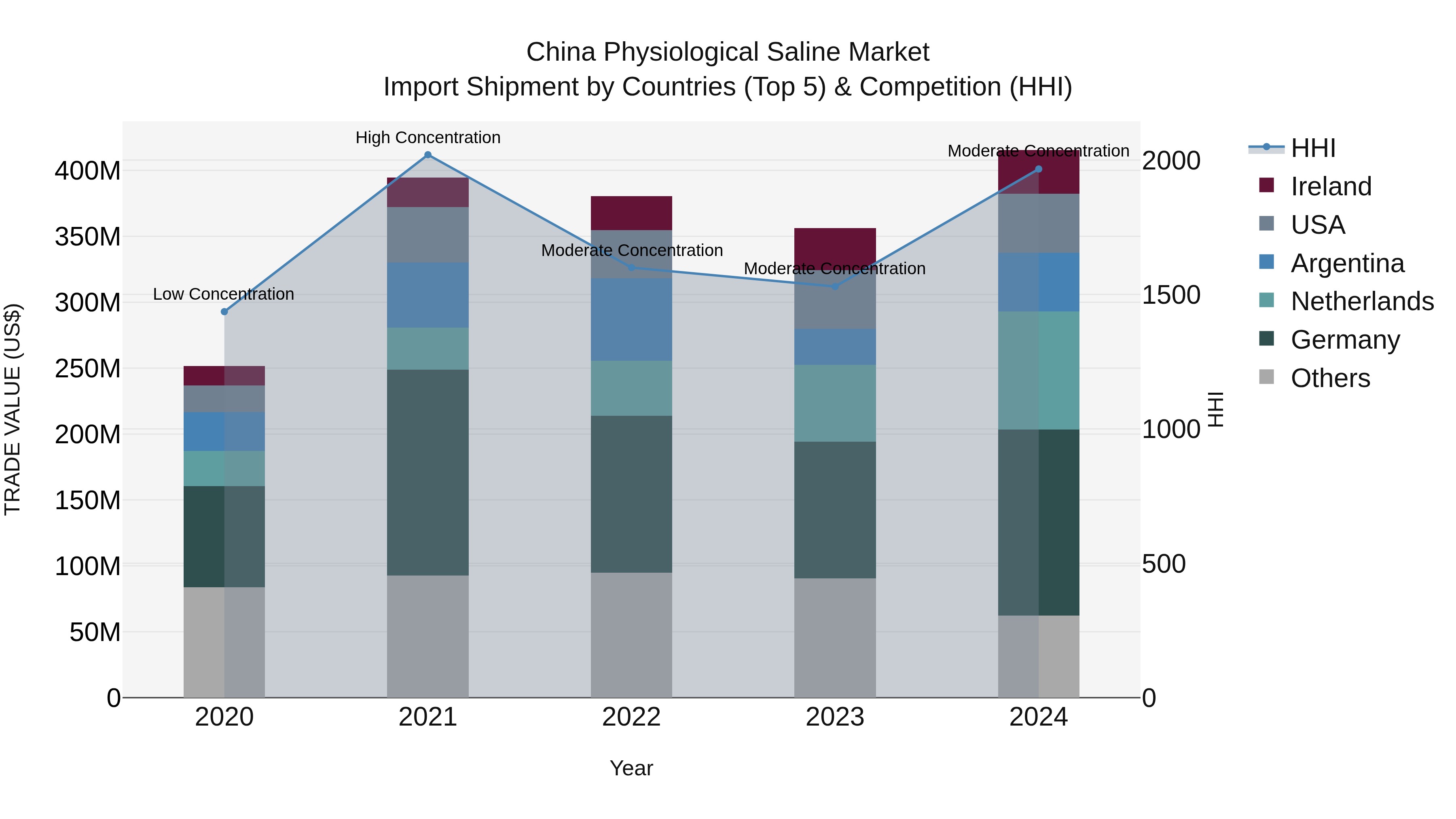
China import of physiological saline in 2024 saw significant growth, with top exporting countries including Germany, Netherlands, USA, Argentina, and Ireland. The market concentration, as measured by the HHI index, remained at a moderate level. The impressive compound annual growth rate (CAGR) of 13.34% from 2020 to 2024 indicates a strong upward trend in demand. Moreover, the growth rate in 2024 alone was an impressive 16.62%, pointing towards continued expansion and opportunities in the physiological saline import market in China.
China Physiological Saline Market Synopsis
The China Physiological Saline Market is witnessing steady growth driven by factors such as the increasing healthcare infrastructure, rising awareness about the benefits of physiological saline solutions, and growing demand in various medical applications. Physiological saline is widely used for intravenous drips, wound cleansing, and medical irrigation, among other purposes. The market is also benefiting from the expanding elderly population and the prevalence of chronic diseases in China, leading to higher demand for healthcare services and products. Key players operating in the market are focusing on product innovation, quality assurance, and strategic collaborations to gain a competitive edge. Overall, the China Physiological Saline Market is expected to continue its growth trajectory in the coming years, supported by the country`s evolving healthcare landscape and increasing investments in the medical sector.
China Physiological Saline Market Trends
The China Physiological Saline Market is experiencing growth due to the increasing awareness about the importance of hydration and the rise in healthcare spending. The market is witnessing a trend towards the development of advanced formulations with added electrolytes and vitamins to cater to different consumer needs. Opportunities lie in the expansion of distribution channels, such as online platforms, to reach a wider consumer base. Additionally, the growing emphasis on personal health and wellness is driving the demand for physiological saline products for hydration and medical purposes. Market players can capitalize on this trend by focusing on product innovation, establishing strategic partnerships with healthcare providers, and leveraging digital marketing to enhance brand visibility and consumer engagement.
China Physiological Saline Market Challenges
In the China Physiological Saline Market, some challenges that are commonly faced include increasing competition from domestic and international manufacturers, price wars leading to margin pressures, and regulatory hurdles related to product quality and safety standards. Additionally, the market is witnessing a shift towards alternative products such as oral rehydration solutions and intravenous fluids, posing a threat to the traditional physiological saline segment. Furthermore, the fragmented nature of the market with numerous small and medium-sized players makes it difficult for companies to establish strong brand presence and distribution networks, impacting market penetration and growth potential. Overall, navigating these challenges while maintaining product quality, competitive pricing, and compliance with regulations is crucial for companies operating in the China Physiological Saline Market.
China Physiological Saline Market Investment Opportunities
The China Physiological Saline Market is primarily driven by factors such as increasing prevalence of chronic diseases requiring medical interventions, growing emphasis on healthcare infrastructure development, rising awareness about the importance of sterile saline solutions in medical procedures, and the expanding geriatric population in the country. Additionally, the rising number of surgeries, trauma cases, and other medical conditions that necessitate the use of physiological saline solutions are also contributing to market growth. Moreover, advancements in healthcare technology, growing disposable income, and improving healthcare access in both urban and rural areas are further fueling the demand for physiological saline products in China.
China Physiological Saline Market Government Polices
The Chinese government has implemented various policies related to the Physiological Saline Market to ensure product quality and safety. The State Food and Drug Administration (SFDA) regulates the production, distribution, and sales of physiological saline to ensure compliance with quality standards. Additionally, the government has issued guidelines to promote the use of physiological saline in medical institutions and has encouraged research and development in the field to enhance product innovation and competitiveness. The government also monitors pricing to prevent monopolies and maintain fair market competition. Overall, the policies aim to safeguard consumer health, promote industry growth, and ensure a stable and transparent market environment for physiological saline products in China.
China Physiological Saline Market Future Outlook
The China Physiological Saline Market is expected to showcase steady growth in the coming years, driven primarily by an increase in healthcare facilities, rising awareness about the importance of hygiene and sanitation, and the growing demand for safe and effective medical products. The market is likely to benefit from the expanding elderly population and the increasing prevalence of chronic diseases, which necessitate the use of physiological saline for various medical purposes. Additionally, advancements in healthcare infrastructure and the government`s initiatives to enhance healthcare services are anticipated to further boost market growth. However, factors such as pricing pressures, competition from alternative products, and regulatory challenges may pose some constraints to the market`s expansion. Overall, the China Physiological Saline Market is poised for a positive trajectory in the foreseeable future.
Key Highlights of the Report:
- China Physiological Saline Market Outlook
- Market Size of China Physiological Saline Market, 2024
- Forecast of China Physiological Saline Market, 2031
- Historical Data and Forecast of China Physiological Saline Revenues & Volume for the Period 2021- 2031
- China Physiological Saline Market Trend Evolution
- China Physiological Saline Market Drivers and Challenges
- China Physiological Saline Price Trends
- China Physiological Saline Porter's Five Forces
- China Physiological Saline Industry Life Cycle
- Historical Data and Forecast of China Physiological Saline Market Revenues & Volume By Product Type for the Period 2021- 2031
- Historical Data and Forecast of China Physiological Saline Market Revenues & Volume By Flexible Bag for the Period 2021- 2031
- Historical Data and Forecast of China Physiological Saline Market Revenues & Volume By Plastic Bottles for the Period 2021- 2031
- Historical Data and Forecast of China Physiological Saline Market Revenues & Volume By Glass Bottles for the Period 2021- 2031
- Historical Data and Forecast of China Physiological Saline Market Revenues & Volume By Application for the Period 2021- 2031
- Historical Data and Forecast of China Physiological Saline Market Revenues & Volume By Chronic Diseases for the Period 2021- 2031
- Historical Data and Forecast of China Physiological Saline Market Revenues & Volume By Acute Health Conditions for the Period 2021- 2031
- Historical Data and Forecast of China Physiological Saline Market Revenues & Volume By Skin Abrasions and Burns for the Period 2021- 2031
- Historical Data and Forecast of China Physiological Saline Market Revenues & Volume By End Users for the Period 2021- 2031
- Historical Data and Forecast of China Physiological Saline Market Revenues & Volume By Hospitals for the Period 2021- 2031
- Historical Data and Forecast of China Physiological Saline Market Revenues & Volume By Clinics for the Period 2021- 2031
- Historical Data and Forecast of China Physiological Saline Market Revenues & Volume By Recovery Centers for the Period 2021- 2031
- Historical Data and Forecast of China Physiological Saline Market Revenues & Volume By Others for the Period 2021- 2031
- China Physiological Saline Import Export Trade Statistics
- Market Opportunity Assessment By Product Type
- Market Opportunity Assessment By Application
- Market Opportunity Assessment By End Users
- China Physiological Saline Top Companies Market Share
- China Physiological Saline Competitive Benchmarking By Technical and Operational Parameters
- China Physiological Saline Company Profiles
- China Physiological Saline Key Strategic Recommendations






































