China Polyester Fabric Market Summary
The china polyester fabric market was estimated at USD 164 Million in 2025 and is projected to reach USD 189 Million by 2032, growing at a CAGR of 4.1% from 2026 to 2032.
China Polyester Fabric Market Year-wise Growth Rate and Key Drivers
This graph highlights how the China Polyester Fabric Market has steadily grown over the past five years, supported by major growth factors.
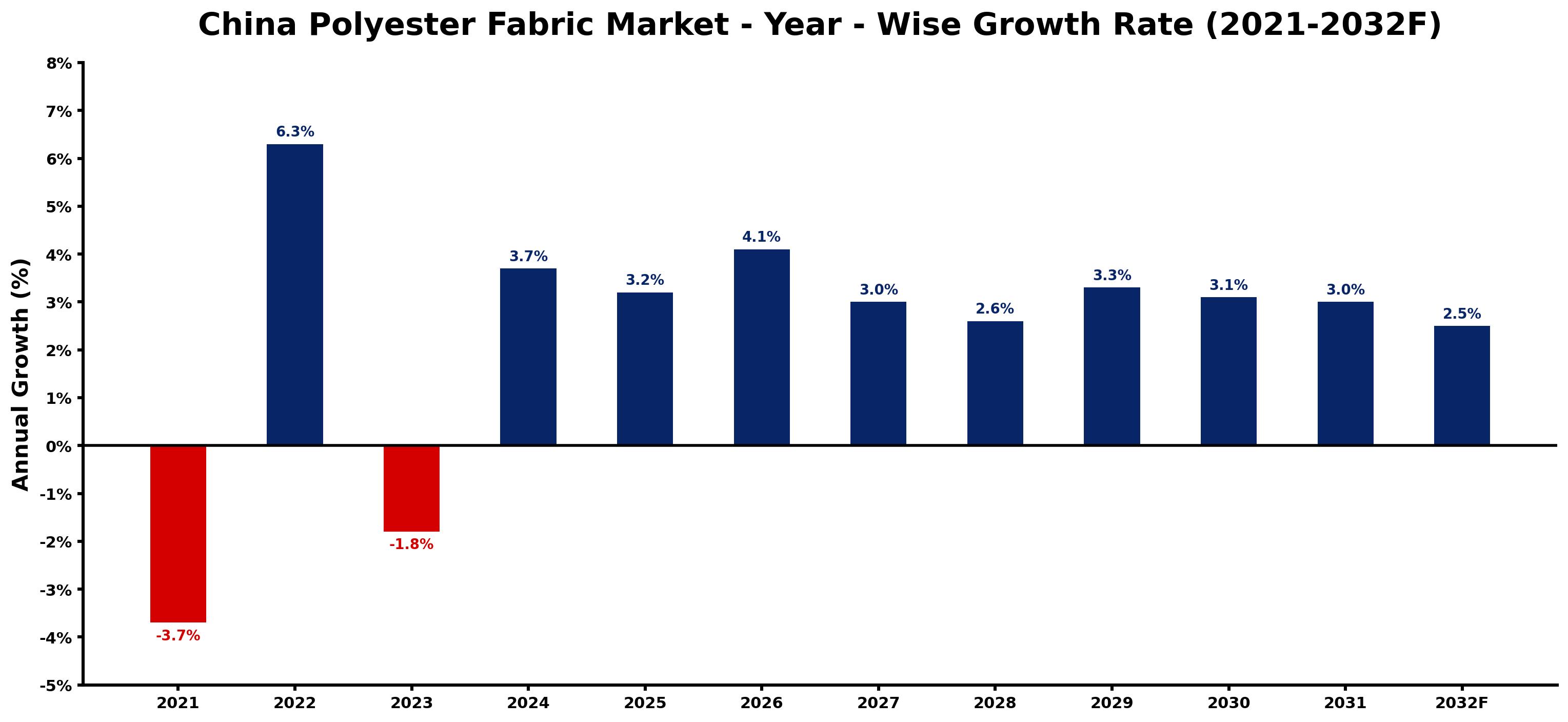
The table below presents the year wise growth rates along with the key drivers influencing the market
| Year | Growth Rate | Major Drivers |
| 2021 | -3.7% | Increased competition from alternative materials diminished polyester fabric's market appeal and consumer preference in 2021. |
| 2022 | 6.3% | Technological improvements in production efficiency reduced costs and elevated output capabilities. |
| 2023 | -1.8% | Increased environmental awareness led to a shift away from synthetic textiles, impacting polyester fabric demand. |
| 2024 | 3.7% | Urbanization trends led to increased construction projects requiring durable polyester fabric solutions. |
| 2025 | 3.2% | E-commerce growth transformed traditional retail channels, expanding the reach of polyester products. |
| 2026 | 4.1% | Rise in athletic wear popularity drove innovation in moisture-wicking polyester fabric technologies. |
| 2027 | 3.0% | Investment in smart textiles opened new markets for high-performance polyester applications. |
| 2028 | 2.6% | Increased disposable income among consumers enhanced spending on high-quality textile materials. |
| 2029 | 3.3% | A heightened focus on sustainability pushed brands toward recycled polyester options. |
| 2030 | 3.1% | Shifts in global supply chains fostered local manufacturing of polyester fabric within China. |
| 2031 | 3.0% | Emergence of eco-conscious consumers shaped product offerings in the polyester market. |
| 2032 | 2.5% | Collaborations between brands and textile manufacturers sparked innovation in polyester fabric design. |
Note - Market size estimations and growth projections presented in this report are based on 6Wresearch's advanced forecasting approach, validated with industry datasets as of June 2026.
China Polyester Fabric Market Synopsis
The China Polyester Fabric Market is projected to reach 4.1% and witness significant growth during the forecast period (2026-2032). The expansion of this market is primarily driven by the increasing demand for polyester fabrics in various sectors, notably sportswear, uniforms, and casual apparel. As consumers continue to prioritize comfort and performance in their clothing choices, the attributes of polyester such as durability, elasticity, and moisture-wicking capabilities further enhance its attractiveness in the apparel industry. Additionally, advancements in dyeing technologies using reactive dyes have contributed to the versatility and appeal of polyester fabrics. Environmental considerations are also shaping the future of the market, with a notable shift towards eco-friendly options including recycled polyester and sustainable alternatives.
China Polyester Fabric Market Growth Drivers
The growth trajectory of the China Polyester Fabric Market is influenced by several key drivers:
- The robust demand from the athletic and athleisure clothing segments has propelled the polyester fabric market significantly. As fitness culture gains popularity, consumers are increasingly opting for performance-oriented fabrics.
- Technological advancements in manufacturing processes, including enhanced dyeing techniques, allow for a wider variety of colors and patterns, meeting the diverse tastes of consumers.
- The growing trend towards sustainable fashion has led to increased interest in recycled polyester, as environmentally conscious consumers seek to reduce their carbon footprint.
- The ongoing urbanization and rising disposable incomes in China are encouraging consumers to invest in quality apparel, further driving the demand for high-performance polyester fabrics.
- The expansion of e-commerce platforms has made polyester clothing more accessible to consumers, facilitating market growth by providing a broader reach to retailers.
China Polyester Fabric Market Trends and Opportunities
The China Polyester Fabric Market is witnessing several notable trends and opportunities that indicate its evolving landscape:
- There is an increasing focus on innovation within the textile industry, with investment in R&D aimed at developing new fabrics that combine polyester with other fibers to enhance performance.
- Emerging technologies in fabric recycling are enabling manufacturers to utilize waste materials, transforming it into high-quality recycled polyester for use in new products.
- Consumer preferences are shifting towards multifunctional fabrics that can adapt to various environments, thus expanding the potential applications of polyester beyond traditional uses.
- The integration of smart textiles, which incorporate technology into fabric, is becoming increasingly prevalent. This trend presents opportunities for polyester fabrics embedded with functionality such as temperature regulation or moisture management.
- Trade policies and tariffs may influence sourcing strategies, providing opportunities for local producers to capitalize on shifts in demand for domestically manufactured fabrics.
China Polyester Fabric Market Challenges and Restraints
Despite its growth potential, the China Polyester Fabric Market faces several challenges that could impact its development:
- Fluctuating raw material prices impact production costs, potentially leading to increased prices for polyester fabrics and reduced competitive advantage.
- The textile industry is subject to stringent environmental regulations, which may impose additional costs on manufacturers striving to comply with sustainable practices.
- The presence of counterfeit products in the market can undermine consumer trust, threatening the reputations of genuine fabric producers.
- Competition from alternative fabric technologies and innovations could challenge the polyester fabric market's share, especially from natural fibers and bio-based alternatives.
- Market saturation in certain segments may limit opportunities for new entrants or innovative products, prompting established firms to adapt their strategies to stay competitive.
China Polyester Fabric Market Government Investment and Initiatives
The Chinese government has enacted several policies and initiatives aimed at fostering growth in the polyester fabric market. Investments in technology and innovation are prioritized as part of national plans to enhance the textile industry's competitiveness. Public funding is directed towards research and development of sustainable and eco-friendly materials, reflecting the country's commitment to environmental sustainability. Moreover, supportive policies encouraging the use of recycled materials are being implemented to drive the circular economy within the textile sector. Efforts to simplify trade regulations and promote domestic manufacturing further bolster the polyester fabric market, ensuring that local producers can thrive amidst global competition.
China Polyester Fabric Market Latest Developments (May 2025 - June 2026)
During the period from May 2025 to June 2026, the China Polyester Fabric Market has experienced notable developments, reflecting the shifting dynamics within the industry. There has been an increased emphasis on sustainability, with more manufacturers adopting eco-friendly production methods and seeking certifications for recycled polyester. The trend towards digital transformation is also gaining momentum, with factories integrating smart technologies to enhance production efficiency and reduce waste. Furthermore, collaborations among industry stakeholders to promote research on advanced materials have been established, aiming to create innovative polyester blends. Consumer trends have continued to evolve, with a marked interest in athleisure and performance apparel driving production strategies. Finally, the ongoing analysis of market trends has prompted many stakeholders to reassess their strategies in response to evolving consumer preferences and market conditions.
China Polyester Fabric Market - Key Attractiveness of the Report
- 10 Years of Market Numbers
- Historical Data Starting from 2022 to 2025
- Base Year: 2025
- Forecast Data until 2032
- Key Performance Indicators Impacting the Market
- Major Upcoming Developments and Projects
Key Highlights of the Report:
- China Polyester Fabric Market Outlook
- Market Size of China Polyester Fabric Market, 2025
- Forecast of China Polyester Fabric Market, 2032F
- Historical Data and Forecast of China Polyester Fabric Revenues & Volume for the Period 2022-2032F
- China Polyester Fabric Market Trend Evolution
- China Polyester Fabric Market Drivers and Challenges
- China Polyester Fabric Price Trends
- China Polyester Fabric Porter's Five Forces
- China Polyester Fabric Industry Life Cycle
- Historical Data and Forecast of China Polyester Fabric Market Revenues & Volume By Type for the Period 2022-2032F
- Historical Data and Forecast of China Polyester Fabric Market Revenues & Volume By PET for the Period 2022-2032F
- Historical Data and Forecast of China Polyester Fabric Market Revenues & Volume By PCDT for the Period 2022-2032F
- Historical Data and Forecast of China Polyester Fabric Market Revenues & Volume By Applications for the Period 2022-2032F
- Historical Data and Forecast of China Polyester Fabric Market Revenues & Volume By Carpets & Rugs for the Period 2022-2032F
- Historical Data and Forecast of China Polyester Fabric Market Revenues & Volume By Non-Woven Fabrics Fiberfill for the Period 2022-2032F
- Historical Data and Forecast of China Polyester Fabric Market Revenues & Volume By Apparels for the Period 2022-2032F
- Historical Data and Forecast of China Polyester Fabric Market Revenues & Volume By Home Textiles for the Period 2022-2032F
- Historical Data and Forecast of China Polyester Fabric Market Revenues & Volume By Others? for the Period 2022-2032F
- China Polyester Fabric Import Export Trade Statistics
- Market Opportunity Assessment By Type
- Market Opportunity Assessment By Applications
- China Polyester Fabric Top Companies Market Share
- China Polyester Fabric Competitive Benchmarking By Technical and Operational Parameters
- China Polyester Fabric Company Profiles
- China Polyester Fabric Key Strategic Recommendations






































