China PVC Pipes Market Growth Rate Analysis (2025 - 2031)
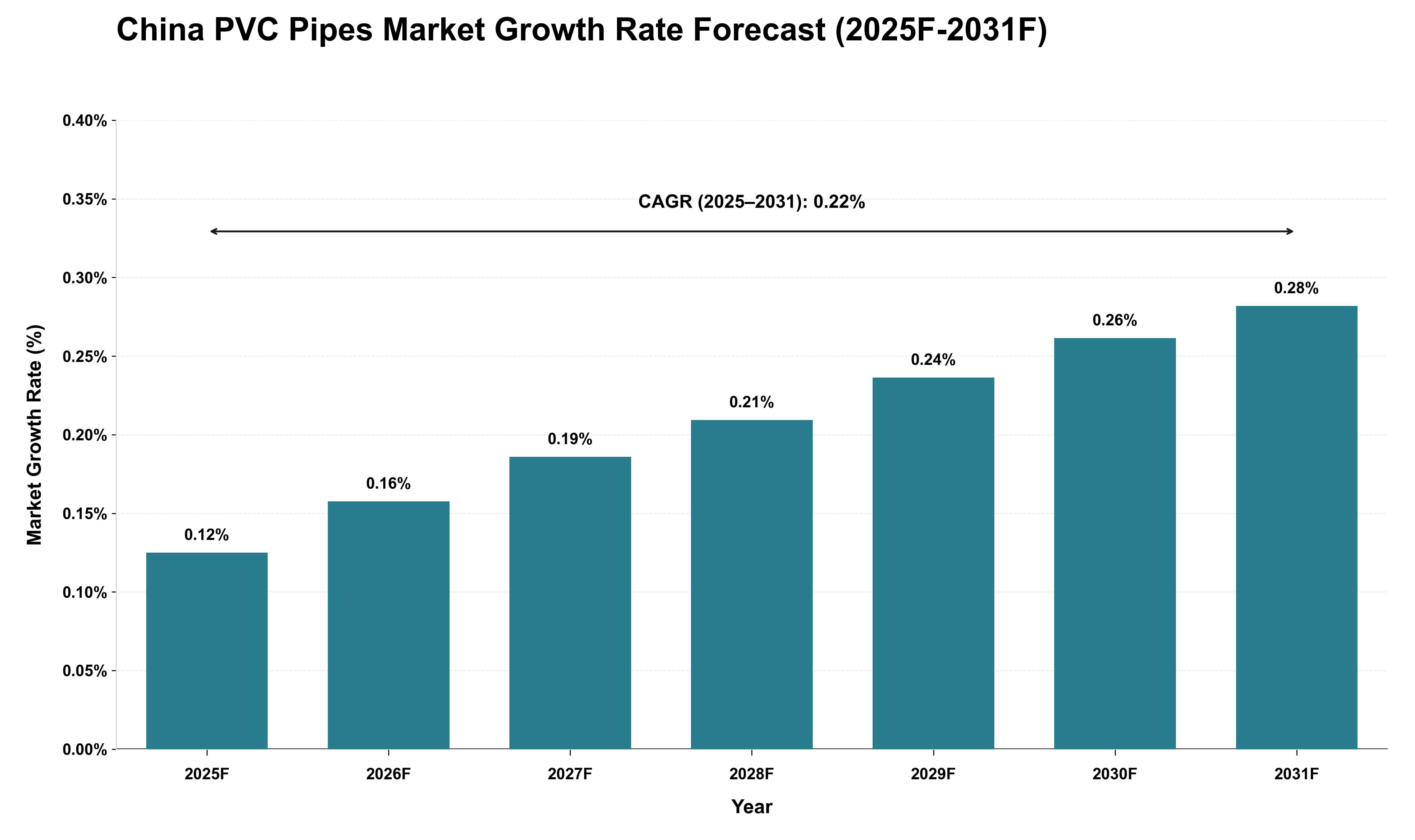
From 2025 onward, the China PVC pipes market will likely experience a gradual upward trajectory in growth rates, reflecting broader macroeconomic cycles and structural shifts within the construction and infrastructure sectors. The projected compound annual growth rate (CAGR) of 0.22% indicates a slow but steady increase in demand, driven by urbanization trends and ongoing investments in water management systems. As annual growth rates rise from 0.12% in 2025 to 0.28% by 2031, this trend suggests an increasing reliance on PVC pipes for both residential and industrial applications, influenced by regulatory frameworks promoting sustainable materials. Additionally, fluctuations in import dependencies may impact pricing dynamics and availability, further shaping market conditions. Overall, the anticipated growth will be characterized by incremental improvements rather than explosive expansion, aligning with cyclical economic patterns that prioritize stability over volatility in this sector.
Key Highlights of the Report:
- China PVC Pipes Market Outlook
- Market Size of China PVC Pipes Market,2024
- Forecast of China PVC Pipes Market, 2031
- Historical Data and Forecast of China PVC Pipes Revenues & Volume for the Period 2021-2031
- China PVC Pipes Market Trend Evolution
- China PVC Pipes Market Drivers and Challenges
- China PVC Pipes Price Trends
- China PVC Pipes Porter's Five Forces
- China PVC Pipes Industry Life Cycle
- Historical Data and Forecast of China PVC Pipes Market Revenues & Volume By Type for the Period 2021-2031
- Historical Data and Forecast of China PVC Pipes Market Revenues & Volume By Rigid PVC for the Period 2021-2031
- Historical Data and Forecast of China PVC Pipes Market Revenues & Volume By Flexible PVC for the Period 2021-2031
- Historical Data and Forecast of China PVC Pipes Market Revenues & Volume By Chlorinated PVC for the Period 2021-2031
- Historical Data and Forecast of China PVC Pipes Market Revenues & Volume By Foam-Core PVC for the Period 2021-2031
- Historical Data and Forecast of China PVC Pipes Market Revenues & Volume By Material for the Period 2021-2031
- Historical Data and Forecast of China PVC Pipes Market Revenues & Volume By uPVC for the Period 2021-2031
- Historical Data and Forecast of China PVC Pipes Market Revenues & Volume By CPVC for the Period 2021-2031
- Historical Data and Forecast of China PVC Pipes Market Revenues & Volume By PVC-O for the Period 2021-2031
- Historical Data and Forecast of China PVC Pipes Market Revenues & Volume By MPVC for the Period 2021-2031
- Historical Data and Forecast of China PVC Pipes Market Revenues & Volume By Diameter for the Period 2021-2031
- Historical Data and Forecast of China PVC Pipes Market Revenues & Volume By < 50mm for the Period 2021-2031
- Historical Data and Forecast of China PVC Pipes Market Revenues & Volume By 50-100mm for the Period 2021-2031
- Historical Data and Forecast of China PVC Pipes Market Revenues & Volume By 100-200mm for the Period 2021-2031
- Historical Data and Forecast of China PVC Pipes Market Revenues & Volume By > 200mm for the Period 2021-2031
- Historical Data and Forecast of China PVC Pipes Market Revenues & Volume By Application for the Period 2021-2031
- Historical Data and Forecast of China PVC Pipes Market Revenues & Volume By Water Supply for the Period 2021-2031
- Historical Data and Forecast of China PVC Pipes Market Revenues & Volume By Sewage and Drainage for the Period 2021-2031
- Historical Data and Forecast of China PVC Pipes Market Revenues & Volume By Industrial Use for the Period 2021-2031
- Historical Data and Forecast of China PVC Pipes Market Revenues & Volume By Irrigation for the Period 2021-2031
- Historical Data and Forecast of China PVC Pipes Market Revenues & Volume By Features for the Period 2021-2031
- Historical Data and Forecast of China PVC Pipes Market Revenues & Volume By Corrosion-Resistant for the Period 2021-2031
- Historical Data and Forecast of China PVC Pipes Market Revenues & Volume By High Durability for the Period 2021-2031
- Historical Data and Forecast of China PVC Pipes Market Revenues & Volume By UV Resistant for the Period 2021-2031
- Historical Data and Forecast of China PVC Pipes Market Revenues & Volume By Lightweight for the Period 2021 - 2029
- China PVC Pipes Import Export Trade Statistics
- Market Opportunity Assessment By Type
- Market Opportunity Assessment By Material
- Market Opportunity Assessment By Diameter
- Market Opportunity Assessment By Application
- Market Opportunity Assessment By Features
- China PVC Pipes Top Companies Market Share
- China PVC Pipes Competitive Benchmarking By Technical and Operational Parameters
- China PVC Pipes Company Profiles
- China PVC Pipes Key Strategic Recommendations






































