China Rattan Products Market Growth Rate Analysis (2025 - 2031)
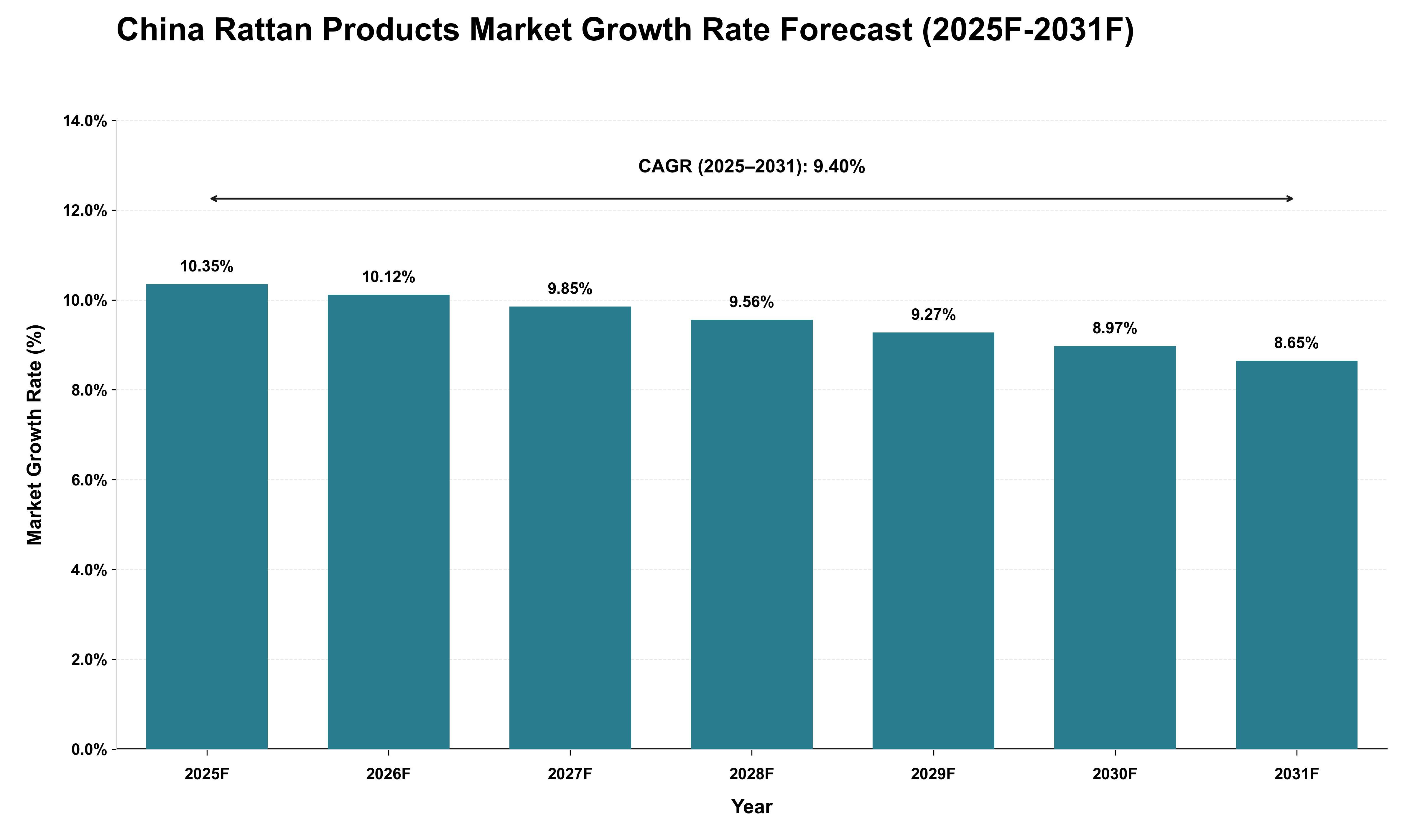
From 2025 onward, the China rattan products market is anticipated to experience robust growth, driven by increasing consumer demand for sustainable and eco-friendly materials. The forecasted CAGR of 9.40% reflects a strong trajectory, with annual growth rates starting at 10.35% in 2025 and gradually tapering to 8.65% by 2031. This trend suggests a resilient market responding to heightened awareness of environmental issues and a shift towards natural materials in home decor and furniture sectors. The availability of raw rattan will play a crucial role; fluctuations in supply due to climatic conditions or import dependencies could impact pricing dynamics, potentially influencing production costs and retail prices. As global markets evolve, cyclical trends may emerge, affecting both the sourcing strategies for manufacturers and the competitive landscape within the rattan product segment, ultimately shaping consumer choices throughout this period.
Key Highlights of the Report:
- China Rattan Products Market Outlook
- Market Size of China Rattan Products Market, 2025
- Forecast of China Rattan Products Market, 2032
- Historical Data and Forecast of China Rattan Products Revenues & Volume for the Period 2022 - 2032F
- China Rattan Products Market Trend Evolution
- China Rattan Products Market Drivers and Challenges
- China Rattan Products Price Trends
- China Rattan Products Porter's Five Forces
- China Rattan Products Industry Life Cycle
- Historical Data and Forecast of China Rattan Products Market Revenues & Volume By Type for the Period 2022 - 2032F
- Historical Data and Forecast of China Rattan Products Market Revenues & Volume By Chair for the Period 2022 - 2032F
- Historical Data and Forecast of China Rattan Products Market Revenues & Volume By Table for the Period 2022 - 2032F
- Historical Data and Forecast of China Rattan Products Market Revenues & Volume By Storage for the Period 2022 - 2032F
- Historical Data and Forecast of China Rattan Products Market Revenues & Volume By Bed for the Period 2022 - 2032F
- Historical Data and Forecast of China Rattan Products Market Revenues & Volume By Others for the Period 2022 - 2032F
- Historical Data and Forecast of China Rattan Products Market Revenues & Volume By Application for the Period 2022 - 2032F
- Historical Data and Forecast of China Rattan Products Market Revenues & Volume By Household for the Period 2022 - 2032F
- Historical Data and Forecast of China Rattan Products Market Revenues & Volume By Commerical for the Period 2022 - 2032F
- China Rattan Products Import Export Trade Statistics
- Market Opportunity Assessment By Type
- Market Opportunity Assessment By Application
- China Rattan Products Top Companies Market Share
- China Rattan Products Competitive Benchmarking By Technical and Operational Parameters
- China Rattan Products Company Profiles
- China Rattan Products Key Strategic Recommendations






































