China Tables Market Summary
The china tables market was estimated at USD 248 Million in 2025 and is projected to reach USD 286 Million by 2032, growing at a CAGR of 4.2% from 2026 to 2032.
China Tables Market Year-wise Growth Rate and Key Drivers
This graph highlights how the China Tables Market has steadily grown over the past five years, supported by major growth factors.
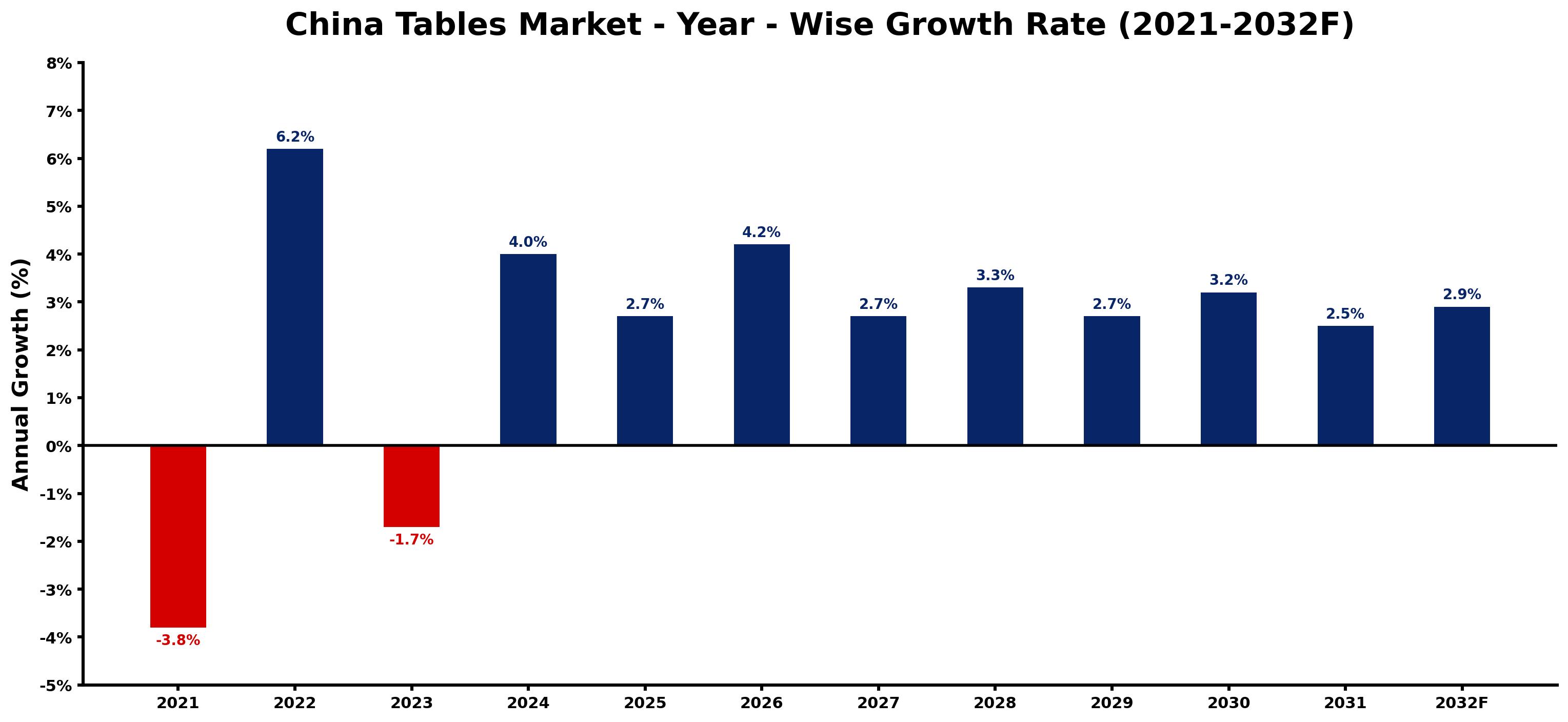
The table below presents the year wise growth rates along with the key drivers influencing the market
| Year | Growth Rate | Major Drivers |
| 2021 | -3.8% | Intensified competition from affordable alternatives led to decreased sales in the China tables market. |
| 2022 | 6.2% | Sustainable materials gain traction, appealing to environmentally conscious Chinese consumers. |
| 2023 | -1.7% | Geopolitical tensions led to reduced imports and exports, hampering market expansion for furniture manufacturers. |
| 2024 | 4.0% | Online retail platforms expand, enhancing accessibility for a wider range of consumers. |
| 2025 | 2.7% | Growing disposable incomes allow consumers to invest in premium table options. |
| 2026 | 4.2% | Lifestyle shifts prioritize home entertainment, boosting sales of dining and coffee tables. |
| 2027 | 2.7% | Technological integration introduces smart furniture features, appealing to tech-savvy buyers. |
| 2028 | 3.3% | Increased focus on home office setups drives demand for versatile working surfaces. |
| 2029 | 2.7% | International design influences inspire unique trends that captivate younger generations. |
| 2030 | 3.2% | Rural-urban migration changes family structures, influencing table size and style preferences. |
| 2031 | 2.5% | Economic recovery post-pandemic fuels home renovation projects, stimulating furniture purchases. |
| 2032 | 2.9% | Emerging market segments, like millennials, prioritize customization and personalization options. |
Note - Market size estimations and growth projections presented in this report are based on 6Wresearch's advanced forecasting approach, validated with industry datasets as of June 2026.
China Tables Market Synopsis
The China Tables Market is projected to reach 4.2% and witness significant growth during the forecast period (2026-2032). The market is underpinned by the rapid economic development of China, which has led to evolving consumer preferences alongside increasing disposable incomes. Various table products, such as dining tables, coffee tables, office desks, and outdoor tables, are experiencing heightened demand, reflecting the diverse requirements of Chinese consumers.
China Tables Market Growth Drivers
Key factors driving the expansion of the China tables market include urbanization, changing lifestyles, and advancing technology. As more individuals migrate to urban settings, space-efficient and multifunctional tables have become increasingly crucial.
- Growing urbanization results in smaller living and working spaces, necessitating the design of more compact and functional table options.
- Consumers are increasingly prioritizing multifunctional furniture that can serve dual purposes, such as dining and work surfaces, leading to innovations in design.
- Technological advances in materials and production methods encourage the use of sustainable, eco-friendly materials, aligning with the rising consumer demand for environmentally conscious products.
- The increasing influence of e-commerce provides consumers with greater access to a wider array of table options, making it easier to compare prices and designs.
- Shifts in consumer preferences towards modern and minimalist aesthetics drive an increase in demand for tables constructed with contemporary materials like metal, glass, and acrylic.
China Tables Market Trends and Opportunities
The China tables market is witnessing a strong inclination towards innovative designs and functionality. As consumer preferences evolve, the demand for contemporary and stylish furniture continues to rise.
- There is a notable trend towards sustainable practices, with consumers favoring tables made from responsibly sourced materials that minimize environmental impact.
- Design innovations, such as expandable and adjustable tables, are gaining traction as they cater to diverse functional needs.
- Customization options are becoming increasingly popular, allowing consumers to select finishes, sizes, and designs that suit their personal preferences.
- The growth of the online retail space facilitates the introduction of niche and bespoke furniture offerings that appeal to specific market segments.
- Urban consumers are increasingly interested in unique, culturally inspired designs that reflect local heritage and trends, presenting opportunities for local artisans and designers.
China Tables Market Challenges and Restraints
Despite the growth opportunities, the China tables market faces several challenges that could hinder its development. Competition among domestic and international manufacturers remains fierce.
- Price competition is intensifying due to the fragmented nature of the market, with numerous players offering varying quality and price ranges.
- Fluctuations in raw material costs can significantly impact production, affecting profit margins for manufacturers.
- Increased labor costs combined with stringent environmental regulations are complicating the operational landscape for manufacturers.
- Shifting consumer preferences may leave companies that fail to innovate in design and functionality at a competitive disadvantage.
- The rise of e-commerce consumption necessitates a strategic approach to online marketing and customer engagement, requiring investments in digital infrastructure.
China Tables Market Government Investment and Initiatives
The role of government policy in the China tables market is significant, with various initiatives aimed at promoting sustainability and consumer safety. The government has implemented quality standards mandating safety regulations for table products.
- Policies encouraging the use of eco-friendly materials in furniture manufacturing reflect the government's commitment to environmental protection.
- Initiatives aimed at improving product labeling enhance transparency, allowing consumers to make informed purchasing decisions.
- The government has been investing in domestic production capabilities, seeking to strengthen local manufacturers and ensure fair competition.
- Support for research and development in furniture design may assist in driving innovation within the industry, fostering a more competitive market.
- Regulations promoting sustainable manufacturing practices are increasingly influencing production strategies, encouraging companies to adopt greener methods.
China Tables Market Latest Developments (May 2025 - June 2026)
Recent developments in the China tables market reflect an ongoing commitment to innovation and sustainability. Industry players have been rapidly adapting their product offerings to meet the evolving needs of consumers.
- Several manufacturers have started launching multifunctional tables that incorporate storage solutions, appealing to urban consumers who prioritize space efficiency.
- Collaborations with designers to create limited-edition collections have become a noteworthy trend, highlighting the cultural significance of furniture in contemporary Chinese lifestyles.
- There has been an increase in promotional campaigns targeting online platforms, enabling brands to reach broader audiences and enhance direct-to-consumer sales.
- Investments in sustainable production techniques are gaining momentum, with companies actively sourcing recyclable materials to appeal to eco-conscious shoppers.
- The trend towards customization has led to more brands offering consumer options for personalization, empowering shoppers to design tables that fit their unique spaces.
China Tables Market - Key Attractiveness of the Report
- 10 Years of Market Numbers
- Historical Data Starting from 2022 to 2025
- Base Year: 2025
- Forecast Data until 2032
- Key Performance Indicators Impacting the Market
- Major Upcoming Developments and Projects
Key Highlights of the Report:
- China Tables Market Outlook
- Market Size of China Tables Market, 2025
- Forecast of China Tables Market, 2032F
- Historical Data and Forecast of China Tables Revenues & Volume for the Period 2022-2032F
- China Tables Market Trend Evolution
- China Tables Market Drivers and Challenges
- China Tables Price Trends
- China Tables Porter's Five Forces
- China Tables Industry Life Cycle
- Historical Data and Forecast of China Tables Market Revenues & Volume By Types for the Period 2022-2032F
- Historical Data and Forecast of China Tables Market Revenues & Volume By Fabric for the Period 2022-2032F
- Historical Data and Forecast of China Tables Market Revenues & Volume By Leather for the Period 2022-2032F
- Historical Data and Forecast of China Tables Market Revenues & Volume By Metal for the Period 2022-2032F
- Historical Data and Forecast of China Tables Market Revenues & Volume By Wooden for the Period 2022-2032F
- Historical Data and Forecast of China Tables Market Revenues & Volume By Others for the Period 2022-2032F
- Historical Data and Forecast of China Tables Market Revenues & Volume By Applications for the Period 2022-2032F
- Historical Data and Forecast of China Tables Market Revenues & Volume By Family for the Period 2022-2032F
- Historical Data and Forecast of China Tables Market Revenues & Volume By Office for the Period 2022-2032F
- Historical Data and Forecast of China Tables Market Revenues & Volume By Others for the Period 2022-2032F
- China Tables Import Export Trade Statistics
- Market Opportunity Assessment By Types
- Market Opportunity Assessment By Applications
- China Tables Top Companies Market Share
- China Tables Competitive Benchmarking By Technical and Operational Parameters
- China Tables Company Profiles
- China Tables Key Strategic Recommendations






































