Colombia Bamboo Furniture Market: Top 5 Importing Countries and Market Competition (HHI) Analysis
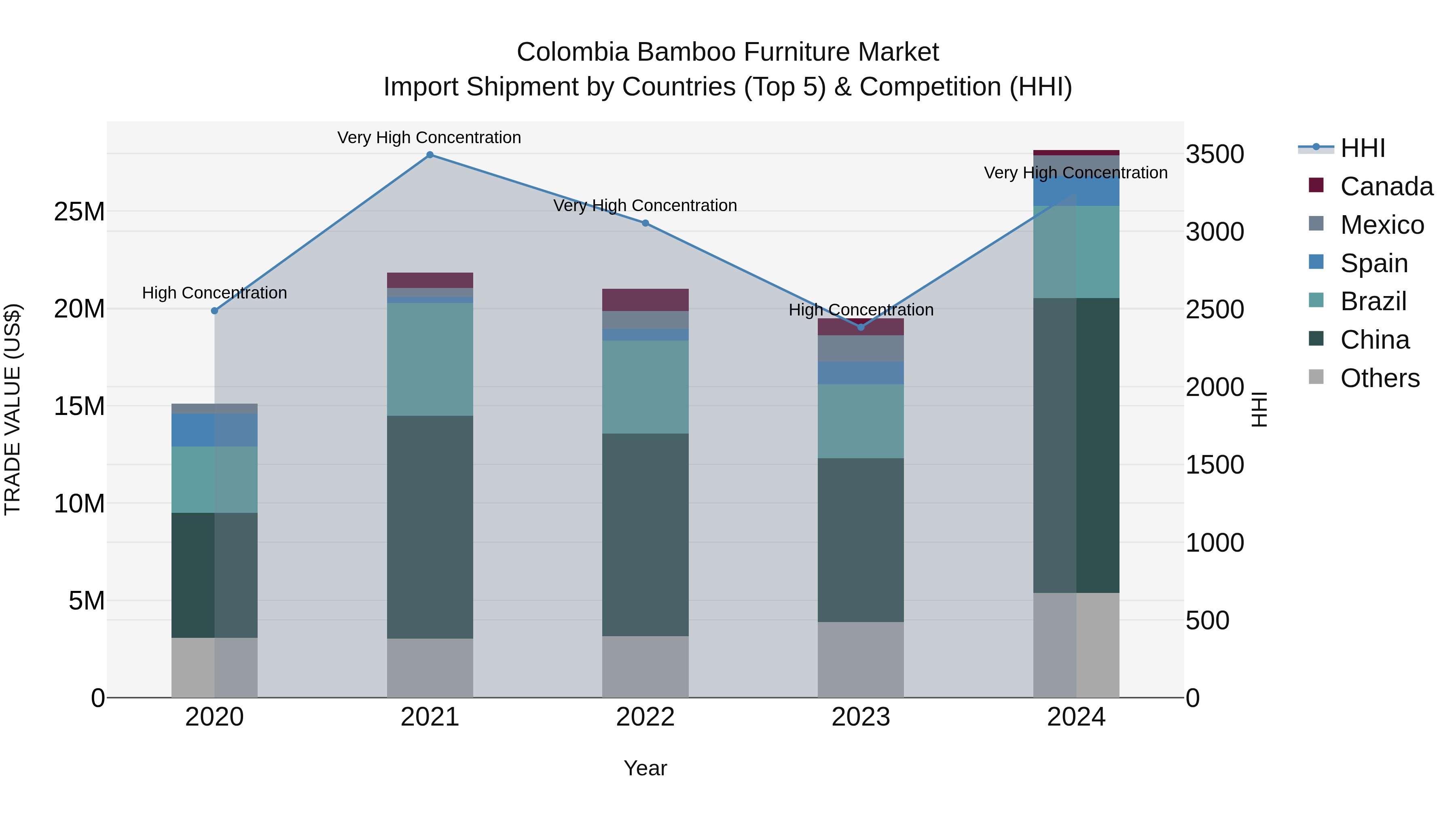
The Colombia bamboo furniture import market is showing strong growth, with a high concentration of shipments from top exporters like China, Brazil, Spain, Mexico, and Poland. The market experienced a significant increase in concentration from 2023 to 2024, indicating a more dominant presence of these key exporting countries. With a impressive compound annual growth rate of 16.8% from 2020 to 2024 and a remarkable growth rate of 44.26% from 2023 to 2024, the Colombia bamboo furniture import market is poised for continued expansion and competitiveness in the coming years.
Colombia Bamboo Furniture Market Synopsis
The Colombia Bamboo Furniture Market is experiencing steady growth driven by increasing consumer demand for sustainable and eco-friendly furniture options. Bamboo furniture is gaining popularity due to its durability, light weight, and stylish aesthetic appeal. The market is highly competitive with both domestic and international players offering a wide range of bamboo furniture products including chairs, tables, sofas, and beds. Key trends in the market include the use of innovative designs and techniques to enhance the quality and durability of bamboo furniture. With a growing focus on environmental conservation and sustainable living, the Colombia Bamboo Furniture Market is expected to continue its upward trajectory in the coming years, presenting opportunities for companies to expand their product offerings and reach a wider customer base.
Colombia Bamboo Furniture Market Trends
The Colombia Bamboo Furniture Market is experiencing a growing interest in sustainable and eco-friendly furniture options, with consumers increasingly prioritizing environmentally conscious choices. Bamboo furniture is gaining popularity due to its renewable nature, durability, and unique aesthetic appeal. Design trends are leaning towards minimalist and modern styles, with an emphasis on clean lines and natural finishes that showcase the beauty of the bamboo material. Additionally, there is a rising demand for multifunctional furniture pieces that offer versatility and space-saving solutions in urban living environments. As the awareness of sustainable living practices continues to rise, the Colombia Bamboo Furniture Market is expected to expand further, driven by consumers seeking ethical and environmentally friendly alternatives in their home furnishings.
Colombia Bamboo Furniture Market Challenges
In the Colombia Bamboo Furniture Market, some challenges include limited awareness and knowledge among consumers about the benefits of bamboo furniture, leading to lower demand compared to traditional furniture materials. Additionally, there may be issues related to the availability of high-quality bamboo material, as well as skilled artisans capable of crafting durable and aesthetically pleasing bamboo furniture. Infrastructure and logistical challenges in sourcing, transporting, and storing bamboo may also impact the market. Moreover, competition from other types of sustainable furniture materials and imported products could pose a threat to the growth of the bamboo furniture market in Colombia. Overcoming these challenges will require targeted marketing efforts to educate consumers, investments in improving the bamboo supply chain, and fostering a supportive ecosystem for bamboo furniture production in the country.
Colombia Bamboo Furniture Market Investment Opportunities
The Colombia Bamboo Furniture Market presents promising investment opportunities due to the growing demand for sustainable and eco-friendly furniture options. Bamboo is a fast-growing and renewable resource that is highly durable and versatile, making it an attractive choice for consumers seeking environmentally conscious products. Investing in the production and sale of bamboo furniture in Colombia can capitalize on this trend, especially as the government and consumers increasingly prioritize sustainability. Additionally, the unique aesthetic appeal of bamboo furniture can cater to a niche market segment looking for stylish and modern home decor options. By leveraging the sustainability and aesthetic advantages of bamboo, investors can tap into a growing market and establish a competitive presence in the Colombia Bamboo Furniture Market.
Jordan Agar Market Government Policies
The Colombian government has implemented various policies to support the bamboo furniture market, aiming to promote sustainable development and environmentally friendly practices. These policies include tax incentives for companies using sustainable materials like bamboo, funding for research and development in the bamboo industry, and regulations to ensure the sustainable harvesting of bamboo resources. Additionally, the government has initiated programs to raise awareness among consumers about the benefits of bamboo furniture in terms of durability, aesthetic appeal, and environmental impact. Overall, these policies seek to foster the growth of the bamboo furniture market in Colombia while promoting sustainability and responsible resource management.
Colombia Bamboo Furniture Market Future Outlook
The future outlook for the Colombia Bamboo Furniture Market appears to be promising, driven by increasing consumer demand for sustainable and eco-friendly furniture options. With a growing awareness of environmental issues and a shift towards more conscious consumption habits, bamboo furniture is gaining popularity due to its renewable nature and durability. Additionally, as the government continues to promote sustainable practices and green initiatives, the market is expected to further expand. Collaborations between local artisans and international designers are also contributing to the innovation and diversification of bamboo furniture offerings in Colombia. Overall, the market is poised for growth in the coming years, with opportunities for manufacturers and retailers to capitalize on the eco-friendly trend and cater to a more environmentally conscious consumer base.
Key Highlights of the Report:
- Colombia Bamboo Furniture Market Outlook
- Market Size of Colombia Bamboo Furniture Market, 2024
- Forecast of Colombia Bamboo Furniture Market, 2031
- Historical Data and Forecast of Colombia Bamboo Furniture Revenues & Volume for the Period 2021 - 2031
- Colombia Bamboo Furniture Market Trend Evolution
- Colombia Bamboo Furniture Market Drivers and Challenges
- Colombia Bamboo Furniture Price Trends
- Colombia Bamboo Furniture Porter's Five Forces
- Colombia Bamboo Furniture Industry Life Cycle
- Historical Data and Forecast of Colombia Bamboo Furniture Market Revenues & Volume By Type for the Period 2021 - 2031
- Historical Data and Forecast of Colombia Bamboo Furniture Market Revenues & Volume By Chairs & Tables for the Period 2021 - 2031
- Historical Data and Forecast of Colombia Bamboo Furniture Market Revenues & Volume By Stools for the Period 2021 - 2031
- Historical Data and Forecast of Colombia Bamboo Furniture Market Revenues & Volume By Beds for the Period 2021 - 2031
- Historical Data and Forecast of Colombia Bamboo Furniture Market Revenues & Volume By Others for the Period 2021 - 2031
- Historical Data and Forecast of Colombia Bamboo Furniture Market Revenues & Volume By End User for the Period 2021 - 2031
- Historical Data and Forecast of Colombia Bamboo Furniture Market Revenues & Volume By Residential for the Period 2021 - 2031
- Historical Data and Forecast of Colombia Bamboo Furniture Market Revenues & Volume By Commercial for the Period 2021 - 2031
- Colombia Bamboo Furniture Import Export Trade Statistics
- Market Opportunity Assessment By Type
- Market Opportunity Assessment By End User
- Colombia Bamboo Furniture Top Companies Market Share
- Colombia Bamboo Furniture Competitive Benchmarking By Technical and Operational Parameters
- Colombia Bamboo Furniture Company Profiles
- Colombia Bamboo Furniture Key Strategic Recommendations






































