Colombia Oil and Gas Cloud Applications Market Size & Growth Rate (2026-2032)
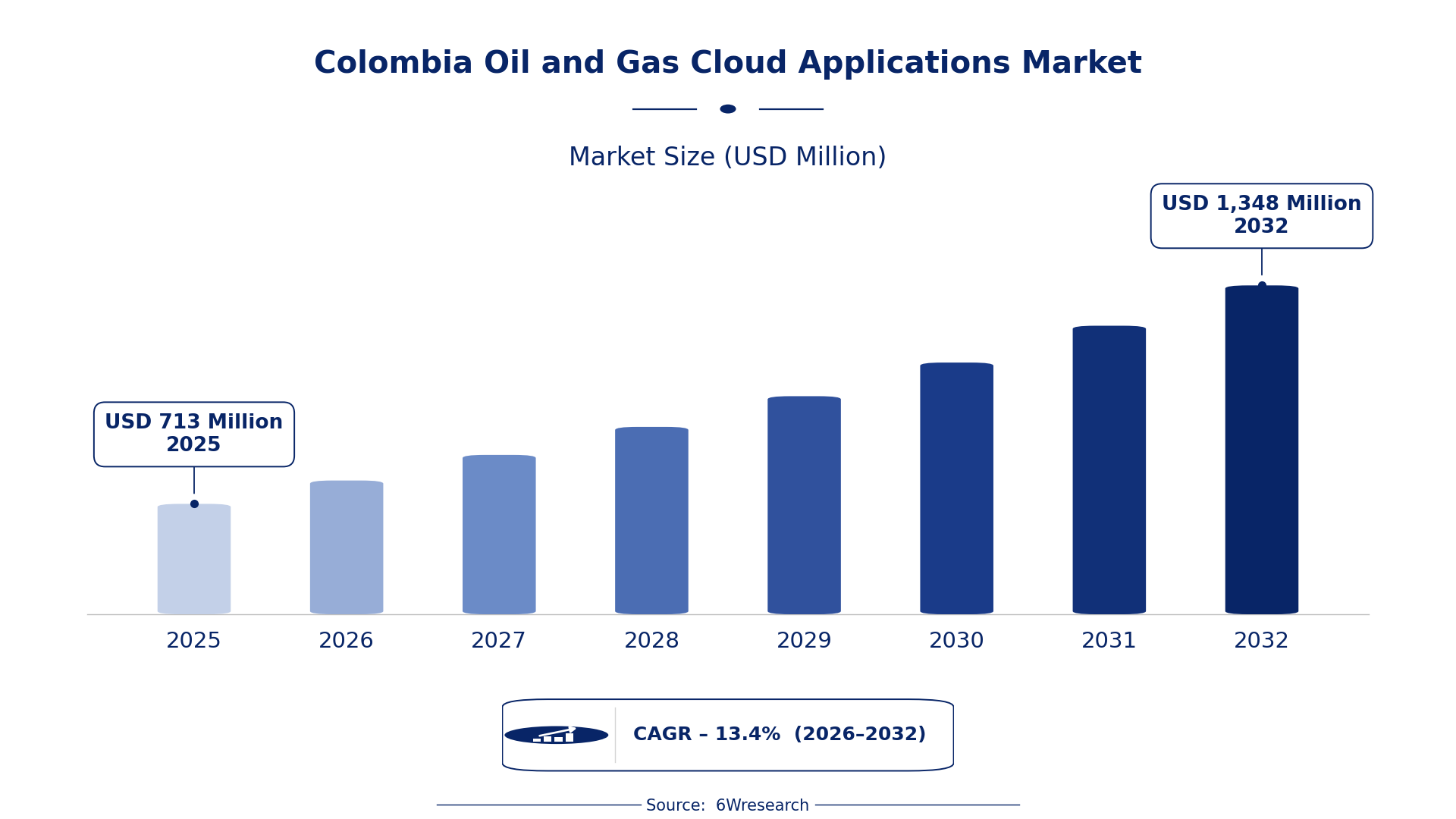
The Colombia Oil and Gas Cloud Applications Market was estimated at USD 713 Million in 2025 and is projected to reach USD 1348 Million by 2032, growing at a CAGR of 13.4% from 2026 to 2032.
Colombia Oil and Gas Cloud Applications Market Synopsis
The adoption of cloud applications in Colombia's oil and gas sector is gaining momentum as companies strive for digital transformation. These cloud solutions provide essential tools for data management, analytics, and collaborative work environments, crucial for enhancing operational efficiencies in an industry characterized by complexity and high operational costs.
As the Colombian government promotes technological advancement and energy sector reforms, organizations are increasingly leveraging cloud technologies. This shift not only streamlines processes but also supports innovation, allowing businesses to adapt to changing market conditions and consumer demands effectively.
Colombia Oil and Gas Cloud Applications Market Year-wise Growth Rate and Key Drivers
This graph illustrates the annual growth rates of the Colombia Oil and Gas Cloud Applications Market from 2021 to 2032, highlighting a steady upward trajectory and projected expansion over the forecast period.
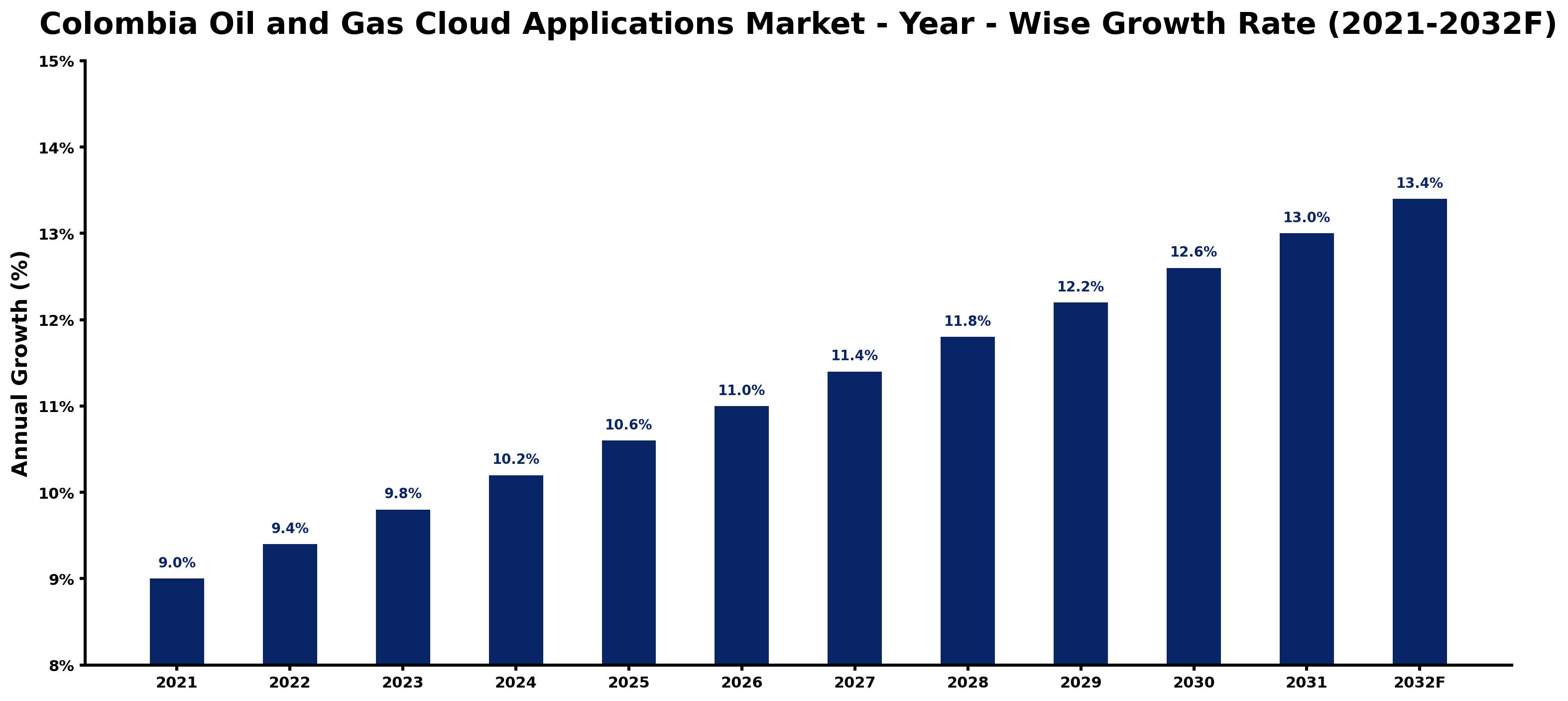
The table below presents the year‑wise growth rates along with the key drivers influencing the market
| Year | Growth Rate | Major Drivers |
| 2021 | 9.0% | Oil sector digitalization drives cloud adoption strategies. |
| 2022 | 9.4% | Government's digital transformation policies favor cloud applications. |
| 2023 | 9.8% | Increased investment in oil exploration enhances cloud reliance. |
| 2024 | 10.2% | COVID-19 recovery fuels remote operations via cloud solutions. |
| 2025 | 10.6% | Rising oil prices boost demand for cloud efficiency tools. |
| 2026 | 11.0% | Colombian Energy Ministry promotes cloud technologies for innovation. |
| 2027 | 11.4% | Enhanced cybersecurity regulations increase adoption of cloud solutions. |
| 2028 | 11.8% | Local startups drive innovation in oil and gas cloud tech. |
| 2029 | 12.2% | Strategic partnerships between firms accelerate cloud integration efforts. |
| 2030 | 12.6% | Sustainable practices in oil management increase cloud service demand. |
| 2031 | 13.0% | Adoption of IoT in oil sector boosts cloud system use. |
| 2032 | 13.4% | Investment in renewable energy transitions encourages cloud scalability. |
Note: Market size estimations and growth projections presented in this report are based on 6Wresearch's proprietary forecasting methodology, utilizing the latest available industry data, government publications, and primary research inputs.
Colombia Oil and Gas Cloud Applications Market Key Takeaways
Below are some of the specific key takeaways from the market, including:
- The market is driven by increasing demand for data analytics and management solutions.
- Cloud applications enhance operational efficiency and reduce costs for companies in the sector.
- Regulatory compliance and data security remain critical challenges for cloud adoption.
- Government initiatives are fostering a supportive environment for technology implementation.
- Connectivity and infrastructure limitations in remote areas pose significant barriers.
Evaluation of Restraints in Colombia Oil and Gas Cloud Applications Market
Despite its promising growth, the Colombia Oil and Gas Cloud Applications Market faces several restraints. Concerns over data security are paramount, as companies grapple with protecting sensitive information in a cloud environment. Compliance with complex regulatory frameworks adds another layer of difficulty, necessitating careful navigation of legal landscapes. on top of that, cultural resistance to adopting new technologies hampers progress, particularly in traditional sectors like oil and gas. Connectivity issues, especially in remote operational areas, exacerbate challenges, making seamless integration of cloud solutions more difficult. Economic volatility and fluctuating oil prices further complicate investment decisions, affecting demand for cloud applications.
Colombia Oil and Gas Cloud Applications Market Trends
A notable trend in the Colombia Oil and Gas Cloud Applications Market is the increasing focus on data-driven decision-making. Companies are investing in advanced analytics tools to optimize operations and forecast market trends. Additionally, the integration of Internet of Things (IoT) devices is enhancing data collection and analysis, driving efficiency. There’s also a growing emphasis on sustainability, as firms seek to minimize their carbon footprints through cloud-based solutions that streamline operations and reduce waste.
Colombia Oil and Gas Cloud Applications Market Opportunities
The opportunities for growth within this market are substantial. The ongoing government push for digital transformation presents a ripe environment for cloud application providers. Companies that can offer tailored solutions that address specific operational challenges will find a receptive audience. on top of that, partnerships with local firms can facilitate market entry and enhance service offerings. As the industry increasingly prioritizes sustainability, cloud solutions that contribute to environmental goals will likely see increased adoption.
Government Initiatives in the Colombia Oil and Gas Cloud Applications Market
The Colombian government is actively shaping the Oil and Gas Cloud Applications Market through various policies aimed at fostering digital transformation and enhancing regulatory frameworks. These initiatives are critical as they set the stage for a more technology-driven energy sector, emphasizing data privacy and operational efficiency. The government's commitment to modernizing infrastructure and supporting innovation reflects its understanding of the sector's potential to drive economic growth.
- A national digital infrastructure upgrade programme, currently in its rollout phase, aims to enhance connectivity in remote oil and gas regions.
- A regulatory framework introduced in 2025 mandates strict data protection measures for cloud computing in the energy sector.
- Ongoing initiatives focused on public-private partnerships are designed to boost cloud technology adoption among local oil and gas companies.
- Upcoming policies are expected to prioritize investment in cloud solutions that support sustainable practices in the oil and gas industry.
Future Insights of the Colombia Oil and Gas Cloud Applications Market
Looking ahead to 2026-2032, the Colombia Oil and Gas Cloud Applications Market is set to expand significantly. As organizations increasingly recognize the need for agility and responsiveness, the demand for advanced cloud applications will rise. The convergence of digital technologies will drive innovation, enabling companies to enhance their operational capabilities. With government support and a growing emphasis on sustainability, firms that embrace these cloud solutions will likely gain a competitive advantage in the evolving energy landscape.
Colombia Oil and Gas Cloud Applications Market Latest Developments
In the past year, the Colombia Oil and Gas Cloud Applications Market has witnessed notable developments reflecting the industry's transition towards digital solutions. Companies are increasingly investing in cloud technologies to streamline their operations and improve data analytics capabilities. This trend is expected to accelerate as more firms recognize the strategic importance of digital transformation.
- A major technology vendor launched a new cloud-based analytics platform for oil and gas operations in early 2025, enhancing real-time decision-making capabilities.
- Current initiatives include a partnership between regional operators and cloud service providers aimed at expanding access to cloud applications in remote areas, underway since mid-2025.
- An upcoming rollout of a comprehensive training programme for oil and gas personnel is planned for late 2026, focusing on cloud technologies and digital skills.
- A leading regional operator is currently implementing a cloud-based supply chain management system, enhancing efficiency and tracking, with implementation expected to complete by early 2026.
Colombia Oil and Gas Cloud Applications Market - Key Attractiveness of the Report
- 10 Years of Market Numbers
- Historical Data Starting from 2022 to 2025
- Base Year: 2025
- Forecast Data until 2032
- Key Performance Indicators Impacting the Market
- Major Upcoming Developments and Projects
Key Highlights of the Report:
- Colombia Oil and Gas Cloud Applications Market Outlook
- Market Size of Colombia Oil and Gas Cloud Applications Market, 2025
- Forecast of Colombia Oil and Gas Cloud Applications Market, 2032
- Historical Data and Forecast of Colombia Oil and Gas Cloud Applications Revenues & Volume for the Period 2022-2032F
- Colombia Oil and Gas Cloud Applications Market Trend Evolution
- Colombia Oil and Gas Cloud Applications Market Drivers and Challenges
- Colombia Oil and Gas Cloud Applications Price Trends
- Colombia Oil and Gas Cloud Applications Porter's Five Forces
- Colombia Oil and Gas Cloud Applications Industry Life Cycle
- Historical Data and Forecast of Colombia Oil and Gas Cloud Applications Market Revenues & Volume By Component for the Period 2022-2032F
- Historical Data and Forecast of Colombia Oil and Gas Cloud Applications Market Revenues & Volume By Solution for the Period 2022-2032F
- Historical Data and Forecast of Colombia Oil and Gas Cloud Applications Market Revenues & Volume By Services for the Period 2022-2032F
- Historical Data and Forecast of Colombia Oil and Gas Cloud Applications Market Revenues & Volume By Deployment Type for the Period 2022-2032F
- Historical Data and Forecast of Colombia Oil and Gas Cloud Applications Market Revenues & Volume By Private for the Period 2022-2032F
- Historical Data and Forecast of Colombia Oil and Gas Cloud Applications Market Revenues & Volume By Public Cloud for the Period 2022-2032F
- Historical Data and Forecast of Colombia Oil and Gas Cloud Applications Market Revenues & Volume By Operation for the Period 2022-2032F
- Historical Data and Forecast of Colombia Oil and Gas Cloud Applications Market Revenues & Volume By Upstream for the Period 2022-2032F
- Historical Data and Forecast of Colombia Oil and Gas Cloud Applications Market Revenues & Volume By Midstream for the Period 2022-2032F
- Historical Data and Forecast of Colombia Oil and Gas Cloud Applications Market Revenues & Volume By Downstream for the Period 2022-2032F
- Colombia Oil and Gas Cloud Applications Import Export Trade Statistics
- Market Opportunity Assessment By Component
- Market Opportunity Assessment By Deployment Type
- Market Opportunity Assessment By Operation
- Colombia Oil and Gas Cloud Applications Top Companies Market Share
- Colombia Oil and Gas Cloud Applications Competitive Benchmarking By Technical and Operational Parameters
- Colombia Oil and Gas Cloud Applications Company Profiles
- Colombia Oil and Gas Cloud Applications Key Strategic Recommendations






































