Democratic Republic of the Congo Digital Camera Market Size Growth Rate
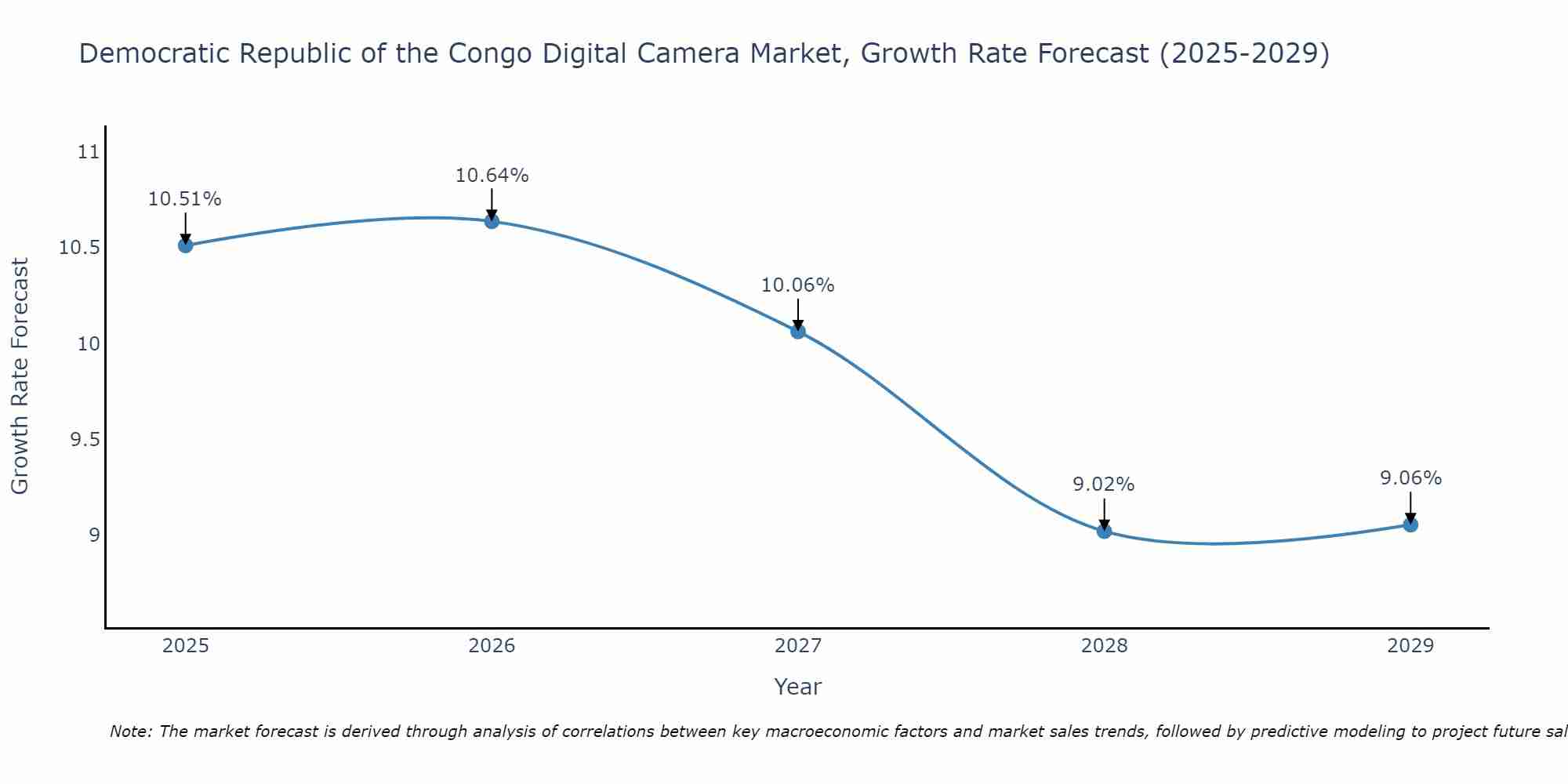
The Democratic Republic of the Congo Digital Camera Market is projected to witness mixed growth rate patterns during 2025 to 2029. Growth accelerates to 10.64% in 2026, following an initial rate of 10.51%, before easing to 9.06% at the end of the period.
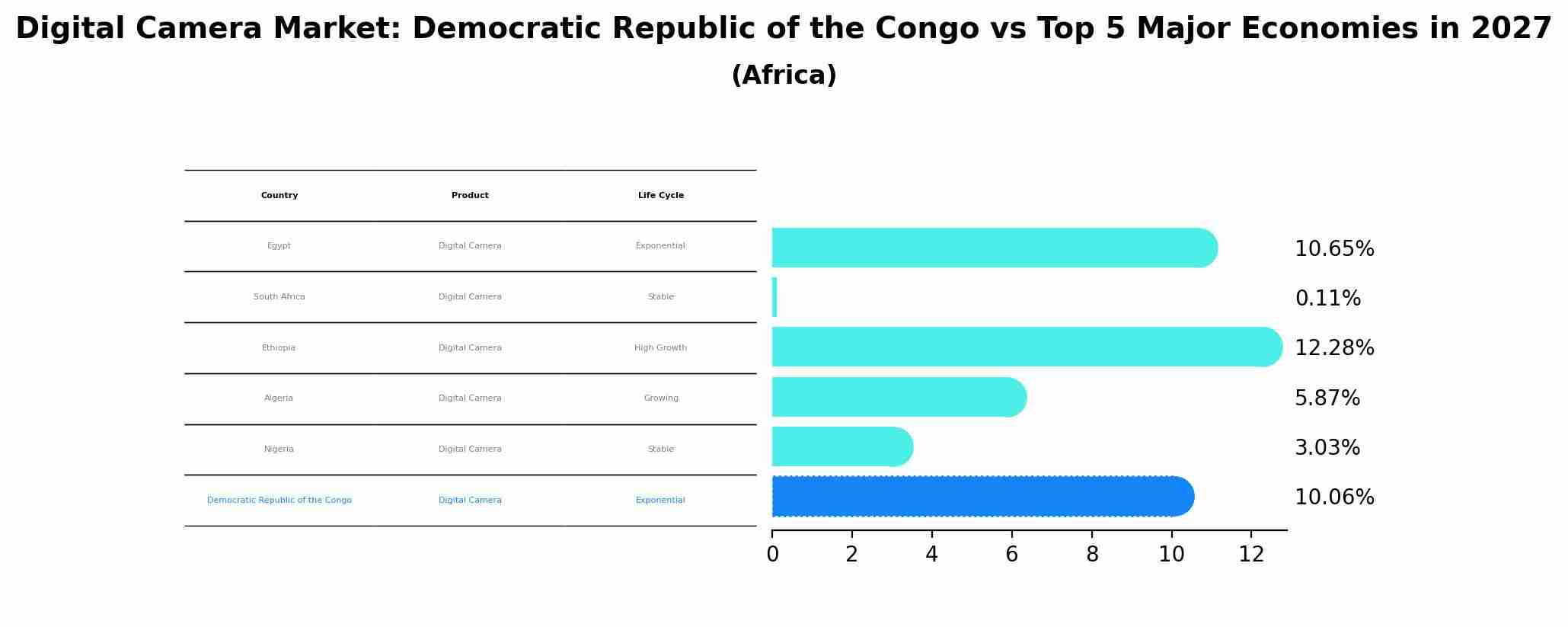
Digital Camera Market: Democratic Republic of the Congo vs Top 5 Major Economies in 2027 (Africa)
In the Africa region, the Digital Camera market in Democratic Republic of the Congo is projected to expand at a high growth rate of 10.06% by 2027. The largest economy is Egypt, followed by South Africa, Ethiopia, Algeria and Nigeria.
Congo Digital Camera Market Overview
The digital camera market in Congo is evolving with the increasing popularity of smartphones equipped with high-quality cameras. However, there remains a niche demand for digital cameras, particularly among professionals and photography enthusiasts. This market includes a variety of cameras, from basic point-and-shoot models to advanced DSLRs and mirrorless cameras.
Drivers of the market
The Congo digital camera market is driven by the growing demand for high-quality imaging devices, the rising popularity of social media and content creation, and advancements in camera technology such as higher resolutions and enhanced connectivity. The expanding consumer electronics market and the shift towards digital photography also support market growth.
Challenges of the market
The Congo digital camera market faces several challenges, including limited access to advanced camera technologies and high costs of procurement and maintenance. The market also struggles with outdated infrastructure and a shortage of skilled professionals to operate and manage digital cameras effectively.
Government Policy of the market
The Congolese government is supporting the digital camera market by promoting local distribution and reducing import taxes on digital cameras. Policies are focused on encouraging the use of digital cameras in various sectors, including media, education, and tourism, to enhance documentation and promote digital literacy. The government is also working to establish partnerships with leading camera manufacturers to introduce affordable and high-quality digital cameras to the local market.
Key Highlights of the Report:
- Congo Digital Camera Market Outlook
- Market Size of Congo Digital Camera Market, 2024
- Forecast of Congo Digital Camera Market, 2031
- Historical Data and Forecast of Congo Digital Camera Revenues & Volume for the Period 2021-2031
- Congo Digital Camera Market Trend Evolution
- Congo Digital Camera Market Drivers and Challenges
- Congo Digital Camera Price Trends
- Congo Digital Camera Porter`s Five Forces
- Congo Digital Camera Industry Life Cycle
- Historical Data and Forecast of Congo Digital Camera Market Revenues & Volume By Product for the Period 2021-2031
- Historical Data and Forecast of Congo Digital Camera Market Revenues & Volume By Built-in Lens Camera for the Period 2021-2031
- Historical Data and Forecast of Congo Digital Camera Market Revenues & Volume By Interchangeable Lens Camera for the Period 2021-2031
- Historical Data and Forecast of Congo Digital Camera Market Revenues & Volume By DSLR for the Period 2021-2031
- Historical Data and Forecast of Congo Digital Camera Market Revenues & Volume By Non-reflex for the Period 2021-2031
- Congo Digital Camera Import Export Trade Statistics
- Market Opportunity Assessment By Product
- Congo Digital Camera Top Companies Market Share
- Congo Digital Camera Competitive Benchmarking By Technical and Operational Parameters
- Congo Digital Camera Company Profiles
- Congo Digital Camera Key Strategic Recommendations






































