Croatia Dairy Protein Market Top 5 Importing Countries and Market Competition (HHI) Analysis
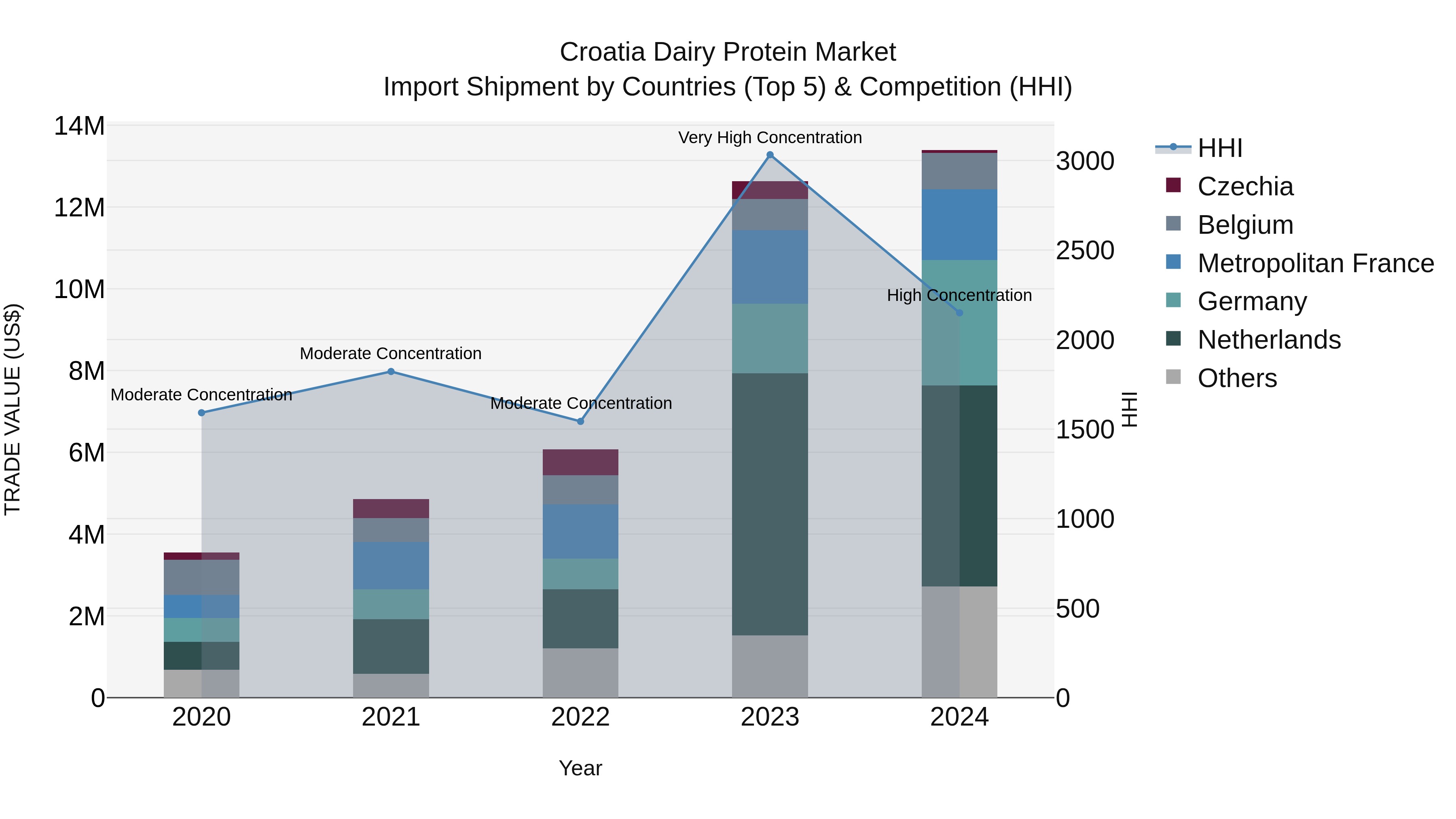
Croatia dairy protein import market experienced significant growth in 2024, with top exporting countries including Netherlands, Germany, Metropolitan France, Belgium, and the USA. Despite a high concentration level in 2023, the market remained competitive in 2024. The impressive compound annual growth rate (CAGR) of 39.37% from 2020 to 2024 highlights the increasing demand for dairy protein in Croatia. Moreover, the growth rate of 6.03% from 2023 to 2024 indicates sustained momentum in the market, offering opportunities for both local and international dairy protein suppliers to capitalize on this expanding market.
Dairy Protein Market: Croatia vs Top 5 Major Economies in 2027 (Europe)
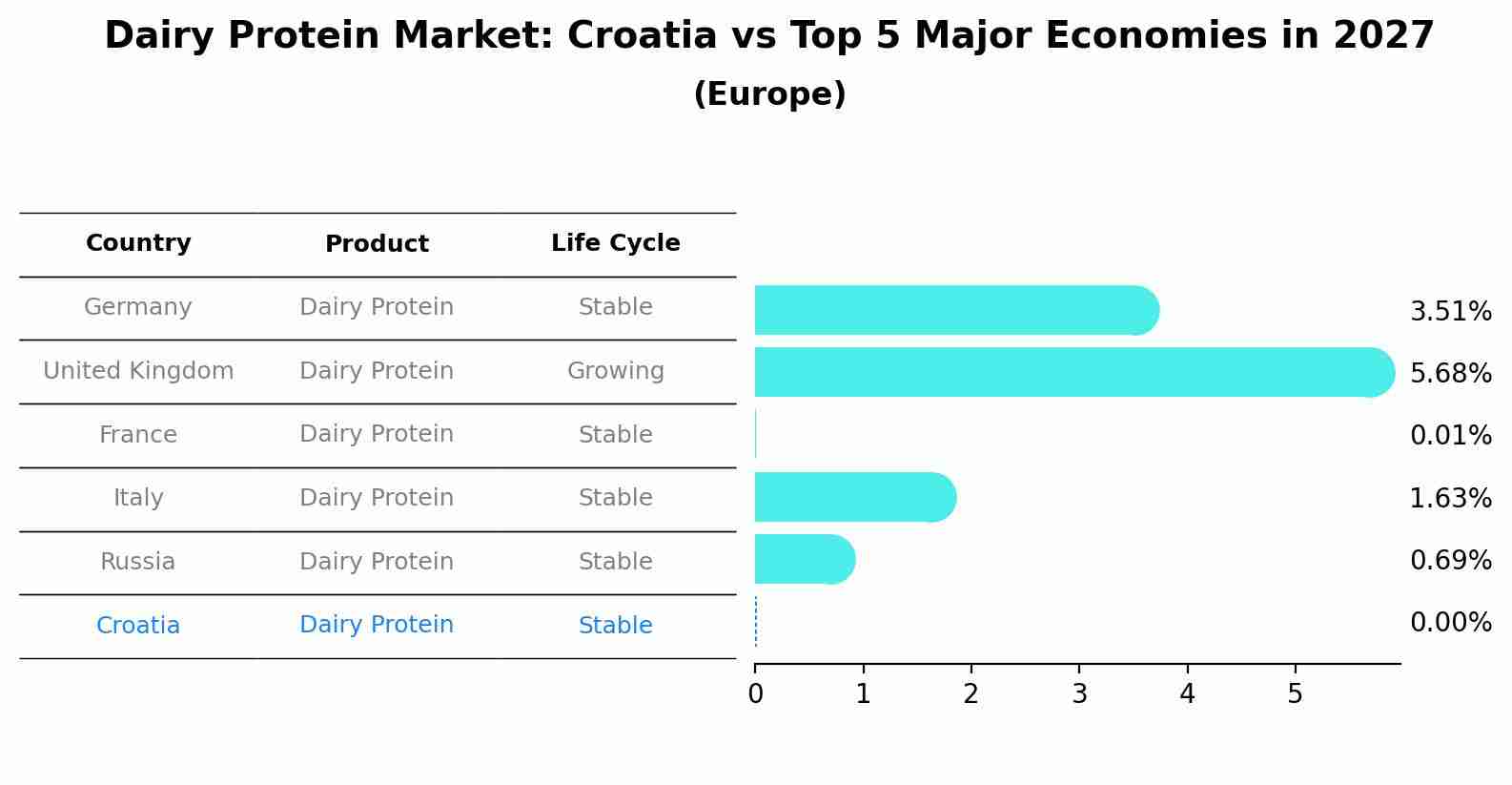
In the Europe region, the Dairy Protein market in Croatia is projected to expand at a stable growth rate of 0.00% by 2027. The largest economy is Germany, followed by United Kingdom, France, Italy and Russia.
Croatia Dairy Protein Market Overview
The dairy protein market in Croatia is influenced by rising health consciousness and demand for protein-rich foods. Dairy proteins such as whey and casein are increasingly popular due to their nutritional benefits, especially in sports nutrition and functional food products. The market is growing as consumers seek high-quality protein sources that support muscle growth and recovery.
Drivers of the market
The Croatia dairy protein market is primarily driven by the rising consumer awareness of the health benefits associated with protein consumption. Demand for functional foods, sports nutrition, and dietary supplements has surged, making dairy proteins a sought-after ingredient. Furthermore, the growing trend towards high-protein diets, combined with innovation in dairy protein-based products, boosts market demand.
Challenges of the market
The Croatia dairy protein market contends with increasing competition from plant-based protein alternatives, which are becoming popular among health-conscious consumers. Moreover, fluctuations in milk production and price volatility of dairy proteins present ongoing market challenges.
Government Policy of the market
The production and distribution of dairy proteins in Croatia are governed by food safety laws that comply with EU regulations. The government supports dairy protein manufacturers through subsidies aimed at increasing productivity and exports. Labeling and marketing regulations ensure transparency in product content, reflecting the government`s focus on consumer protection and fair trade practices.
Key Highlights of the Report:
- Croatia Dairy Protein Market Outlook
- Market Size of Croatia Dairy Protein Market, 2024
- Forecast of Croatia Dairy Protein Market, 2031
- Historical Data and Forecast of Croatia Dairy Protein Revenues & Volume for the Period 2021-2031
- Croatia Dairy Protein Market Trend Evolution
- Croatia Dairy Protein Market Drivers and Challenges
- Croatia Dairy Protein Price Trends
- Croatia Dairy Protein Porter`s Five Forces
- Croatia Dairy Protein Industry Life Cycle
- Historical Data and Forecast of Croatia Dairy Protein Market Revenues & Volume By Type for the Period 2021-2031
- Historical Data and Forecast of Croatia Dairy Protein Market Revenues & Volume By Casein and Derivatives for the Period 2021-2031
- Historical Data and Forecast of Croatia Dairy Protein Market Revenues & Volume By Whey protein for the Period 2021-2031
- Historical Data and Forecast of Croatia Dairy Protein Market Revenues & Volume By Milk Protein Concentrate for the Period 2021-2031
- Historical Data and Forecast of Croatia Dairy Protein Market Revenues & Volume By Application for the Period 2021-2031
- Historical Data and Forecast of Croatia Dairy Protein Market Revenues & Volume By Food & Beverages for the Period 2021-2031
- Historical Data and Forecast of Croatia Dairy Protein Market Revenues & Volume By Nutrition for the Period 2021-2031
- Historical Data and Forecast of Croatia Dairy Protein Market Revenues & Volume By Personal Care & Cosmetics for the Period 2021-2031
- Historical Data and Forecast of Croatia Dairy Protein Market Revenues & Volume By Feed for the Period 2021-2031
- Historical Data and Forecast of Croatia Dairy Protein Market Revenues & Volume By Others for the Period 2021-2031
- Historical Data and Forecast of Croatia Dairy Protein Market Revenues & Volume By Form for the Period 2021-2031
- Historical Data and Forecast of Croatia Dairy Protein Market Revenues & Volume By Solid for the Period 2021-2031
- Historical Data and Forecast of Croatia Dairy Protein Market Revenues & Volume By Liquid for the Period 2021-2031
- Croatia Dairy Protein Import Export Trade Statistics
- Market Opportunity Assessment By Type
- Market Opportunity Assessment By Application
- Market Opportunity Assessment By Form
- Croatia Dairy Protein Top Companies Market Share
- Croatia Dairy Protein Competitive Benchmarking By Technical and Operational Parameters
- Croatia Dairy Protein Company Profiles
- Croatia Dairy Protein Key Strategic Recommendations






































