Croatia Iodine Market Size (2020-2030)
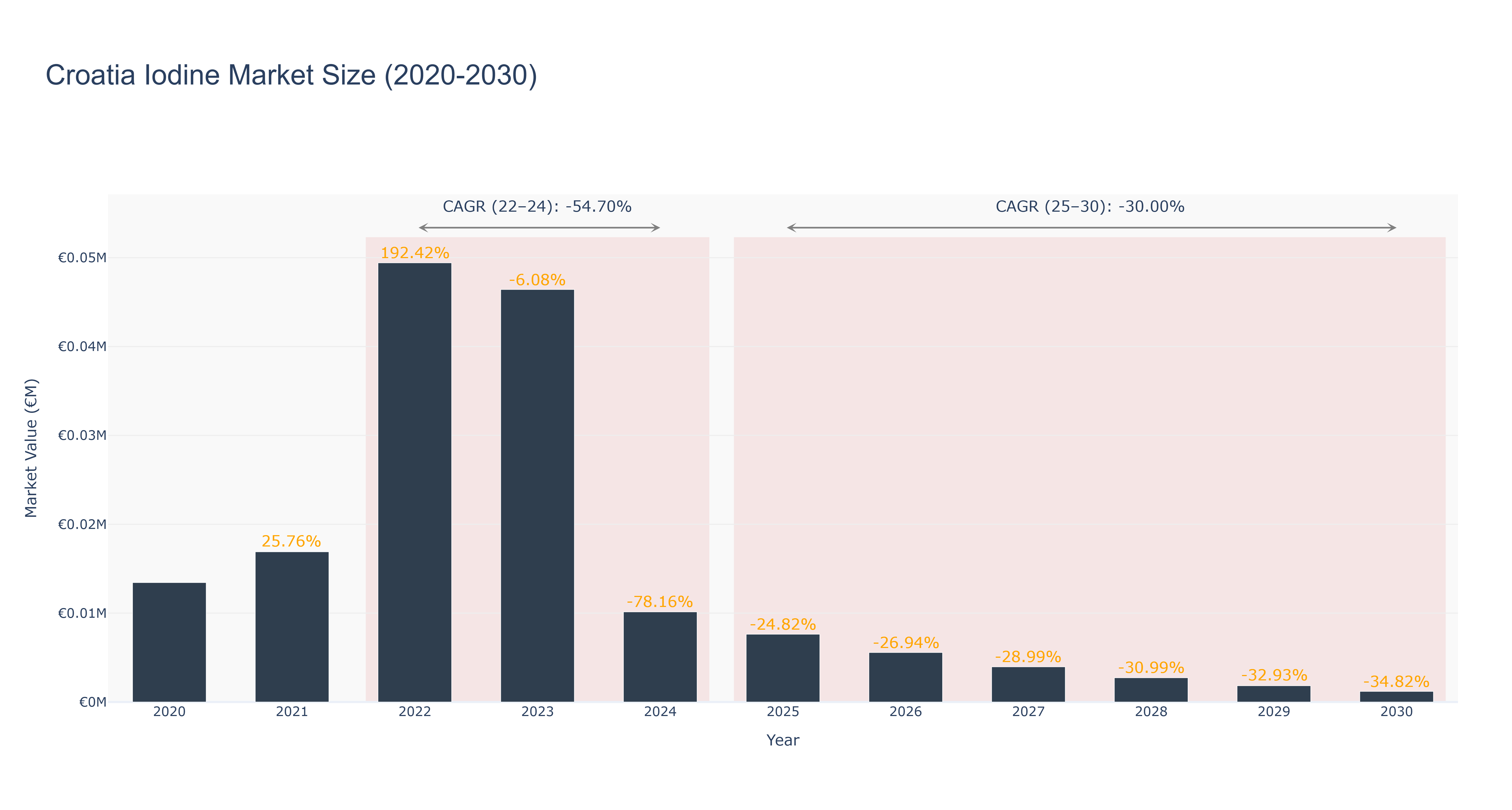
The Croatia Iodine Market has experienced a tumultuous trajectory, peaking in 2022 with a market size of €49.42 thousand, following a remarkable growth of 192.42% from the previous year. However, this growth was short-lived, as the market contracted significantly in 2023 and is projected to decline further through 2030. Actual data from 2022 to 2024 reflects a steep CAGR of -54.70%, with market size plummeting to €10.14 thousand by 2024. The forecasted period (2025-2030) anticipates continued decline, with a CAGR of -30.00%, leading to a projected market size of just €1.19 thousand by 2030. This downturn can be attributed to diminishing demand, regulatory changes, and potential shifts in consumer preferences. Without significant industry innovations or new projects to stimulate growth, the market faces a challenging outlook, emphasizing the need for strategic adaptation to navigate this decline.
Croatia Iodine Market: Production & Trade Performance (2019-2025)
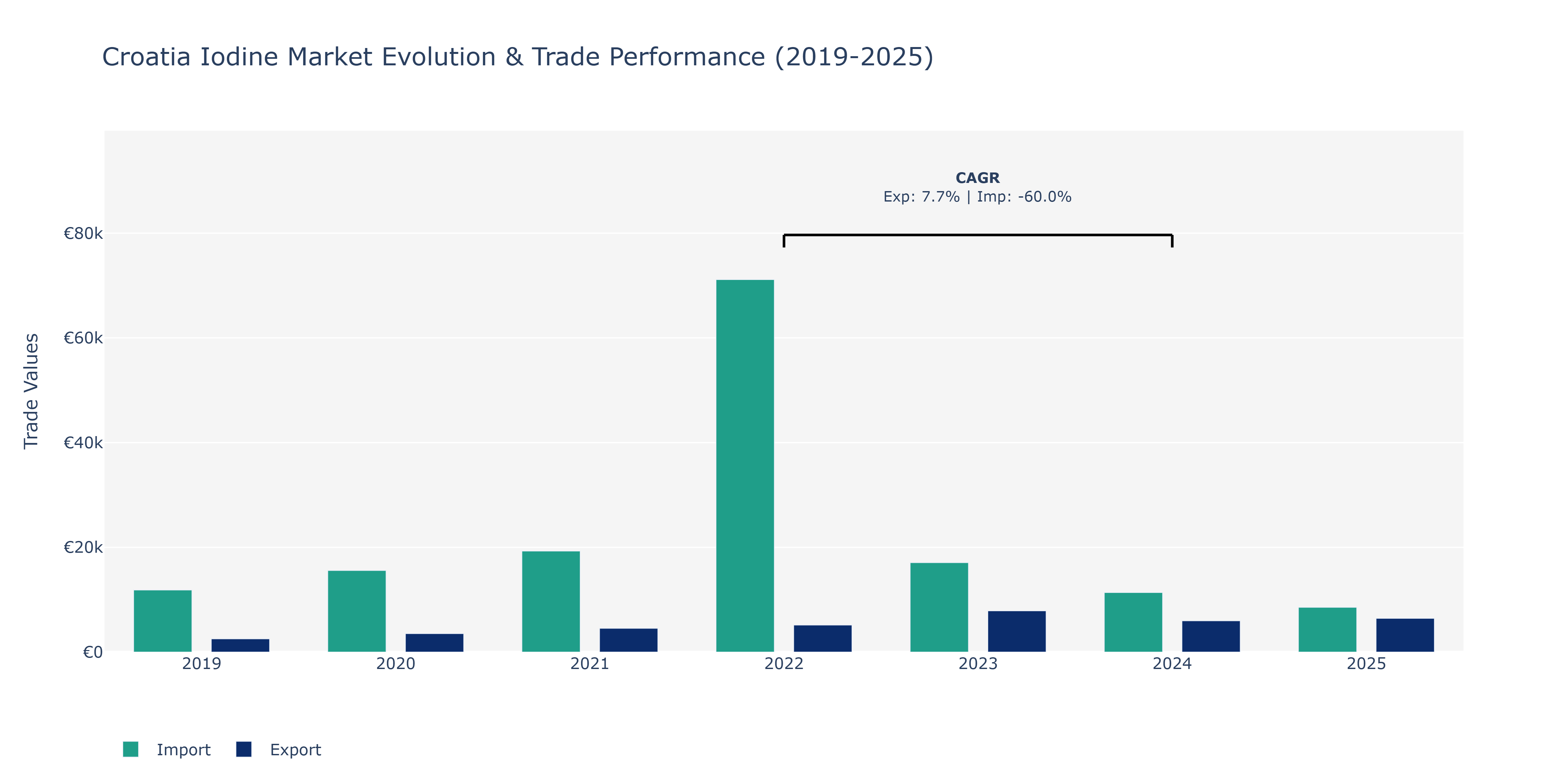
In the Croatia Iodine Market, exports exhibited an upward trend from 2019 to 2025, with a peak of €7.87 thousand in 2023 after a consistent annual growth. Conversely, imports experienced fluctuations over the same period, reaching a peak of €71.13 thousand in 2022 before sharply declining to €11.35 thousand in 2024. This drastic drop in imports can be attributed to various factors such as shifts in global iodine prices, changes in domestic consumption patterns, or alterations in trade policies impacting the iodine market in Croatia. The surge in exports could be linked to increased demand from international markets due to the quality of Croatian iodine products, improved production efficiencies, or strategic marketing efforts by local manufacturers. These fluctuations highlight the volatility and competitiveness of the iodine market, necessitating adaptive strategies for market players to navigate changing trade dynamics effectively.
Croatia Iodine Market Overview
The iodine market in Croatia is shaped by its applications in pharmaceuticals, nutrition, and industrial processes. Iodine is essential for thyroid function and is used in various medical and dietary products. The market benefits from increasing awareness of iodine deficiency and its health implications. Additionally, iodine`s role in the manufacturing of disinfectants and pharmaceuticals supports its market presence. The Croatian healthcare system`s focus on preventive health measures and iodine supplementation further drives market growth.
Drivers of the market
The Croatian iodine market is influenced by the rising awareness of iodine deficiency and its health implications, leading to increased supplementation and fortification efforts. Iodine is essential for thyroid function and overall health, which drives its demand in various dietary supplements and fortified foods. Additionally, the growth of the pharmaceutical industry and increasing use of iodine in medical imaging and antiseptics contribute to market expansion. Efforts by health organizations and governments to address iodine deficiency also support the market growth.
Challenges of the market
In the Croatian iodine market, challenges include supply chain dependencies and environmental concerns. The market relies heavily on imports, making it vulnerable to global supply disruptions and price fluctuations. Furthermore, there are environmental and safety concerns related to iodine extraction and usage, which can lead to stricter regulations and increased operational costs for businesses in the sector.
Government Policy of the market
The iodine market in Croatia is influenced by policies related to public health and nutrition. The Croatian government, in conjunction with EU health regulations, supports the fortification of table salt with iodine to prevent iodine deficiency disorders. Policies also regulate the quality and safety of iodine products used in medical and industrial applications. The government monitors iodine levels in food and dietary supplements to ensure compliance with recommended dietary allowances and to address any public health concerns related to iodine deficiency.
Key Highlights of the Report:
- Croatia Iodine Market Outlook
- Market Size of Croatia Iodine Market, 2024
- Forecast of Croatia Iodine Market, 2031
- Historical Data and Forecast of Croatia Iodine Revenues & Volume for the Period 2021-2031
- Croatia Iodine Market Trend Evolution
- Croatia Iodine Market Drivers and Challenges
- Croatia Iodine Price Trends
- Croatia Iodine Porter`s Five Forces
- Croatia Iodine Industry Life Cycle
- Historical Data and Forecast of Croatia Iodine Market Revenues & Volume By Source for the Period 2021-2031
- Historical Data and Forecast of Croatia Iodine Market Revenues & Volume By Caliche Ore for the Period 2021-2031
- Historical Data and Forecast of Croatia Iodine Market Revenues & Volume By Underground Brines for the Period 2021-2031
- Historical Data and Forecast of Croatia Iodine Market Revenues & Volume By Recycling for the Period 2021-2031
- Historical Data and Forecast of Croatia Iodine Market Revenues & Volume By Seaweeds for the Period 2021-2031
- Historical Data and Forecast of Croatia Iodine Market Revenues & Volume By Form for the Period 2021-2031
- Historical Data and Forecast of Croatia Iodine Market Revenues & Volume By Organic Compounds for the Period 2021-2031
- Historical Data and Forecast of Croatia Iodine Market Revenues & Volume By Inorganic Salts & Complexes for the Period 2021-2031
- Historical Data and Forecast of Croatia Iodine Market Revenues & Volume By Elemental & Isotopes for the Period 2021-2031
- Historical Data and Forecast of Croatia Iodine Market Revenues & Volume By Application for the Period 2021-2031
- Historical Data and Forecast of Croatia Iodine Market Revenues & Volume By X-Ray Contrast Media for the Period 2021-2031
- Historical Data and Forecast of Croatia Iodine Market Revenues & Volume By Pharmaceuticals for the Period 2021-2031
- Historical Data and Forecast of Croatia Iodine Market Revenues & Volume By Optical Polarizing Films for the Period 2021-2031
- Historical Data and Forecast of Croatia Iodine Market Revenues & Volume By Catalyst in Polymer Processing for the Period 2021-2031
- Historical Data and Forecast of Croatia Iodine Market Revenues & Volume By Animal Feed for the Period 2021-2031
- Historical Data and Forecast of Croatia Iodine Market Revenues & Volume By Fluorochemicals for the Period 2021-2031
- Historical Data and Forecast of Croatia Iodine Market Revenues & Volume By Human Nutrition for the Period 2021-2031
- Historical Data and Forecast of Croatia Iodine Market Revenues & Volume By Othersfor the Period 2021-2031
- Croatia Iodine Import Export Trade Statistics
- Market Opportunity Assessment By Source
- Market Opportunity Assessment By Form
- Market Opportunity Assessment By Application
- Croatia Iodine Top Companies Market Share
- Croatia Iodine Competitive Benchmarking By Technical and Operational Parameters
- Croatia Iodine Company Profiles
- Croatia Iodine Key Strategic Recommendations






































