Croatia Natural Gas Generator Market Size (2020-2030)
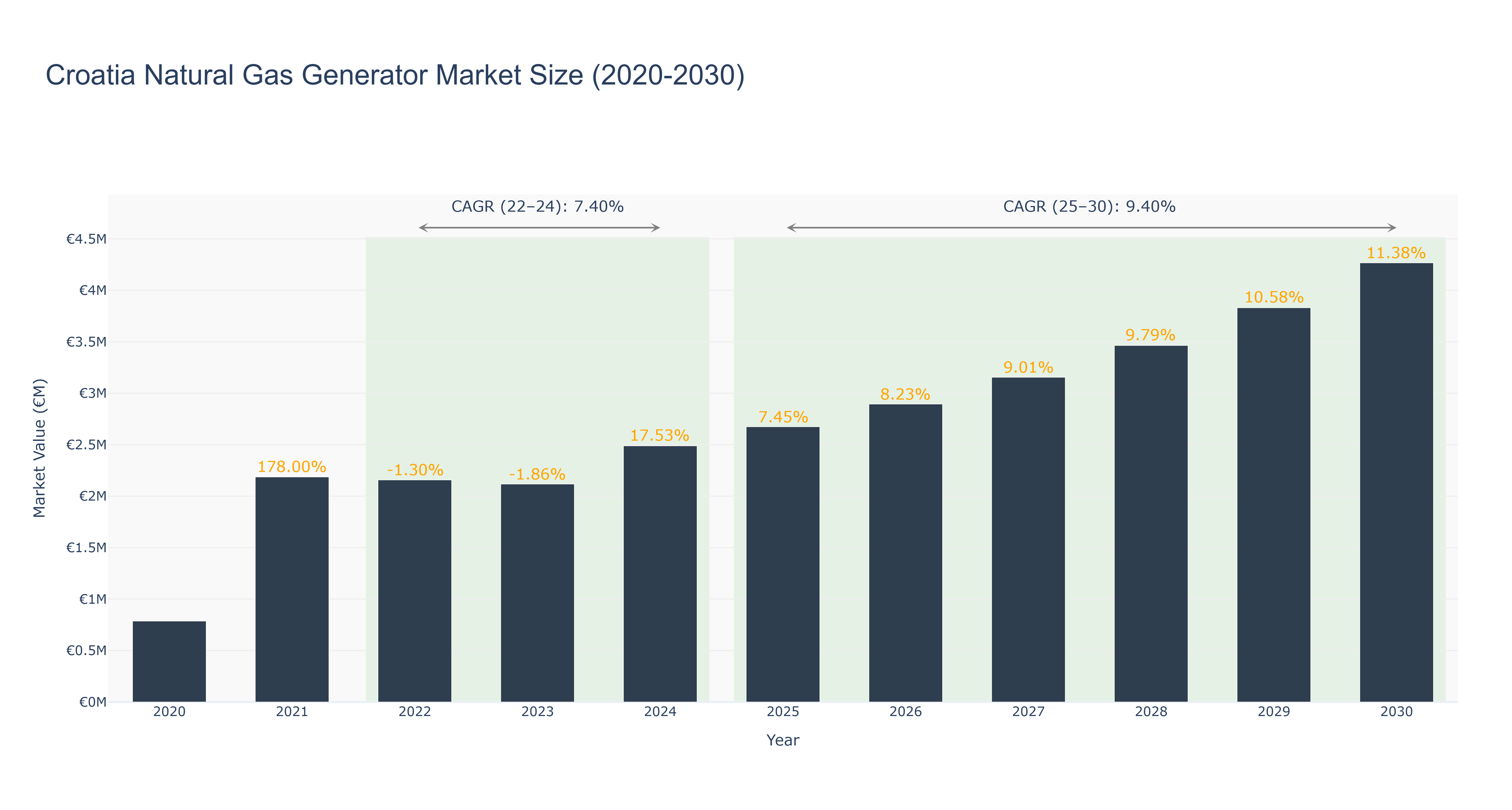
Croatia's Natural Gas Generator Market has shown a steady growth trajectory over the past decade. The market size peaked at €4.27 million in 2030, with a notable 11.38% growth rate. From 2020 to 2024, the market size increased steadily, reaching €2.49 million in 2024. The forecasted market size from 2025 to 2030 is expected to continue this upward trend, with a CAGR of 9.40%. The market's growth can be attributed to increasing demand for cleaner energy solutions and government initiatives promoting sustainable practices. Recent developments in Croatia include investments in renewable energy projects, such as solar and wind power installations, which are set to further boost the natural gas generator market in the coming years.
Croatia Natural Gas Generator Market: Production & Trade Performance (2019-2025)
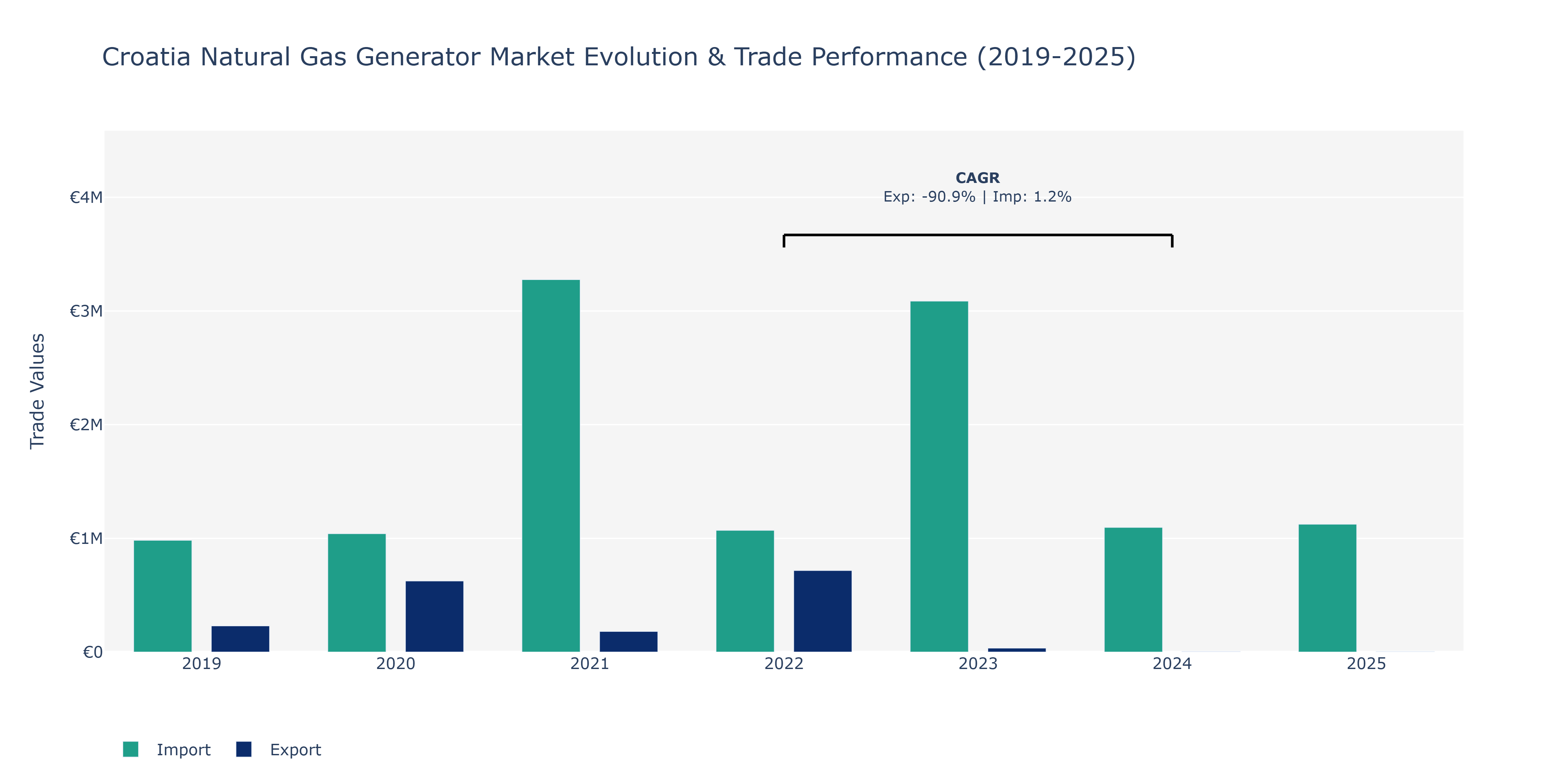
Between 2019 and 2025, Croatia's Natural Gas Generator Market showed varying trends in exports and imports. In 2020, exports surged to €624.93 thousand, marking a significant increase from the previous year, while imports also saw growth, reaching €1.04 million. However, in 2021, both exports and imports experienced sharp declines, with exports plummeting to €181.24 thousand and imports rising to €3.28 million. The year 2023 witnessed a notable decrease in exports to €34.34 thousand, followed by a further decline to €5.97 thousand in 2024. Conversely, imports peaked in 2023 at €3.09 million, gradually decreasing in 2024 and 2025. These fluctuations could be attributed to shifts in energy policies, global market conditions, and infrastructure development impacting Croatia's natural gas sector. The decreasing trend in exports may reflect changes in domestic production capacities or shifting demand patterns, while fluctuating Import value could be influenced by international supply dynamics or trade agreements affecting the energy market landscape in Croatia.
Croatia Natural Gas Generator Market Synopsis
The Croatia natural gas generator market is experiencing steady growth driven by increasing demand for reliable and efficient power generation solutions. With a focus on reducing emissions and transitioning towards cleaner energy sources, natural gas generators are being increasingly adopted in various industries, commercial establishments, and residential settings. The market is characterized by a competitive landscape with key players offering a wide range of products catering to different power capacity requirements. Government initiatives promoting the use of natural gas for power generation and favorable regulations are further supporting market growth. Technological advancements in natural gas generator systems, such as improved efficiency and lower maintenance requirements, are also contributing to market expansion. Overall, the Croatia natural gas generator market is poised for continued growth in the coming years.
Croatia Natural Gas Generator Market Trends
The Croatia Natural Gas Generator Market is currently experiencing growth fueled by increasing demand for reliable and efficient power generation solutions. The trend towards cleaner energy sources and the push for decarbonization are driving the adoption of natural gas generators as they offer lower emissions and reduced environmental impact compared to traditional fossil fuels. Additionally, the government`s focus on energy security and resilience is creating opportunities for market players to provide backup power solutions. The growing industrial sector, coupled with the need for continuous power supply in remote areas, is further boosting the market for natural gas generators in Croatia. Overall, there is a promising outlook for the natural gas generator market in Croatia, with opportunities for innovation, partnerships, and expansion in the coming years.
Croatia Natural Gas Generator Market Challenges
In the Croatia Natural Gas Generator Market, some of the challenges faced include the high initial investment costs associated with purchasing and installing natural gas generators, which can be a barrier for businesses looking to adopt this technology. Additionally, there may be limited availability of natural gas infrastructure in certain regions, making it difficult for businesses to access a reliable supply of natural gas for their generators. Furthermore, regulatory hurdles and environmental concerns surrounding the use of natural gas as a fuel source can also pose challenges for market growth. Overall, overcoming these challenges will require collaboration between industry stakeholders, government entities, and energy providers to address infrastructure needs, incentivize investment, and ensure compliance with regulations.
Croatia Natural Gas Generator Market Investment Opportunities
The Croatia Natural Gas Generator Market is primarily driven by a combination of factors including increasing demand for reliable and efficient power generation solutions, growing emphasis on cleaner energy sources to reduce carbon emissions, and the government`s initiatives to promote natural gas as a key component of the energy mix. The inherent advantages of natural gas generators, such as lower operating costs, reduced environmental impact compared to traditional fossil fuels, and greater fuel efficiency, are also contributing to the market growth. Additionally, the fluctuating prices of oil and coal have led to a shift towards natural gas generators as a more stable and cost-effective alternative, further fueling the market expansion in Croatia.
Croatia Natural Gas Generator Market Government Polices
The Croatian government has implemented several policies related to the natural gas generator market to promote energy efficiency and reduce environmental impact. These policies include the promotion of renewable energy sources, such as natural gas, through financial incentives and subsidies. The government has also set targets for increasing the share of natural gas in the country`s energy mix to reduce dependence on fossil fuels. Additionally, regulations have been put in place to ensure the safe and efficient operation of natural gas generators, including standards for emissions control and maintenance. Overall, these policies aim to drive the growth of the natural gas generator market in Croatia while advancing sustainability goals and reducing greenhouse gas emissions.
Croatia Natural Gas Generator Market Future Outlook
The future outlook for the Croatia Natural Gas Generator Market looks promising due to several factors. The increasing focus on reducing carbon emissions and transitioning to cleaner energy sources is driving the demand for natural gas generators as they offer a more environmentally friendly alternative to traditional diesel generators. Additionally, the government`s initiatives to promote the use of natural gas for power generation and the expanding industrial sector in Croatia are expected to further boost the market growth. The growing investments in infrastructure development and the rising need for reliable backup power solutions are also likely to contribute to the market`s expansion. Overall, the Croatia Natural Gas Generator Market is poised for steady growth in the coming years.
Key Highlights of the Report:
- Croatia Natural Gas Generator Market Outlook
- Market Size of Croatia Natural Gas Generator Market, 2024
- Forecast of Croatia Natural Gas Generator Market, 2031
- Historical Data and Forecast of Croatia Natural Gas Generator Revenues & Volume for the Period 2021- 2031
- Croatia Natural Gas Generator Market Trend Evolution
- Croatia Natural Gas Generator Market Drivers and Challenges
- Croatia Natural Gas Generator Price Trends
- Croatia Natural Gas Generator Porter's Five Forces
- Croatia Natural Gas Generator Industry Life Cycle
- Historical Data and Forecast of Croatia Natural Gas Generator Market Revenues & Volume By Rating for the Period 2021- 2031
- Historical Data and Forecast of Croatia Natural Gas Generator Market Revenues & Volume By Low Power Gensets for the Period 2021- 2031
- Historical Data and Forecast of Croatia Natural Gas Generator Market Revenues & Volume By Medium Power Gensets for the Period 2021- 2031
- Historical Data and Forecast of Croatia Natural Gas Generator Market Revenues & Volume By High Power Gensets for the Period 2021- 2031
- Historical Data and Forecast of Croatia Natural Gas Generator Market Revenues & Volume By Application for the Period 2021- 2031
- Historical Data and Forecast of Croatia Natural Gas Generator Market Revenues & Volume By Industrial for the Period 2021- 2031
- Historical Data and Forecast of Croatia Natural Gas Generator Market Revenues & Volume By Commercial for the Period 2021- 2031
- Historical Data and Forecast of Croatia Natural Gas Generator Market Revenues & Volume By Residential for the Period 2021- 2031
- Croatia Natural Gas Generator Import Export Trade Statistics
- Market Opportunity Assessment By Rating
- Market Opportunity Assessment By Application
- Croatia Natural Gas Generator Top Companies Market Share
- Croatia Natural Gas Generator Competitive Benchmarking By Technical and Operational Parameters
- Croatia Natural Gas Generator Company Profiles
- Croatia Natural Gas Generator Key Strategic Recommendations






































