Croatia Physiological Saline Market Top 5 Importing Countries and Market Competition (HHI) Analysis
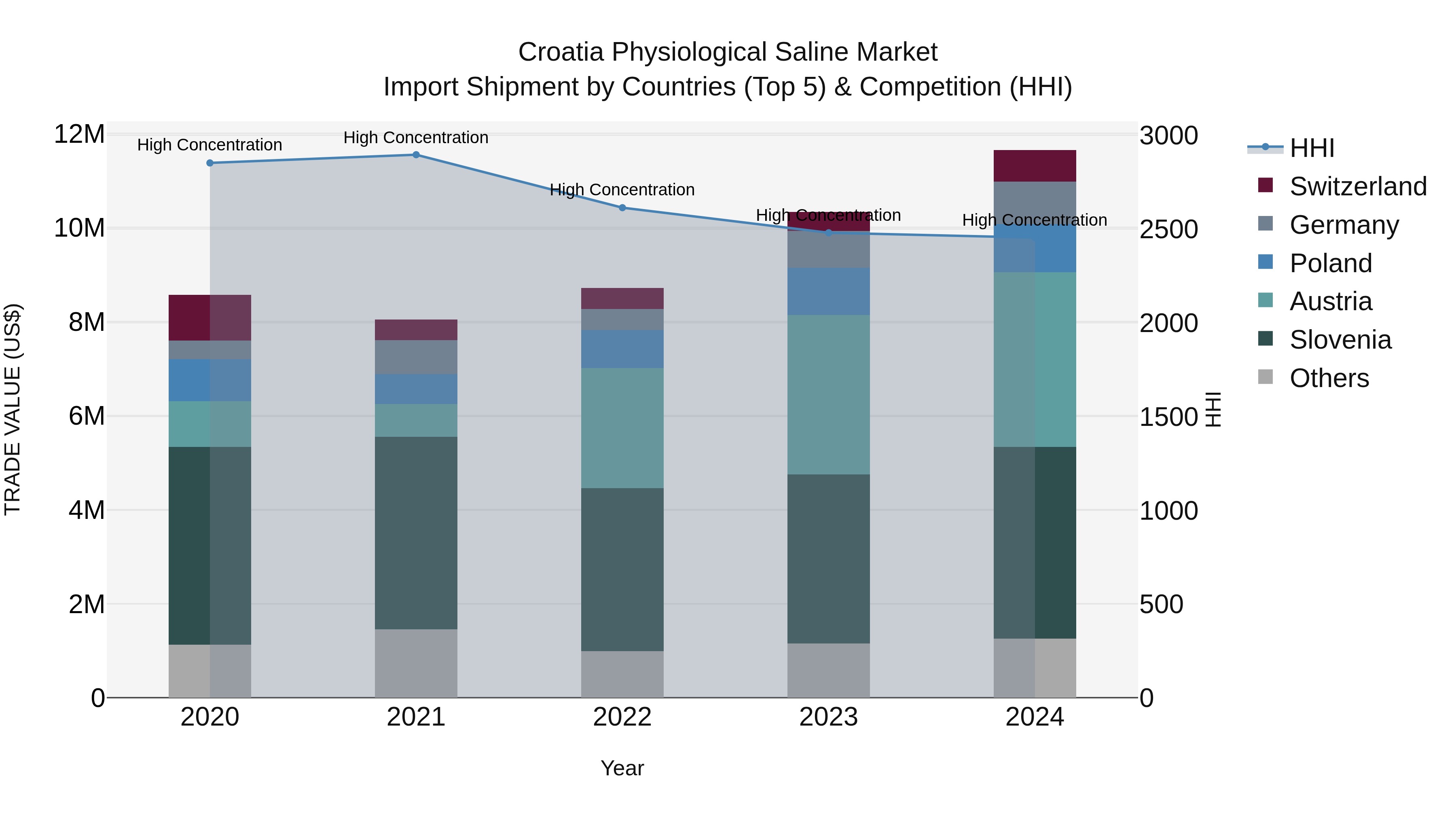
Croatia import of physiological saline in 2024 continued to be dominated by key suppliers such as Slovenia, Austria, Poland, Germany, and the Netherlands. The high Herfindahl-Hirschman Index (HHI) indicates a concentrated market structure. With a strong compound annual growth rate (CAGR) of 7.99% from 2020 to 2024 and an impressive growth rate of 12.75% from 2023 to 2024, the market for physiological saline imports in Croatia appears to be experiencing significant expansion and opportunities for further development.
Croatia Physiological Saline Market Synopsis
The Croatia Physiological Saline Market is experiencing steady growth driven by the increasing demand for intravenous solutions in healthcare settings. Physiological saline, also known as normal saline, is a sterile solution of sodium chloride in water and is widely used for various medical purposes such as hydration, wound cleaning, and intravenous medication administration. Key factors contributing to market growth include the rising prevalence of chronic diseases, growth in the aging population, and advancements in healthcare infrastructure. Major players in the market include B. Braun Melsungen AG, Fresenius Kabi, Baxter International Inc., and Hospira Inc. The market is characterized by intense competition, with companies focusing on product innovation, strategic partnerships, and expanding their distribution networks to gain a competitive edge in this growing sector.
Croatia Physiological Saline Market Trends
The Croatia Physiological Saline Market is experiencing steady growth driven by the increasing demand for medical products and procedures. One of the key trends in the market is the rising adoption of physiological saline for wound cleansing, intravenous infusions, and other medical applications. With the country`s healthcare sector witnessing advancements and increased investment in healthcare infrastructure, there are ample opportunities for market players to expand their offerings and reach a wider customer base. Additionally, the growing emphasis on infection control and hygiene practices in medical settings is further driving the demand for physiological saline solutions. Companies operating in the Croatia Physiological Saline Market can capitalize on these trends by focusing on product innovation, strategic partnerships with healthcare providers, and effective marketing strategies to tap into the growing market potential.
Croatia Physiological Saline Market Challenges
In the Croatia Physiological Saline Market, some of the key challenges include increasing competition from alternative solutions and substitutes, price volatility due to fluctuating raw material costs, and regulatory hurdles related to quality standards and import/export requirements. Additionally, the market may face supply chain disruptions, especially during times of global crises or emergencies, impacting the availability of physiological saline products. Market players also need to address consumer preferences for natural or organic alternatives, which could impact the demand for traditional physiological saline solutions. To stay competitive and overcome these challenges, companies in the Croatia Physiological Saline Market must focus on innovation, product differentiation, and strategic partnerships to enhance their market position and meet evolving customer needs.
Croatia Physiological Saline Market Investment Opportunities
The Croatia Physiological Saline Market is primarily driven by several factors. One of the key drivers is the increasing awareness among healthcare professionals and consumers about the benefits of physiological saline solutions in various medical applications, such as wound cleansing, contact lens cleaning, and nasal irrigation. Additionally, the rising prevalence of chronic diseases and the growing demand for sterile solutions for medical procedures are fueling the market growth. Furthermore, the expanding healthcare infrastructure and the increasing investments in research and development activities are also contributing to the market expansion. Moreover, the rising geriatric population and the surging number of surgeries being performed in healthcare facilities are boosting the demand for physiological saline products in Croatia.
Croatia Physiological Saline Market Government Polices
In Croatia, the physiological saline market is governed by regulations set by the Croatian Agency for Medicinal Products and Medical Devices (HALMED). HALMED oversees the registration, distribution, and quality control of physiological saline products to ensure they meet safety and efficacy standards. Manufacturers and distributors of physiological saline must adhere to Good Manufacturing Practices (GMP) and Good Distribution Practices (GDP) established by HALMED to maintain product quality and safety. Additionally, pricing and reimbursement policies for physiological saline products are determined by the Croatian Institute for Health Insurance (HZZO) to ensure affordability and accessibility for patients. Overall, stringent regulatory oversight by HALMED and pricing regulations by HZZO play a crucial role in shaping the physiological saline market in Croatia.
Croatia Physiological Saline Market Future Outlook
The Croatia Physiological Saline Market is expected to witness steady growth in the coming years due to factors such as the increasing prevalence of chronic diseases, rising demand for medical procedures requiring saline solution, and expanding healthcare infrastructure. The market is likely to be driven by the growing awareness about the importance of hydration and electrolyte balance in maintaining overall health. Additionally, the ongoing advancements in healthcare technology and the increasing focus on preventive healthcare measures are anticipated to further boost market growth. However, factors such as price fluctuations of raw materials and the presence of alternative solutions may pose challenges to market growth. Overall, the Croatia Physiological Saline Market is projected to experience a positive trajectory in the foreseeable future.
Key Highlights of the Report:
- Croatia Physiological Saline Market Outlook
- Market Size of Croatia Physiological Saline Market, 2024
- Forecast of Croatia Physiological Saline Market, 2031
- Historical Data and Forecast of Croatia Physiological Saline Revenues & Volume for the Period 2021- 2031
- Croatia Physiological Saline Market Trend Evolution
- Croatia Physiological Saline Market Drivers and Challenges
- Croatia Physiological Saline Price Trends
- Croatia Physiological Saline Porter's Five Forces
- Croatia Physiological Saline Industry Life Cycle
- Historical Data and Forecast of Croatia Physiological Saline Market Revenues & Volume By Product Type for the Period 2021- 2031
- Historical Data and Forecast of Croatia Physiological Saline Market Revenues & Volume By Flexible Bag for the Period 2021- 2031
- Historical Data and Forecast of Croatia Physiological Saline Market Revenues & Volume By Plastic Bottles for the Period 2021- 2031
- Historical Data and Forecast of Croatia Physiological Saline Market Revenues & Volume By Glass Bottles for the Period 2021- 2031
- Historical Data and Forecast of Croatia Physiological Saline Market Revenues & Volume By Application for the Period 2021- 2031
- Historical Data and Forecast of Croatia Physiological Saline Market Revenues & Volume By Chronic Diseases for the Period 2021- 2031
- Historical Data and Forecast of Croatia Physiological Saline Market Revenues & Volume By Acute Health Conditions for the Period 2021- 2031
- Historical Data and Forecast of Croatia Physiological Saline Market Revenues & Volume By Skin Abrasions and Burns for the Period 2021- 2031
- Historical Data and Forecast of Croatia Physiological Saline Market Revenues & Volume By End Users for the Period 2021- 2031
- Historical Data and Forecast of Croatia Physiological Saline Market Revenues & Volume By Hospitals for the Period 2021- 2031
- Historical Data and Forecast of Croatia Physiological Saline Market Revenues & Volume By Clinics for the Period 2021- 2031
- Historical Data and Forecast of Croatia Physiological Saline Market Revenues & Volume By Recovery Centers for the Period 2021- 2031
- Historical Data and Forecast of Croatia Physiological Saline Market Revenues & Volume By Others for the Period 2021- 2031
- Croatia Physiological Saline Import Export Trade Statistics
- Market Opportunity Assessment By Product Type
- Market Opportunity Assessment By Application
- Market Opportunity Assessment By End Users
- Croatia Physiological Saline Top Companies Market Share
- Croatia Physiological Saline Competitive Benchmarking By Technical and Operational Parameters
- Croatia Physiological Saline Company Profiles
- Croatia Physiological Saline Key Strategic Recommendations






































