Cyprus Acetone Market Size (2020-2030)
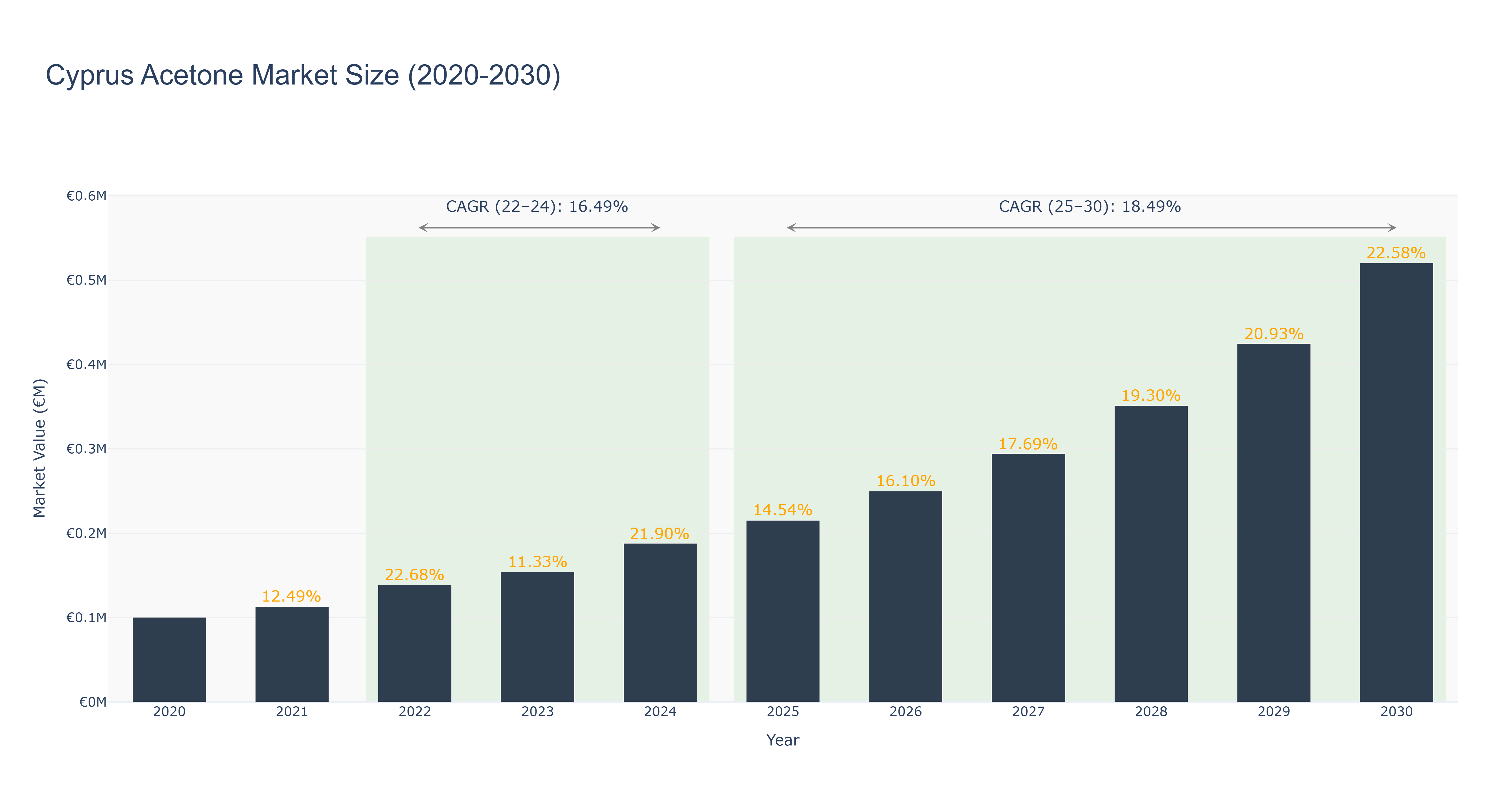
Cyprus Acetone Market has shown a steady growth trajectory over the years. The market peaked at €0.52 million in 2030, with a notable increase in size from €0.10 million in 2020. The actual market size saw consistent growth from 2020 to 2024, with a forecasted upward trend projected from 2025 to 2030. The CAGR values for the periods 2022-24 and 2025-30 were 16.49% and 18.49% respectively. Industry drivers such as increasing demand from various end-use industries and technological advancements have propelled this growth. Looking ahead, Cyprus is set to witness advancements in acetone production technologies, aiming to further boost market growth. These developments are expected to solidify Cyprus's position as a key player in the global acetone market.
Cyprus Acetone Market: Production & Trade Performance (2019-2025)
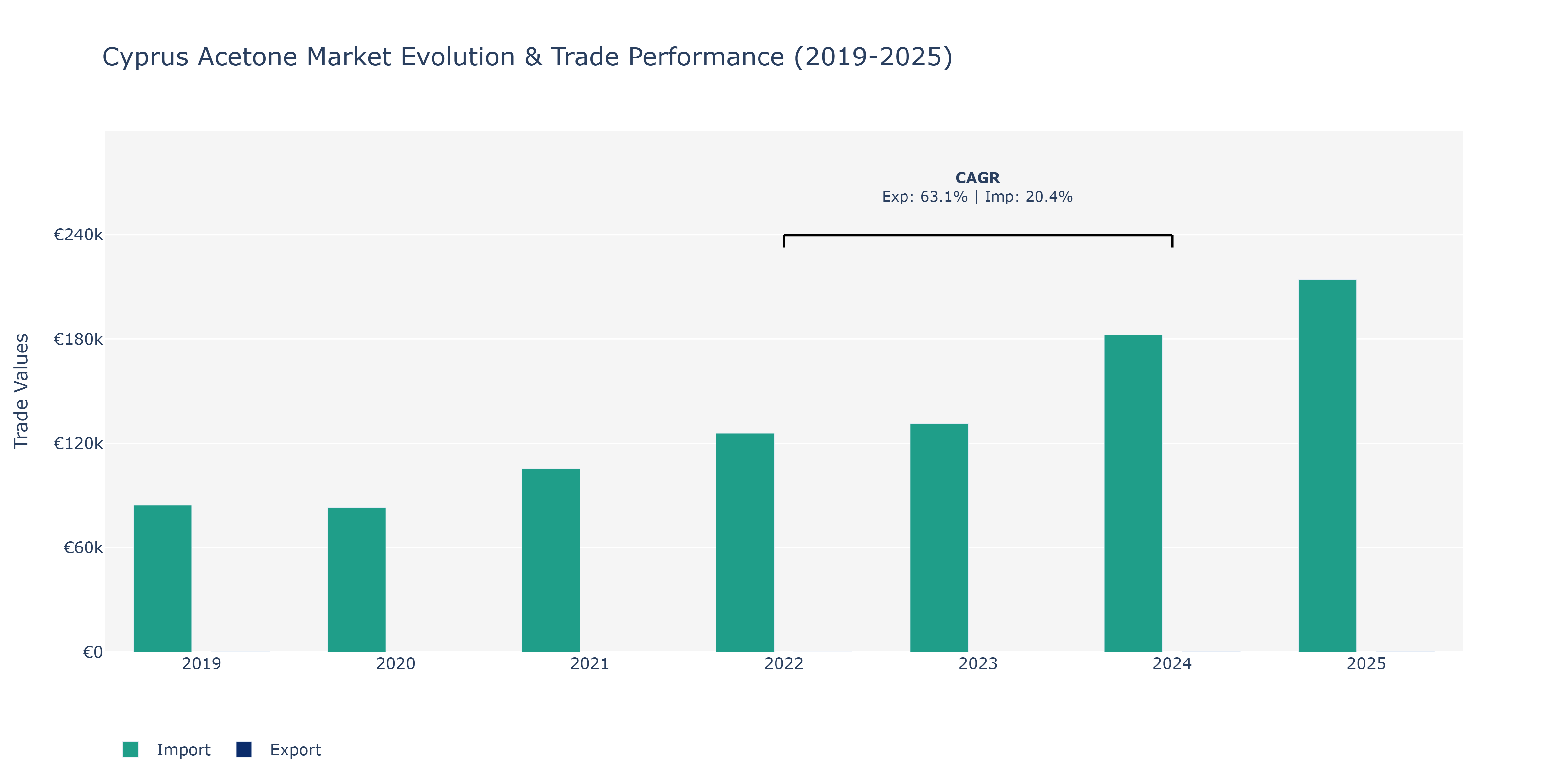
In the Cyprus Acetone Market, exports saw a notable increase from €150.0 million in 2019 to €308.4 million in 2025, reflecting a positive growth trend over the years. Imports, on the other hand, experienced fluctuations but generally displayed an upward trajectory, reaching €214.1 million in 2025. The peak points for exports were observed in 2024 at €250.0 million and for imports in 2025. The market witnessed a substantial rise in exports between 2019 and 2025, possibly attributed to increased demand from industries utilizing acetone in various applications. Similarly, the growth in imports can be linked to the need for raw materials and chemicals for domestic production processes. The CAGR for exports between 2022 and 2024 stood at 63.08%, indicating a robust expansion in outbound shipments during this period. For imports, the CAGR was 20.36%, reflecting a steady growth rate in inbound acetone volumes. These trends align with the global chemical industry's movements towards innovation and sustainability, driving both exports and imports in the Cyprus Acetone Market.
Key Highlights of the Report:
- Cyprus Acetone Market Outlook
- Market Size of Cyprus Acetone Market, 2024
- Forecast of Cyprus Acetone Market, 2031
- Historical Data and Forecast of Cyprus Acetone Revenues & Volume for the Period 2021-2031
- Cyprus Acetone Market Trend Evolution
- Cyprus Acetone Market Drivers and Challenges
- Cyprus Acetone Price Trends
- Cyprus Acetone Porter`s Five Forces
- Cyprus Acetone Industry Life Cycle
- Historical Data and Forecast of Cyprus Acetone Market Revenues & Volume By Application for the Period 2021-2031
- Historical Data and Forecast of Cyprus Acetone Market Revenues & Volume By Methyl Methacrylate (MMA) for the Period 2021-2031
- Historical Data and Forecast of Cyprus Acetone Market Revenues & Volume By Bisphenol A (BPA) for the Period 2021-2031
- Historical Data and Forecast of Cyprus Acetone Market Revenues & Volume By Solvents for the Period 2021-2031
- Historical Data and Forecast of Cyprus Acetone Market Revenues & Volume By Others for the Period 2021-2031
- Historical Data and Forecast of Cyprus Acetone Market Revenues & Volume By Distribution Channel for the Period 2021-2031
- Historical Data and Forecast of Cyprus Acetone Market Revenues & Volume By Manufacturer to Distributor for the Period 2021-2031
- Historical Data and Forecast of Cyprus Acetone Market Revenues & Volume By Manufacturer to End-User for the Period 2021-2031
- Historical Data and Forecast of Cyprus Acetone Market Revenues & Volume By Grade for the Period 2021-2031
- Historical Data and Forecast of Cyprus Acetone Market Revenues & Volume By Specialty Grade for the Period 2021-2031
- Historical Data and Forecast of Cyprus Acetone Market Revenues & Volume By Technical Grade for the Period 2021-2031
- Cyprus Acetone Import Export Trade Statistics
- Market Opportunity Assessment By Application
- Market Opportunity Assessment By Distribution Channel
- Market Opportunity Assessment By Grade
- Cyprus Acetone Top Companies Market Share
- Cyprus Acetone Competitive Benchmarking By Technical and Operational Parameters
- Cyprus Acetone Company Profiles
- Cyprus Acetone Key Strategic Recommendations






































