Cyprus Canned Tuna Market Size (2020-2030)
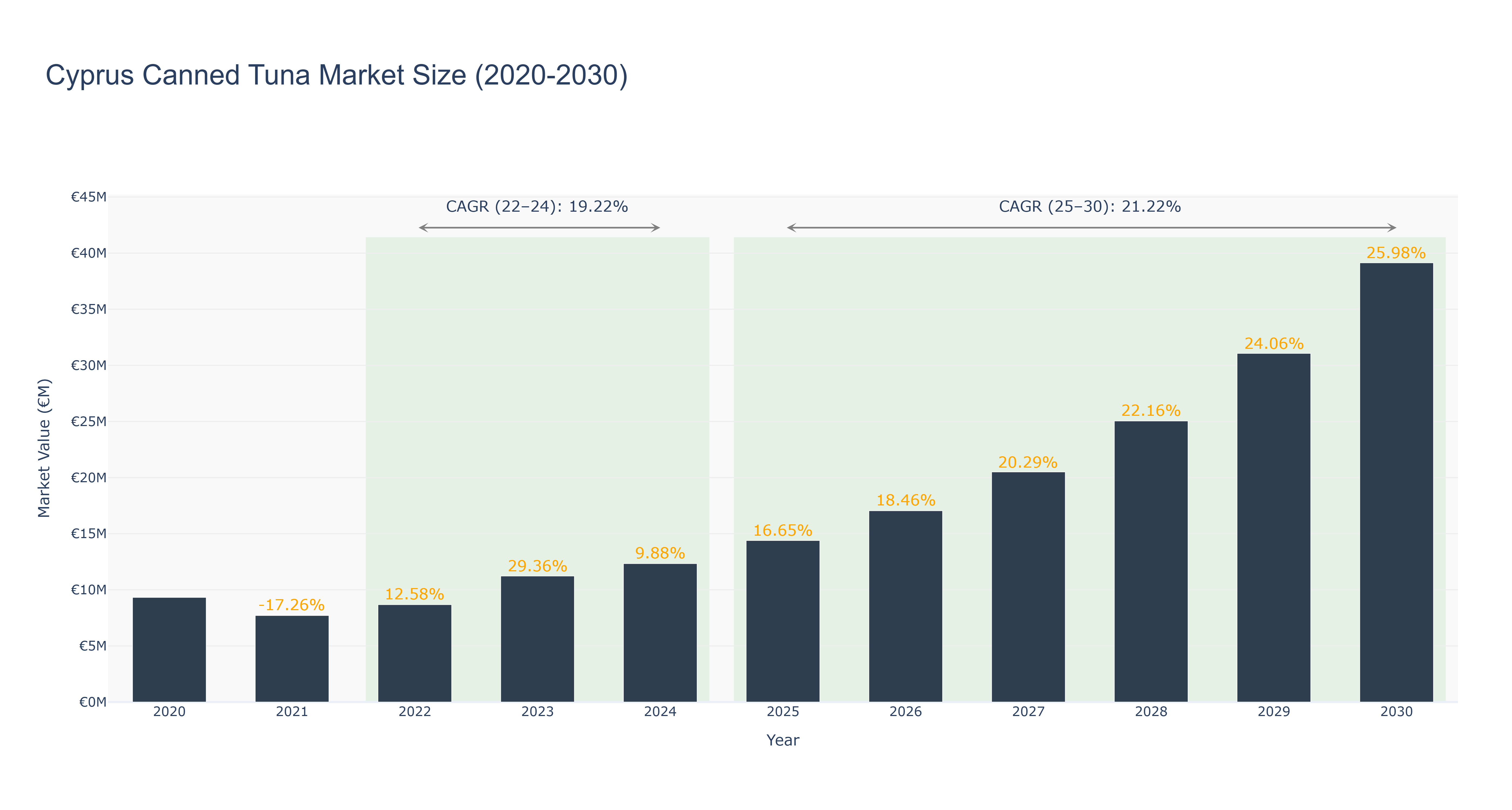
The Cyprus Canned Tuna Market experienced significant fluctuations from 2020 to 2024, peaking at €9.31 million in 2020 before declining to €7.71 million in 2021, marking a notable decrease of 17.26%. However, the market rebounded with a growth of 12.58% in 2022, reaching €8.68 million, and continued its upward trajectory to €11.22 million in 2023, reflecting a robust growth rate of 29.36%. The actual market size is projected to grow to €12.33 million in 2024, yielding a compound annual growth rate (CAGR) of 19.22% from 2022 to 2024. Looking ahead, the forecasted period from 2025 to 2030 anticipates a strong market expansion, with projected sizes increasing from €14.38 million in 2025 to €39.13 million by 2030, corresponding to a CAGR of 21.22%. Key drivers of this growth include increasing consumer demand for convenient and sustainable food options, along with innovations in packaging and preservation technologies.
Cyprus Canned Tuna Market: Production & Trade Performance (2019-2025)
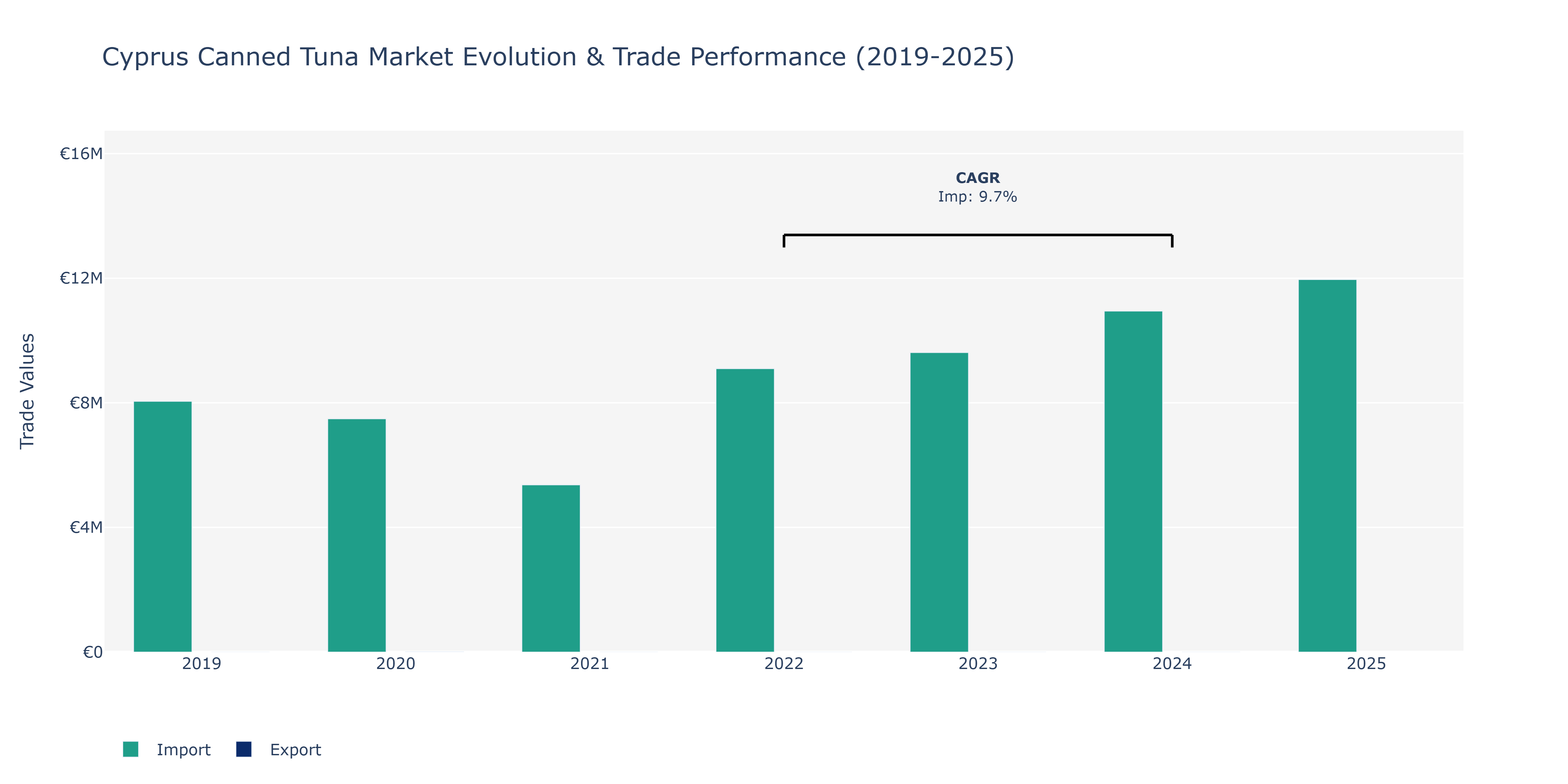
In the Cyprus Canned Tuna Market, imports experienced a substantial fluctuation over the years. In 2019, imports stood at approximately €8.04 million. The following year, imports decreased to around €7.49 million, while in 2021, a significant drop to about €5.37 million was observed. However, starting in 2022, imports surged to €9.09 million, showing a consistent upward trend reaching its peak in 2025 at over €11.95 million. The market's import fluctuations can be attributed to various factors such as changes in consumer demand, economic conditions affecting disposable income, and fluctuations in global tuna supply and pricing. The rise in imports aligns with the increasing popularity of canned tuna as a convenient and healthy food choice, reflecting consumer preferences for quick meal solutions amidst busy lifestyles. Additionally, developments in sustainable tuna sourcing practices may have influenced market dynamics, driving both the supply chain and consumer choices in the canned tuna segment.
Cyprus Canned Tuna Market Overview
Canned tuna is a significant segment of the canned seafood market in Cyprus, driven by high consumer demand for protein-rich and convenient food options. Tuna is a staple in Cypriot households, being used in salads, sandwiches, and pasta dishes, contributing to the sustained growth of this market.
Drivers of the market
The canned tuna market in Cyprus is driven by the increasing consumption of convenient, protein-rich food products. As health-conscious consumers seek nutritious and affordable options, canned tuna remains a popular choice. Additionally, the expansion of the food service industry and the rising popularity of ready-to-eat meals are further supporting market growth.
Challenges of the market
In Cyprus, the canned tuna market faces challenges from fluctuating global tuna prices and competition from fresh and frozen seafood. The market is also impacted by growing concerns over sustainability and overfishing, which influence consumer buying decisions.
Government Policy of the market
Cypruss canned tuna market is regulated by government policies on food safety, fisheries management, and environmental sustainability. The government promotes responsible fishing practices and ensures that canned tuna products meet both national and EU standards for quality and safety, which supports market growth and consumer confidence.
Key Highlights of the Report:
- Cyprus Canned Tuna Market Outlook
- Market Size of Cyprus Canned Tuna Market, 2024
- Forecast of Cyprus Canned Tuna Market, 2031
- Historical Data and Forecast of Cyprus Canned Tuna Revenues & Volume for the Period 2021-2031
- Cyprus Canned Tuna Market Trend Evolution
- Cyprus Canned Tuna Market Drivers and Challenges
- Cyprus Canned Tuna Price Trends
- Cyprus Canned Tuna Porter`s Five Forces
- Cyprus Canned Tuna Industry Life Cycle
- Historical Data and Forecast of Cyprus Canned Tuna Market Revenues & Volume By Product for the Period 2021-2031
- Historical Data and Forecast of Cyprus Canned Tuna Market Revenues & Volume By Skipjack for the Period 2021-2031
- Historical Data and Forecast of Cyprus Canned Tuna Market Revenues & Volume By Yellowfin for the Period 2021-2031
- Historical Data and Forecast of Cyprus Canned Tuna Market Revenues & Volume By Others for the Period 2021-2031
- Historical Data and Forecast of Cyprus Canned Tuna Market Revenues & Volume By Distribution Channel for the Period 2021-2031
- Historical Data and Forecast of Cyprus Canned Tuna Market Revenues & Volume By Hypermarket & Supermarket for the Period 2021-2031
- Historical Data and Forecast of Cyprus Canned Tuna Market Revenues & Volume By Specialty Stores for the Period 2021-2031
- Historical Data and Forecast of Cyprus Canned Tuna Market Revenues & Volume By Online for the Period 2021-2031
- Cyprus Canned Tuna Import Export Trade Statistics
- Market Opportunity Assessment By Product
- Market Opportunity Assessment By Distribution Channel
- Cyprus Canned Tuna Top Companies Market Share
- Cyprus Canned Tuna Competitive Benchmarking By Technical and Operational Parameters
- Cyprus Canned Tuna Company Profiles
- Cyprus Canned Tuna Key Strategic Recommendations






































